

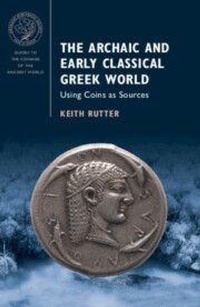
The Archaic and Early Classical Greek World
Using Coins as Sources
Will be published approx. on 31. July 2026
Book
Paperback/Softback
290 pages
978-1-009-43408-9 (ISBN)
Description
The western tradition of coinage began in Asia Minor around 650 BCE and from there the idea spread quite rapidly to other parts of the Mediterranean. This book describes and evaluates developments in coinage down to the middle of the fifth century. Early coinage was not monolithic. The new medium of exchange proved attractive to a variety of rulers and societies - kings, dynasts, tribes, city-states with varying forms of governance. The physical characteristics of the coins produced were another source of difference. Initially there was no fixed idea of what a coin should look like, and there were several experiments before a consensus emerged around a small, circular metal object with a design, or type, on both sides. This book provides students with an authoritative introduction, with all technical terms and methodologies explained, as well as illustrations of over 200 important coins with detailed captions.
More details
Series
Language
English
Place of publication
Cambridge
United Kingdom
Target group
College/higher education
Product notice
Paperback (trade)
Illustrations
Worked examples or Exercises; 3 Maps; 200 Halftones, color
Weight
250 gr
ISBN-13
978-1-009-43408-9 (9781009434089)
Copyright in bibliographic data and cover images is held by Nielsen Book Services Limited or by the publishers or by their respective licensors: all rights reserved.
Schweitzer Classification
Other editions
Additional editions
Book
approx. 07/2026
Cambridge University Press
€105.50
Not yet published
Person
Keith Rutter was Professor Emeritus of Greek History and Numismatics at the University of Edinburgh. He was a medallist of the Royal Numismatic Society and published extensively on Greek coinage and history. His books include Campanian Coinages 475-380 (1979) and Greek Coinages of Southern Italy and Sicily (1997). He was Principal Editor of the third edition of Historia Numorum Italy (2001). Between 2003 and 2008 he directed the Cyprus Numismatic Project, a web-based resource for the study of the coins of the Cypriot kingdoms. In 2012 he set up the biennial two-week course in numismatics at the British School at Athens, designed for postgraduates in Classics, History and Archaeology whose research would be enriched by a more informed and profound engagement with the evidence provided by coins.
Content
Introduction and Acknowledgments; 1. The terminology and methodologies of Greek numismatics; 2. The beginning of coinage; 3. Coinage in the Achaemenid Empire; 4. The Aegean world - weight standards and the spread of coinage; 5. Colonisation; 6. Coins and Art; Epilogue.