

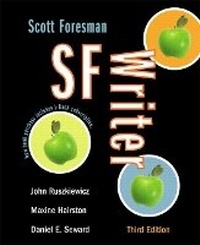
SF Writer, Reprint
3rd Edition
Published on 28. February 2006
Book
Paperback/Softback
536 pages
978-0-13-193416-0 (ISBN)
Description
For courses in Freshman Composition.
SF Writer, Third Edition, offers the best coverage of argument and visual rhetoric in a brief handbook. The style is energetic and witty, the advice fresh and contemporary, the design ground-breaking. More than any other handbook, SF Writer now focuses on argument. This is the handbook that reflects where the field is going, and what is important to today's students.
SF Writer, Third Edition, offers the best coverage of argument and visual rhetoric in a brief handbook. The style is energetic and witty, the advice fresh and contemporary, the design ground-breaking. More than any other handbook, SF Writer now focuses on argument. This is the handbook that reflects where the field is going, and what is important to today's students.
More details
Edition
3rd edition
Language
English
Place of publication
United States
Publishing group
Pearson Education (US)
Target group
Professional and scholarly
Dimensions
Height: 216 mm
Width: 140 mm
Weight
762 gr
ISBN-13
978-0-13-193416-0 (9780131934160)
Copyright in bibliographic data and cover images is held by Nielsen Book Services Limited or by the publishers or by their respective licensors: all rights reserved.
Schweitzer Classification
Other editions
Previous edition

John J. Ruszkiewicz | Maxine E. Hairston | Dan Seward
SF Writer with 2003 MLA Update
Book
07/2003
2nd Edition
Longman Inc
€33.41
Article exhausted; check for reprint
Content
I. WORKING AS A WRITER.
1. Writers at Work.
2. Preparing to Write.
3. Making a Point.
4. Making Choices About Plagiarism.
5. Creating a Structure.
6. Drafting.
7. Revising, Editing, and Proofreading.
II. SHAPING LANGUAGE.
8. Making Choices About Language.
9. Writing Stylish Sentences.
10. Shaping Effective Paragraphs.
III. PRESENTING YOUR WRITING.
11. Designing Documents.
12. Enhancing Visual Style.
13. Writing for the Web.
14. Giving Oral Presentations.
15. Model Documents.
IV. WRITING ARGUMENTS.
16. Reading and Responding Critically.
17. Strategies of Argument.
18. Visual Arguments.
19. Writing a Literary or Popular Culture Analysis.
V. RESEARCH.
20. Doing Research.
21. Finding Information.
22. Evaluating Sources.
23. Using Sources Responsibly.
24. Using Quotations Effectively.
25. Collecting Source Information for Documentation.
VI. DOCUMENTATION.
26. MLA Documenation.
27. APA Documentation.
28. CMS Documentation.
29. CSE Documentation.
30. COS Documentation.
VII. UNDERSTANDING GRAMMAR.
31. Key Grammatical Terms.
32. The Shape of Sentences.
33. Sentences, Fragments, Comma Splices, and Run-ons.
34. Modifiers.
35. Subject-Verb Agreement.
36. Verb Tense, Voice, and Mood.
37. Pronouns.
38. Suggestions for ESL Writers.
VIII. UNDERSTANDING PUNCTUATION AND MECHANICS.
39. End Punctuation.
40. Commas.
41. Semicolons and Colons.
42. Quotation Marks and Ellipses.
43. Parentheses and Brackets.
44. Dashes, Hyphens, and Slashes.
45. Italics and Capitalization.
46. Apostrophes, Abbreviations, and Numbers.
47. Spelling, Dictionary, Thesaurus.
Almanac.
Glossary of Usage.
Index.
1. Writers at Work.
2. Preparing to Write.
3. Making a Point.
4. Making Choices About Plagiarism.
5. Creating a Structure.
6. Drafting.
7. Revising, Editing, and Proofreading.
II. SHAPING LANGUAGE.
8. Making Choices About Language.
9. Writing Stylish Sentences.
10. Shaping Effective Paragraphs.
III. PRESENTING YOUR WRITING.
11. Designing Documents.
12. Enhancing Visual Style.
13. Writing for the Web.
14. Giving Oral Presentations.
15. Model Documents.
IV. WRITING ARGUMENTS.
16. Reading and Responding Critically.
17. Strategies of Argument.
18. Visual Arguments.
19. Writing a Literary or Popular Culture Analysis.
V. RESEARCH.
20. Doing Research.
21. Finding Information.
22. Evaluating Sources.
23. Using Sources Responsibly.
24. Using Quotations Effectively.
25. Collecting Source Information for Documentation.
VI. DOCUMENTATION.
26. MLA Documenation.
27. APA Documentation.
28. CMS Documentation.
29. CSE Documentation.
30. COS Documentation.
VII. UNDERSTANDING GRAMMAR.
31. Key Grammatical Terms.
32. The Shape of Sentences.
33. Sentences, Fragments, Comma Splices, and Run-ons.
34. Modifiers.
35. Subject-Verb Agreement.
36. Verb Tense, Voice, and Mood.
37. Pronouns.
38. Suggestions for ESL Writers.
VIII. UNDERSTANDING PUNCTUATION AND MECHANICS.
39. End Punctuation.
40. Commas.
41. Semicolons and Colons.
42. Quotation Marks and Ellipses.
43. Parentheses and Brackets.
44. Dashes, Hyphens, and Slashes.
45. Italics and Capitalization.
46. Apostrophes, Abbreviations, and Numbers.
47. Spelling, Dictionary, Thesaurus.
Almanac.
Glossary of Usage.
Index.