

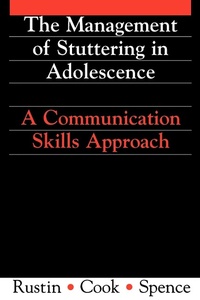
Management of Stuttering in Adolescence
A Communication Skills Approach
1st Edition
Published on 1. April 1995
Book
Paperback/Softback
224 pages
978-1-897635-60-5 (ISBN)
Description
The majority of adolescent stutters have a long history of dysfluency and as they approach the final years of their schooling they may become apprehensive about their future, particulary in relation to further education, career options, job interviews etc. The treatment of this age group is further complicated by the experience of adolescence itself, and the problems presented by this group are very different to those posed by young children or adults who stutter. This book presents a Communication Skills Approach to the treatment of adolescent stuttering which has been developed over many years of clinical experience.
More details
Series
Language
English
Place of publication
New York
United States
Target group
College/higher education
Professional and scholarly
Product notice
Paperback (trade)
Unsewn / adhesive bound
Dimensions
Height: 229 mm
Width: 152 mm
Thickness: 12 mm
Weight
315 gr
ISBN-13
978-1-897635-60-5 (9781897635605)
Copyright in bibliographic data and cover images is held by Nielsen Book Services Limited or by the publishers or by their respective licensors: all rights reserved.
Schweitzer Classification
Persons
Lena Rustin is the author of Management of Stuttering in Adolescence : A Communication Skills Approach, published by Wiley. Robert Spence is the author of Management of Stuttering in Adolescence : A Communication Skills Approach, published by Wiley.
Content
Dedication. Foreword.
Preface.
Acknowledgements.
Chapter 1 - Introduction.
The therapeutic relationship.
The nature of stuttering: an overview.
The nature of adolescence.
The adolescence who stutters.
Chapter 2 - The assessment of the adolescent who stutters.
The interview procedure.
The diagnostic interview.
Language assessemnts.
The parental interview.
Further assessemtns.
Outcome measures.
Chapter 3 - Planning interventions.
Physiological factors.
Cognitive-emotional factors.
Behavioural factors.
Environmental factors.
Four case study presentations.
Summary.
Chapter 4 - Communication skills approach.
Self-concepts and relationships.
Components of the communication skills therapy.
Chapter 5 - Intensive group management of adolescents who stutter.
Intensive course procedure.
Criteria for acceptance on the course.
Organisation of the course.
Cource assessments.
Principles of group management.
Structure of the course.
Week 2.
Chapter 6 - Environemntal influences.
Family involvement.
The role of the speech and language therapist.
Child-rearing styles.
Family interventions.
Parent-centred sessions.
Strategies for intervention.
Intervention within the school setting.
Chapter 7 - Language impairment and the adolescent who stutters - Claire Toppintg.
Assessment of language skills.
Intervention.
Summary.
Appendix I Initial assessment form.
Appendix II Adolscent interview.
Appendix III Facts about stuttering.
Appendix IV Assessment booklet.
Appendix V Checklist of social skills.
Appendix VI Social communication skills.
Appendix VII Measurement of change and outcome.
Appendix VIII Measurement of change.
Appendix IX The communication skills workbook.
Appendix X Examples of self-characterisation.
Appendix XI Examples of brainstorm exercises.
Appendix XII Communication, observation, listening, praise and reinforcement.
Appendix XIII Fear of stuttering; ring of confidence.
Appendix XIV Adolescents' view of adolescence.
Appendix XV How adolescents thing parents' view adolescence.
Appendix XVI Parents' view of adolescent.
Appendix XVII Family session.
Appendix XVIII Review of communication skills course.
Reference.
Index.
Preface.
Acknowledgements.
Chapter 1 - Introduction.
The therapeutic relationship.
The nature of stuttering: an overview.
The nature of adolescence.
The adolescence who stutters.
Chapter 2 - The assessment of the adolescent who stutters.
The interview procedure.
The diagnostic interview.
Language assessemnts.
The parental interview.
Further assessemtns.
Outcome measures.
Chapter 3 - Planning interventions.
Physiological factors.
Cognitive-emotional factors.
Behavioural factors.
Environmental factors.
Four case study presentations.
Summary.
Chapter 4 - Communication skills approach.
Self-concepts and relationships.
Components of the communication skills therapy.
Chapter 5 - Intensive group management of adolescents who stutter.
Intensive course procedure.
Criteria for acceptance on the course.
Organisation of the course.
Cource assessments.
Principles of group management.
Structure of the course.
Week 2.
Chapter 6 - Environemntal influences.
Family involvement.
The role of the speech and language therapist.
Child-rearing styles.
Family interventions.
Parent-centred sessions.
Strategies for intervention.
Intervention within the school setting.
Chapter 7 - Language impairment and the adolescent who stutters - Claire Toppintg.
Assessment of language skills.
Intervention.
Summary.
Appendix I Initial assessment form.
Appendix II Adolscent interview.
Appendix III Facts about stuttering.
Appendix IV Assessment booklet.
Appendix V Checklist of social skills.
Appendix VI Social communication skills.
Appendix VII Measurement of change and outcome.
Appendix VIII Measurement of change.
Appendix IX The communication skills workbook.
Appendix X Examples of self-characterisation.
Appendix XI Examples of brainstorm exercises.
Appendix XII Communication, observation, listening, praise and reinforcement.
Appendix XIII Fear of stuttering; ring of confidence.
Appendix XIV Adolescents' view of adolescence.
Appendix XV How adolescents thing parents' view adolescence.
Appendix XVI Parents' view of adolescent.
Appendix XVII Family session.
Appendix XVIII Review of communication skills course.
Reference.
Index.