

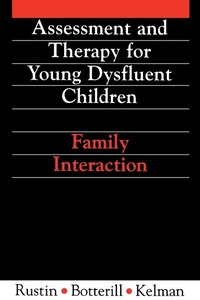
Assessment and Therapy for Young Dysfluent Children
Family Interaction
1st Edition
Published on 1. June 1995
Book
Paperback/Softback
192 pages
978-1-897635-55-1 (ISBN)
Description
Clinicians continue to be anxious about the assessment and treatment of dysfluency, but all the evidence suggests that early intervention is of primary importance in preventing long-term chronic stuttering. This practical programme aims to provide the means to assess the child's speech and language and the family life-style, to identify the children at risk and to plan appropriate treatment for the child concerned.
More details
Series
Language
English
Place of publication
New York
United States
Target group
College/higher education
Professional and scholarly
Product notice
Paperback (trade)
Unsewn / adhesive bound
Dimensions
Height: 234 mm
Width: 156 mm
Thickness: 11 mm
Weight
301 gr
ISBN-13
978-1-897635-55-1 (9781897635551)
Copyright in bibliographic data and cover images is held by Nielsen Book Services Limited or by the publishers or by their respective licensors: all rights reserved.
Schweitzer Classification
Persons
Lena Rustin is the author of Assessment and Therapy for Young Dysfluent Children: Family Interaction, published by Wiley. Elaine Kelman is the author of Assessment and Therapy for Young Dysfluent Children: Family Interaction, published by Wiley.
Content
Acknowledgements vii Note to readers vii
Foreword ix
Chapter 1 Introduction 1
Onset and development of stuttering 1
Remission 2
Normal dysfluency or early stuttering? 2
Variability 3
A theoretical framework 4
Physiological factors 5
Linguistic factors 7
Environmental/sociocultural factors 8
Psychological and emotional factors 10
Summary 12
Chapter 2 Child Assessment 13
Introduction 13
Child assessment 14
General behavior 16
Cognitive skills 18
Language 19
Social skills 27
Dysfluency 30
Child interview-attitudes 36
Chapter 3 Assessment of Parent-Child Interaction 42
Introduction 42
Interaction analysis 43
Selection of interaction therapy goals 53
Chapter 4 The Parent Interview 58
Introduction 58
The Interview 59
Setting the scene 61
Introducing the interview 61
Parent interview 62
Summary 78
Chapter 5 The Formulation 79
Physiological factors 81
Linguistic factors 82
Environmental/sociocultural factors 82
Psychological/emotional factors 82
Recommendations for therapy 86
Chapter 6 Interaction Therapy 97
Introduction 97
Structure of therapy 97
First therapy session 98
Session format 100
Consolidation period 106
Review 107
Examples of interaction therapy techniques 107
Summary 113
Chapter 7 Family Issues 114
Introduction 114
Environmental issues 115
Emotional issues 123
Summary 132
Chapter 8 Direct Treatment of the Child 133
Direct fluency therapy 133
Language therapy for the dysfluent child 137
Phonological therapy for the dysfluent child 138
Summary 139
Appendix I Child Assessment 141
Appendix Il Picture Material 149
Appendix III Parent Interview 151
Appendix IV The Summary Chart 163
Appendix V Generally Accepted Facts of Stuttering 164
Appendix VI Special Time - Instruction Sheet 165
Appendix VII Five Minutes Special Time Task Sheet 166
References 168
Index 175
Foreword ix
Chapter 1 Introduction 1
Onset and development of stuttering 1
Remission 2
Normal dysfluency or early stuttering? 2
Variability 3
A theoretical framework 4
Physiological factors 5
Linguistic factors 7
Environmental/sociocultural factors 8
Psychological and emotional factors 10
Summary 12
Chapter 2 Child Assessment 13
Introduction 13
Child assessment 14
General behavior 16
Cognitive skills 18
Language 19
Social skills 27
Dysfluency 30
Child interview-attitudes 36
Chapter 3 Assessment of Parent-Child Interaction 42
Introduction 42
Interaction analysis 43
Selection of interaction therapy goals 53
Chapter 4 The Parent Interview 58
Introduction 58
The Interview 59
Setting the scene 61
Introducing the interview 61
Parent interview 62
Summary 78
Chapter 5 The Formulation 79
Physiological factors 81
Linguistic factors 82
Environmental/sociocultural factors 82
Psychological/emotional factors 82
Recommendations for therapy 86
Chapter 6 Interaction Therapy 97
Introduction 97
Structure of therapy 97
First therapy session 98
Session format 100
Consolidation period 106
Review 107
Examples of interaction therapy techniques 107
Summary 113
Chapter 7 Family Issues 114
Introduction 114
Environmental issues 115
Emotional issues 123
Summary 132
Chapter 8 Direct Treatment of the Child 133
Direct fluency therapy 133
Language therapy for the dysfluent child 137
Phonological therapy for the dysfluent child 138
Summary 139
Appendix I Child Assessment 141
Appendix Il Picture Material 149
Appendix III Parent Interview 151
Appendix IV The Summary Chart 163
Appendix V Generally Accepted Facts of Stuttering 164
Appendix VI Special Time - Instruction Sheet 165
Appendix VII Five Minutes Special Time Task Sheet 166
References 168
Index 175