

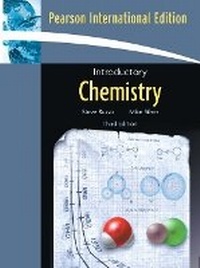
Introductory Chemistry
International Edition
3rd Edition
Published on 13. February 2007
Book
Paperback/Softback
864 pages
978-0-321-49376-7 (ISBN)
Description
Introductory Chemistry, Third Edition helps students master the quantitative skills and conceptual understanding they need to gain a deep understanding of chemistry. Unlike other books on the market that emphasize rote memory of problem-solving algorithms, Introductory Chemistry takes a conceptual approach with the idea that focusing on the concepts behind chemical equations helps students become more proficient problem solvers.
The Third Edition retains the engaging narrative and stunning illustrations that have made Russo/Silver so popular with students, while adding a powerful new media package and expanded problem-solving pedagogy designed to help students master the material. An Audible (TM) MP3 workbook allows busy students to study on the go, interactive "clicker" questions written specifically for the Third Edition enable faculty to quiz and test students during lecture, and InterAct Math exercises on the text-specific website help students get up to speed on important quantitative topics. New end-of-chapter visualization and group problems foster student understanding and collaboration, while hundreds of new worked examples and problems provide students more practice opportunity than ever before.
The Third Edition retains the engaging narrative and stunning illustrations that have made Russo/Silver so popular with students, while adding a powerful new media package and expanded problem-solving pedagogy designed to help students master the material. An Audible (TM) MP3 workbook allows busy students to study on the go, interactive "clicker" questions written specifically for the Third Edition enable faculty to quiz and test students during lecture, and InterAct Math exercises on the text-specific website help students get up to speed on important quantitative topics. New end-of-chapter visualization and group problems foster student understanding and collaboration, while hundreds of new worked examples and problems provide students more practice opportunity than ever before.
More details
Edition
3rd edition
Language
English
Place of publication
United States
Publishing group
Pearson Education (US)
Target group
Professional and scholarly
Dimensions
Height: 216 mm
Width: 276 mm
Thickness: 30 mm
Weight
1766 gr
ISBN-13
978-0-321-49376-7 (9780321493767)
Copyright in bibliographic data and cover images is held by Nielsen Book Services Limited or by the publishers or by their respective licensors: all rights reserved.
Schweitzer Classification
Other editions
New editions
Book
10/2010
4th Edition
Pearson
€146.07
Article exhausted; check for reprint
Persons
Steve Russo is a Senior Lecturer in the Department of Chemistry at Cornell University and the Director of Organic Laboratories. Prior to that, he was an Assistant Professor at Indiana University. While there, he designed and implemented a state-of-the-art computer resource center for the undergraduate chemistry curriculum. He received his B.S. in chemistry from St. Francis College and his Ph.D. in physical organic chemistry from Cornell University. He is a member of the American Chemical Society and has been a recipient of the Dupont Teaching Award, Clark Teaching Award, and the Amoco Distinguished Teaching Award.
Mike Silver is a Professor of Chemistry at Hope College. He received his B.S. in chemistry from Fairleigh Dickinson University and his Ph.D. in inorganic chemistry from Cornell University. He is a member of the American Chemical Society, past president of the West Michigan Section, and a member of the Council of Undergraduate Research. He has received the Camille and Henry Dreyfus Teacher-Scholar Award for excellence in teaching and research and the Provost's Award for Teaching Excellence. Currently he is involved in collaborative research with the Dow Corning Chemical Company.
Mike Silver is a Professor of Chemistry at Hope College. He received his B.S. in chemistry from Fairleigh Dickinson University and his Ph.D. in inorganic chemistry from Cornell University. He is a member of the American Chemical Society, past president of the West Michigan Section, and a member of the Council of Undergraduate Research. He has received the Camille and Henry Dreyfus Teacher-Scholar Award for excellence in teaching and research and the Provost's Award for Teaching Excellence. Currently he is involved in collaborative research with the Dow Corning Chemical Company.
Content
What Is Chemistry?
The Numerical Side of Chemistry
The Evolution of Atomic Theory
The Modern Model of the Atom 1
Chemical Bonding and Nomenclature
The Shape of Molecules
Chemical Reactions
Stoichiometry and the Mole
The Transfer of Electrons from One Atom to Another in a Chemical Reaction
Intermolecular Forces and the Phases of Matter
What If There Were No Intermolecular Forces?
The Ideal Gas Solutions
When Reactants Turn into Products
Chemical Equilibrium
Electrolytes, Acids, and Bases
Nuclear Chemistry
The Chemistry of Carbon
Synthetic and Biological Polymers
The Numerical Side of Chemistry
The Evolution of Atomic Theory
The Modern Model of the Atom 1
Chemical Bonding and Nomenclature
The Shape of Molecules
Chemical Reactions
Stoichiometry and the Mole
The Transfer of Electrons from One Atom to Another in a Chemical Reaction
Intermolecular Forces and the Phases of Matter
What If There Were No Intermolecular Forces?
The Ideal Gas Solutions
When Reactants Turn into Products
Chemical Equilibrium
Electrolytes, Acids, and Bases
Nuclear Chemistry
The Chemistry of Carbon
Synthetic and Biological Polymers