

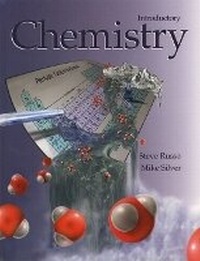
Introductory Chemistry
A Conceptual Focus
Published on 7. February 2000
Book
Paperback/Softback
610 pages
978-0-321-01525-9 (ISBN)
Description
Introductory Chemistry: A Conceptual Focus teaches students to understand the core concepts of chemistry and to apply this understanding to solve quantitative and qualitative problems. The text consistently engages students in active learning through embedded Workpatches, abundant visual depictions, Practice Problems, and attention-getting applications, built right into the narrative. Through the authors' friendly, direct approach and the focus on comprehension of core concepts, students gain confidence in their ability, retain more of what they learn, and are freed from dependence on rote mathematical manipulation.
More details
Language
English
Place of publication
United States
Publishing group
Pearson Education (US)
Target group
Professional and scholarly
Dimensions
Height: 284 mm
Width: 223 mm
Thickness: 29 mm
Weight
1652 gr
ISBN-13
978-0-321-01525-9 (9780321015259)
Copyright in bibliographic data and cover images is held by Nielsen Book Services Limited or by the publishers or by their respective licensors: all rights reserved.
Schweitzer Classification
Other editions
New editions
Steve Russo | Michael E. Silver
Introductory Chemistry
Book
12/2001
2nd Edition
Pearson
€64.47
Article exhausted; check for reprint
Content
1. What Is Chemistry?
2. The Numerical Side of Chemistry.
3. The Evolution of Atomic Theory.
4. The Modern Model of the Atom.
5. Bonding Between Atoms.
6. The Structure of Molecules.
7. Chemical Reactions.
8. The Transfer of Electrons Between Atoms in a Chemical Reaction.
9. Intermolecular Forces and the Phases of Matter.
10. Solutions.
11. When Reactants Turn Into Products.
12. Chemical Equilibrium.
13. Electrolytes, Acids, and Bases.
14. Nuclear Chemistry.
15. The Chemistry of Carbon.
16. Polymers: Synthetic and Biological.
Glossary.
Selected Answers.
Index.
2. The Numerical Side of Chemistry.
3. The Evolution of Atomic Theory.
4. The Modern Model of the Atom.
5. Bonding Between Atoms.
6. The Structure of Molecules.
7. Chemical Reactions.
8. The Transfer of Electrons Between Atoms in a Chemical Reaction.
9. Intermolecular Forces and the Phases of Matter.
10. Solutions.
11. When Reactants Turn Into Products.
12. Chemical Equilibrium.
13. Electrolytes, Acids, and Bases.
14. Nuclear Chemistry.
15. The Chemistry of Carbon.
16. Polymers: Synthetic and Biological.
Glossary.
Selected Answers.
Index.