

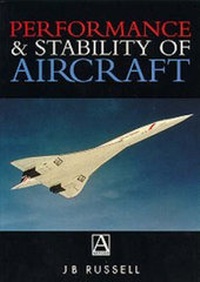
Performance and Stability of Aircraft
Published on 2. August 1996
Book
Paperback/Softback
294 pages
978-0-340-63170-6 (ISBN)
Description
The performance, stability, control and response of aircraft are key areas of aeronautical engineering. This book provides a comprehensive overview to the underlying theory and application of what are often perceived to be difficult topics.
Initially it introduces the reader to the fundamental concepts underlying performance and stability, including lift characteristics and estimation of drag, before moving on to a more detailed analysis of performance in both level and climbing flight. Pitching motion is then described followed by a detailed discussion of all aspects of both lateral and longitudinal stability and response. It finishes with an examination of inertial cross-coupling and automatic control and stabilization. The student is helped to think in three dimensions throughout the book by the use of illustrative examples. The progression from one degree of freedom to six degrees of freedom is gradually introduced. The result is an approach dealing specifically with all aspects of performance, stability and control that fills a gap in the current literature. It will be essential reading for all those embarking on degree level courses in aeronautical engineering and will be of interest to all with an interest in stability and dynamics, including those in commercial flying schools who require an insight into the performance of their aircraft.
Initially it introduces the reader to the fundamental concepts underlying performance and stability, including lift characteristics and estimation of drag, before moving on to a more detailed analysis of performance in both level and climbing flight. Pitching motion is then described followed by a detailed discussion of all aspects of both lateral and longitudinal stability and response. It finishes with an examination of inertial cross-coupling and automatic control and stabilization. The student is helped to think in three dimensions throughout the book by the use of illustrative examples. The progression from one degree of freedom to six degrees of freedom is gradually introduced. The result is an approach dealing specifically with all aspects of performance, stability and control that fills a gap in the current literature. It will be essential reading for all those embarking on degree level courses in aeronautical engineering and will be of interest to all with an interest in stability and dynamics, including those in commercial flying schools who require an insight into the performance of their aircraft.
Reviews / Votes
"This is a book that students will like and buy." --The Aeronautical JournalMore details
Language
English
Place of publication
Oxford
United Kingdom
Publishing group
Elsevier Science & Technology
Target group
Professional and scholarly
Essential reading for aeronautical engineering students. Also of interest to engineering undergraduates studying stability/dynamics and those studying for commercial flying exams.
Dimensions
Height: 229 mm
Width: 152 mm
Weight
590 gr
ISBN-13
978-0-340-63170-6 (9780340631706)
Copyright in bibliographic data and cover images is held by Nielsen Book Services Limited or by the publishers or by their respective licensors: all rights reserved.
Schweitzer Classification
Person
Content
Performance in Level FlightPerformance - Other Flight ManoeuvresIntroduction to Stability and ControlElementary Treatment of Pitching MotionLateral Static Stability and ControlRevision and Extension of DynamicsEquations of Motion of a Rigid AircraftLongitudinal Dynamic StabilityLongitudinal ResponseLateral Dynamic Stability and ResponseEffects of Inertial Cross-CouplingIntroduction to Automatic Control and Stabization