

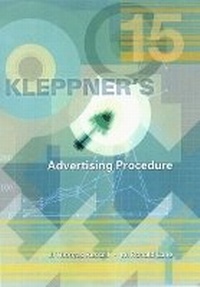
Kleppner's Advertising Procedure
15th Edition
Published on 31. August 2001
Book
Hardback
697 pages
978-0-13-032877-9 (ISBN)
Description
For introductory-level courses in Advertising offered by communications, journalism, and marketing departments.
This classic text introduces advertising as both an art and science while providing a broad overview of advertising issues and functions. Covering the entire field of advertising with special emphasis in IMC and new technologies, it places advertising within a contemporary, integrated marketing framework to demonstrate how advertising must be coordinated with all other aspects of marketing communications.
This classic text introduces advertising as both an art and science while providing a broad overview of advertising issues and functions. Covering the entire field of advertising with special emphasis in IMC and new technologies, it places advertising within a contemporary, integrated marketing framework to demonstrate how advertising must be coordinated with all other aspects of marketing communications.
More details
Edition
15th edition
Language
English
Place of publication
United States
Publishing group
Pearson Education (US)
Target group
Professional and scholarly
Dimensions
Height: 283 mm
Width: 218 mm
Thickness: 32 mm
Weight
1667 gr
ISBN-13
978-0-13-032877-9 (9780130328779)
Copyright in bibliographic data and cover images is held by Nielsen Book Services Limited or by the publishers or by their respective licensors: all rights reserved.
Schweitzer Classification
Other editions
New editions
W. Ronald Lane | Karen Whitehill King | J. Thomas Russell
Kleppner's Advertising Procedure
United States Edition
Book
09/2004
16th Edition
Pearson
€61.89
Article exhausted; check for reprint
Previous edition
J. Thomas Russell | Ron Lane
Kleppner's Advertising Procedure
Book
08/1998
14th Edition
Pearson
€47.03
Article exhausted; check for reprint
Persons
OTTO KLEPPNER (1899-7982)
A graduate of New York University, Otto Kleppner started out in advertising as a copywriter. After several such jobs, he became advertising manager at Prentice Hall, where he began to think that he, too, "could write a book." Some years later, he also thought that he could run his own advertising agency, and both ideas materialized eminently. His highly successful agency handled advertising for leading accounts (Dewar's Scotch Whisky, I. W Harper Bourbon and other Schenley brands, Saab Cars, Doubleday Book Clubs, and others). His book became a bible for advertising students, and his writings have been published in eight languages.
Active in the American Association of Advertising Agencies, Mr. Kleppner served as a director, a member of the Control Committee, chairman of the Committee of Government, Public and Educator Relations, and a governor of the New York Council. He was awarded the Nichols Cup (now the Crain Cup) for distinguished service to the teaching of advertising.
J. THOMAS RUSSELL
Thomas Russell is Phil Landrum Professor of Communications and Dean of the Athens Center of Piedmont College, Demorest, Georgia. He also is Dean Emeritus of the College of Journalism and Mass Communication at the University of Georgia. Tom received his Ph.D. in communications from the University of Illinois and has taught and conducted research in a number of areas of advertising and marketing. He was formerly editor of the Journal of Advertising.
In addition to his academic endeavor, Tom has worked as a retail copywriter as well as been a principal in his own advertising agency. He is a member of a number of academic, professional, and civic organizations. He also has served as a judge and faculty member for the Institute of Advanced Advertising Studies sponsored by the American Association of Advertising Agencies.
W. RONALD LANE
Ron has worked in most aspects of advertising. He began in advertising and promotion for a drug manufacturer. Ron has worked in creative and account services for clients including Coca-Cola, National Broiler Council, Minute-Maid, and Callaway Gardens Country Store.
He is a professor of advertising at the University of Georgia and has served as advertising manager of the Journal of Advertising. He was coordinator of the Institute of Advanced Advertising Studies sponsored by the American Association of Advertising Agencies for six years. He is also a partner in SLRS Communications, an advertising-marketing agency.
Currently, Ron is a member of the American Advertising Federation's (AAF) Academic Division, Executive Committee. He has been the AAF Academic Division Chair and served as a member of the AAF Board of Directors, Council of Governors, and Executive Committee. He has been an ADDY Awards judge numerous times and has been a member of the Advertising Age Creative Workshop faculty. He is a member of the Atlanta Advertising Club, American Academy of Advertising, American Marketing Association, and the ACEJMC Accrediting Council.
A graduate of New York University, Otto Kleppner started out in advertising as a copywriter. After several such jobs, he became advertising manager at Prentice Hall, where he began to think that he, too, "could write a book." Some years later, he also thought that he could run his own advertising agency, and both ideas materialized eminently. His highly successful agency handled advertising for leading accounts (Dewar's Scotch Whisky, I. W Harper Bourbon and other Schenley brands, Saab Cars, Doubleday Book Clubs, and others). His book became a bible for advertising students, and his writings have been published in eight languages.
Active in the American Association of Advertising Agencies, Mr. Kleppner served as a director, a member of the Control Committee, chairman of the Committee of Government, Public and Educator Relations, and a governor of the New York Council. He was awarded the Nichols Cup (now the Crain Cup) for distinguished service to the teaching of advertising.
J. THOMAS RUSSELL
Thomas Russell is Phil Landrum Professor of Communications and Dean of the Athens Center of Piedmont College, Demorest, Georgia. He also is Dean Emeritus of the College of Journalism and Mass Communication at the University of Georgia. Tom received his Ph.D. in communications from the University of Illinois and has taught and conducted research in a number of areas of advertising and marketing. He was formerly editor of the Journal of Advertising.
In addition to his academic endeavor, Tom has worked as a retail copywriter as well as been a principal in his own advertising agency. He is a member of a number of academic, professional, and civic organizations. He also has served as a judge and faculty member for the Institute of Advanced Advertising Studies sponsored by the American Association of Advertising Agencies.
W. RONALD LANE
Ron has worked in most aspects of advertising. He began in advertising and promotion for a drug manufacturer. Ron has worked in creative and account services for clients including Coca-Cola, National Broiler Council, Minute-Maid, and Callaway Gardens Country Store.
He is a professor of advertising at the University of Georgia and has served as advertising manager of the Journal of Advertising. He was coordinator of the Institute of Advanced Advertising Studies sponsored by the American Association of Advertising Agencies for six years. He is also a partner in SLRS Communications, an advertising-marketing agency.
Currently, Ron is a member of the American Advertising Federation's (AAF) Academic Division, Executive Committee. He has been the AAF Academic Division Chair and served as a member of the AAF Board of Directors, Council of Governors, and Executive Committee. He has been an ADDY Awards judge numerous times and has been a member of the Advertising Age Creative Workshop faculty. He is a member of the Atlanta Advertising Club, American Academy of Advertising, American Marketing Association, and the ACEJMC Accrediting Council.
Content
I. THE PLACE OF ADVERTISING.
1. Background of Today's Advertising.
Beginnings. Origins of Newspaper Advertising. Three Momentous Decades: 1870-1900. America Enters the Twentieth Century. Advertising Comes of Age. The War Advertising Council.
2. Roles of Advertising.
Advertising and Profitability. Advertising, The Marketing Mix, and Integrated Marketing. Advertising as an Institution. Advertising to Diverse Publics. A Good Product that Meets a Perceived Need. Variations in the Importance of Advertising. Advertising and the Marketing Channel. Advertising to the Consumer. Advertising to Business and Professions. The Categories of Business Advertising. Nonproduct Advertising.
II. PLANNING THE ADVERTISING.
3. The Advertising Spiral and Brand Planning.
Pioneering Stage. The Competitive Stage. The Retentive Stage. The Advertising Spiral. The Retentive Stage.
4. Target Marketing.
Defining Prime Prospects. Generational Marketing. Planning the Advertising. Positioning. How to Approach a Positioning Problem. Profile of the Buyer. Beyond Demographics: Psychographics.
III. MANAGING THE ADVERTISING.
5. The Advertising Agency, Media Services, and Other Services.
The Agency. How Agencies Developed. The Full-Service Agency. The Traditional Agency Organization. The Reengineering of the Agency. Global Agencies and Global Markets. Competing Accounts. Client-Agency Relationship Length. Agency of Record. Agency Multiple Offices. Agency Networks. Other Advertising Services. Forms of Agency Compensation. Other Services.
6. The Advertiser's Marketing/Advertising Operation.
Marketing Services System. Integrated Marketing Brand Management. Corporate Restructuring. Setting the Budget. The Changing Marketing Environment. Managing Brands. Agency-Client Relationships. Appraising National Advertising. Changes in Marketing.
IV. MEDIA.
7. Basic Media Strategy.
Organization of the Media Function. The New Media Function. Media Unbundling and Independent Media-Buying Firms. Basic Media Strategy. Putting It all Together: The Media Plan. Communication Requirements and Creative Elements. Geography-Where Is the Product Distributed? Media Tactics: Reach, Frequency, Continuity, and Budget. The Media Schedule.
8. Using Television.
Television as an Advertising Medium. The Rating-Point System. Share of Audience. The Many Faces of Television. Network Television. Spot Television. Television Syndication. Syndicated Rating Services.
9. Using Radio.
The Contemporary Radio Industry. Features and Advantages of Radio. Limitations and Challenges of Radio. Technical Aspects of Radio. Selling Radio Commercial Time. Radio Ratings Services. Buying Radio. Using Radio Ratings.
10. Using Newspapers.
The National Newspaper. Marketing the Newspaper. Newspaper Inserts, Zoning, and Total Market Coverage. Circulation Analysis. Newspaper-Distributed Magazine Supplements. The Ethnic and Foreign Language Press. Weekly Newspaper.
11. Using Magazines.
Advertising and Consumer Magazines. Selectivity. Magazines as National Advertising Medium. Features of Magazine Advertising. Magazine Elements. How Space Is Sold. Magazine Circulation. Measuring Magazine Audiences. Consumer Magazines-Summing Up. The Business Press an Business-to-Business Advertising. The Organization of the Farm Press.
12. Out-of-Home Advertising.
Strategic Advertising and Out-of-Home. Outdoor Regulation and Public Opinion. Forms of Outdoor Advertising. The Elements of Outdoor. Buying Outdoor. Verifying. Transit Advertising. Shelter Advertising.
13. Direct-Response and Internet Advertising.
Direct Response and the Internet. The Internet and Marketing Research. The Wireless and Broadband Revolution. The Role of the Internet in Advertising and Marketing. Direct-Response Marketing: An Overview. Database Marketing. The Direct-Response Industry. Direct-Mail Advertising.
14. Sales Promotion.
Promotion and Advertising. Forms of Sales Promotion. Point-of-Purchase Advertising. Specialty Advertising. Coupons. Sampling. Event Marketing/Product Licensing. Sweepstakes and Contests. Cooperative Advertising. Controlling Co-Op Dollars.
V. CREATING THE ADVERTISING.
15. Research in Advertising.
Research Is an Informational Tool. The Right Kind of Research. Public Attitude Toward Survey Research. Advanced Analytics. Strategic or Account Planners. Agency Futurist Departments Versus Account Planners. What Kind o Research is Needed? The Series of Research Steps in Advertising. Testing Creative Research.
16. Creating the Copy.
A Challenge and Creative Vision. Another Brilliant Simple Idea was Created for the Economist. How Do We Create Great Advertising? The Nature and Use of Appeals. Great Advertising Elements. Structure of an Advertisement. Copy Style. Slogans. The Creative Work Plan. Guidelines for Creating an Ad.
17. The Total Concept: Words and Visuals.
Ideas Come from the Left and Right Brain. The Creative Team. The Idea. The Creative Leap.
18. Print Production.
Digital Advertising and Production. Prepress Process. Print Production. Production Data. Production Planning and Scheduling. Selecting the Printing Process. Understanding Typography. Type and Reading. Typefaces. Type Fonts and Families. Typesetting. Electronic Mechanical and Artwork. Sending Duplicate Material. Other Production Advances.
19. The Television Commercial.
The Problems of TV. Copy Development and Production Timetable. Creating the Television Commercial. Producing the TV Commercial. Role of the Producer. Controlling the Cost of Commercial Production.
20. The Radio Commercial.
The Nature of the Medium. Flexibility, Marketability, and Promotionability. Creating the Commercial. Developing the Radio Script. Writing the Commercial. Timing of Commercials. Musical Commercials. Methods of Delivery. Producing the Radio Commercial.
21. Trademarks and Packaging.
A Little Background. What Is a Trademark? House Marks. Sevrice Marks, Certification Marks. Company and Product Names. Packaging.
22. The Complete Campaign.
Situation Analysis. Creative Objectives and Strategy. Media Objectives. Other Integrated Elements. Getting the Campaign Approved. Research-Posttests. Case History: Mary Black Memorial Hospital. Case History: Folks Southern Kitchens.
VI. OTHER ENVIRONMENTS OF ADVERTISING.
23. Retail Advertising.
Retail Branding. Consume Attitudes. Retailing in the Late 1990s. National and Retail Advertising. Types of Retail Advertising. The Retail Advertising Mix. Case History: Morgan Imports Retail Branding Magazine Campaign.
24. International Advertising.
The Multinational Corporation. The Internet and International Communication. The Development of Global Marketing and Advertising. Global Marketing and Advertising. Political and Economic Movements Toward a World Economy. The Multinational Advertising Agency. The Multinational Advertising Plan. Media Planning Procedures and Legal Considerations. Challenges for Advertising Diversity in the United States.
25. Legal and Other Restraints on Advertising.
The Federal Trade Commission. The Federal Food, Drug, and Cosmetic Act. The United States Postal Inspection Service. Advertising and the First Amendment. Advertising of Professional Services. State and Local Laws Relating to Advertising. Comparison Advertising. The Advertising Clearance Process. Self-Regulation by Industry-Wide Groups. The NAD/NARB Self-Regulation Program.
26. Economic and Social Effects of Advertising.
The Economic Role of Advertising. Economic Perspectives on Advertising. The Social Role of Advertising. Types of Advertising Criticism. Overt Use of Advertising for Social Causes. The Advertising Council. Advertising Influence on Editorial Content.
Glossary.
Index.
1. Background of Today's Advertising.
Beginnings. Origins of Newspaper Advertising. Three Momentous Decades: 1870-1900. America Enters the Twentieth Century. Advertising Comes of Age. The War Advertising Council.
2. Roles of Advertising.
Advertising and Profitability. Advertising, The Marketing Mix, and Integrated Marketing. Advertising as an Institution. Advertising to Diverse Publics. A Good Product that Meets a Perceived Need. Variations in the Importance of Advertising. Advertising and the Marketing Channel. Advertising to the Consumer. Advertising to Business and Professions. The Categories of Business Advertising. Nonproduct Advertising.
II. PLANNING THE ADVERTISING.
3. The Advertising Spiral and Brand Planning.
Pioneering Stage. The Competitive Stage. The Retentive Stage. The Advertising Spiral. The Retentive Stage.
4. Target Marketing.
Defining Prime Prospects. Generational Marketing. Planning the Advertising. Positioning. How to Approach a Positioning Problem. Profile of the Buyer. Beyond Demographics: Psychographics.
III. MANAGING THE ADVERTISING.
5. The Advertising Agency, Media Services, and Other Services.
The Agency. How Agencies Developed. The Full-Service Agency. The Traditional Agency Organization. The Reengineering of the Agency. Global Agencies and Global Markets. Competing Accounts. Client-Agency Relationship Length. Agency of Record. Agency Multiple Offices. Agency Networks. Other Advertising Services. Forms of Agency Compensation. Other Services.
6. The Advertiser's Marketing/Advertising Operation.
Marketing Services System. Integrated Marketing Brand Management. Corporate Restructuring. Setting the Budget. The Changing Marketing Environment. Managing Brands. Agency-Client Relationships. Appraising National Advertising. Changes in Marketing.
IV. MEDIA.
7. Basic Media Strategy.
Organization of the Media Function. The New Media Function. Media Unbundling and Independent Media-Buying Firms. Basic Media Strategy. Putting It all Together: The Media Plan. Communication Requirements and Creative Elements. Geography-Where Is the Product Distributed? Media Tactics: Reach, Frequency, Continuity, and Budget. The Media Schedule.
8. Using Television.
Television as an Advertising Medium. The Rating-Point System. Share of Audience. The Many Faces of Television. Network Television. Spot Television. Television Syndication. Syndicated Rating Services.
9. Using Radio.
The Contemporary Radio Industry. Features and Advantages of Radio. Limitations and Challenges of Radio. Technical Aspects of Radio. Selling Radio Commercial Time. Radio Ratings Services. Buying Radio. Using Radio Ratings.
10. Using Newspapers.
The National Newspaper. Marketing the Newspaper. Newspaper Inserts, Zoning, and Total Market Coverage. Circulation Analysis. Newspaper-Distributed Magazine Supplements. The Ethnic and Foreign Language Press. Weekly Newspaper.
11. Using Magazines.
Advertising and Consumer Magazines. Selectivity. Magazines as National Advertising Medium. Features of Magazine Advertising. Magazine Elements. How Space Is Sold. Magazine Circulation. Measuring Magazine Audiences. Consumer Magazines-Summing Up. The Business Press an Business-to-Business Advertising. The Organization of the Farm Press.
12. Out-of-Home Advertising.
Strategic Advertising and Out-of-Home. Outdoor Regulation and Public Opinion. Forms of Outdoor Advertising. The Elements of Outdoor. Buying Outdoor. Verifying. Transit Advertising. Shelter Advertising.
13. Direct-Response and Internet Advertising.
Direct Response and the Internet. The Internet and Marketing Research. The Wireless and Broadband Revolution. The Role of the Internet in Advertising and Marketing. Direct-Response Marketing: An Overview. Database Marketing. The Direct-Response Industry. Direct-Mail Advertising.
14. Sales Promotion.
Promotion and Advertising. Forms of Sales Promotion. Point-of-Purchase Advertising. Specialty Advertising. Coupons. Sampling. Event Marketing/Product Licensing. Sweepstakes and Contests. Cooperative Advertising. Controlling Co-Op Dollars.
V. CREATING THE ADVERTISING.
15. Research in Advertising.
Research Is an Informational Tool. The Right Kind of Research. Public Attitude Toward Survey Research. Advanced Analytics. Strategic or Account Planners. Agency Futurist Departments Versus Account Planners. What Kind o Research is Needed? The Series of Research Steps in Advertising. Testing Creative Research.
16. Creating the Copy.
A Challenge and Creative Vision. Another Brilliant Simple Idea was Created for the Economist. How Do We Create Great Advertising? The Nature and Use of Appeals. Great Advertising Elements. Structure of an Advertisement. Copy Style. Slogans. The Creative Work Plan. Guidelines for Creating an Ad.
17. The Total Concept: Words and Visuals.
Ideas Come from the Left and Right Brain. The Creative Team. The Idea. The Creative Leap.
18. Print Production.
Digital Advertising and Production. Prepress Process. Print Production. Production Data. Production Planning and Scheduling. Selecting the Printing Process. Understanding Typography. Type and Reading. Typefaces. Type Fonts and Families. Typesetting. Electronic Mechanical and Artwork. Sending Duplicate Material. Other Production Advances.
19. The Television Commercial.
The Problems of TV. Copy Development and Production Timetable. Creating the Television Commercial. Producing the TV Commercial. Role of the Producer. Controlling the Cost of Commercial Production.
20. The Radio Commercial.
The Nature of the Medium. Flexibility, Marketability, and Promotionability. Creating the Commercial. Developing the Radio Script. Writing the Commercial. Timing of Commercials. Musical Commercials. Methods of Delivery. Producing the Radio Commercial.
21. Trademarks and Packaging.
A Little Background. What Is a Trademark? House Marks. Sevrice Marks, Certification Marks. Company and Product Names. Packaging.
22. The Complete Campaign.
Situation Analysis. Creative Objectives and Strategy. Media Objectives. Other Integrated Elements. Getting the Campaign Approved. Research-Posttests. Case History: Mary Black Memorial Hospital. Case History: Folks Southern Kitchens.
VI. OTHER ENVIRONMENTS OF ADVERTISING.
23. Retail Advertising.
Retail Branding. Consume Attitudes. Retailing in the Late 1990s. National and Retail Advertising. Types of Retail Advertising. The Retail Advertising Mix. Case History: Morgan Imports Retail Branding Magazine Campaign.
24. International Advertising.
The Multinational Corporation. The Internet and International Communication. The Development of Global Marketing and Advertising. Global Marketing and Advertising. Political and Economic Movements Toward a World Economy. The Multinational Advertising Agency. The Multinational Advertising Plan. Media Planning Procedures and Legal Considerations. Challenges for Advertising Diversity in the United States.
25. Legal and Other Restraints on Advertising.
The Federal Trade Commission. The Federal Food, Drug, and Cosmetic Act. The United States Postal Inspection Service. Advertising and the First Amendment. Advertising of Professional Services. State and Local Laws Relating to Advertising. Comparison Advertising. The Advertising Clearance Process. Self-Regulation by Industry-Wide Groups. The NAD/NARB Self-Regulation Program.
26. Economic and Social Effects of Advertising.
The Economic Role of Advertising. Economic Perspectives on Advertising. The Social Role of Advertising. Types of Advertising Criticism. Overt Use of Advertising for Social Causes. The Advertising Council. Advertising Influence on Editorial Content.
Glossary.
Index.