

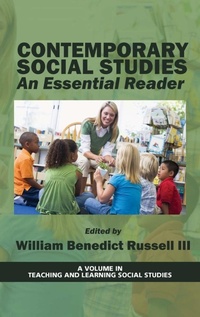
Contemporary Social Studies
An Essential Reader
Will be published approx. on 12. December 2011
Book
Hardback
616 pages
978-1-61735-672-8 (ISBN)
Description
The field of social studies is unique and complex. It is challenged by the differing perspectives related to the definition, goals, content, and purpose of social studies.
Contemporary Social Studies: An Essential Reader discusses the contemporary issues surrounding social studies education today. Contemporary Social Studies: An Essential Reader encourages and inspires readers to think. The chapters included in this volume are written by prominent scholars in the field of social studies. The collection inspires and provokes readers to reconsider and reexamine social studies and its contemporary state. Readers will explore the various critical topics that encompass contemporary social studies.
This collection provides readers with rich chapters which are sure to be cited as key works. Compelling and accessible, this collection brings to light the critical topics relevant to contemporary social studies and is sure to serve as a cornerstone and seminal text for the future.
Contemporary Social Studies: An Essential Reader discusses the contemporary issues surrounding social studies education today. Contemporary Social Studies: An Essential Reader encourages and inspires readers to think. The chapters included in this volume are written by prominent scholars in the field of social studies. The collection inspires and provokes readers to reconsider and reexamine social studies and its contemporary state. Readers will explore the various critical topics that encompass contemporary social studies.
This collection provides readers with rich chapters which are sure to be cited as key works. Compelling and accessible, this collection brings to light the critical topics relevant to contemporary social studies and is sure to serve as a cornerstone and seminal text for the future.
More details
Series
Language
English
Place of publication
Charlotte
United States
Publishing group
Emerald Publishing Inc
Target group
Professional and scholarly
Dimensions
Height: 240 mm
Width: 161 mm
Thickness: 37 mm
Weight
1080 gr
ISBN-13
978-1-61735-672-8 (9781617356728)
Copyright in bibliographic data and cover images is held by Nielsen Book Services Limited or by the publishers or by their respective licensors: all rights reserved.
Schweitzer Classification
Person
Content
Section I. Purpose and Approach.
Chapter 1. 21st Century Democratic Social and Citizenship Education: A Hybrid Perspective; Ellen Santora.
Chapter 2. Towards an Inclusive Definition of Democratic Education; Jonathan Miller-Lane.
Chapter 3. Global Education: Responding to a Changing World; Merry M. Merryfield.
Chapter 4. The Place of Global Citizenship in the Social Studies Curriculum; Anatoli Rapoport.
Chapter 5. Character, Moral, and Values Education: The Foundation of Effective Citizenship; Stewart Waters and William Benedict Russell III.
Section II. Curriculum, Content, & Standards.
Chapter 6. History: From Learning Narratives to Thinking Historically; Keith C. Barton.
Chapter 7. Geography Education: Making Sense of Our World with Spatial Relationships; Reese H. Todd.
Chapter 8. Standards-Based Educational Reform and Social Studies Education: A Critical Introduction; Kevin D. Vinson, E Wayne Ross, and Melissa B. Wilson.
Chapter 9. The Marginalization of Social Studies in the Elementary Grades: An Overview; Beverly Milner (Lee) Bisland.
Section III. Diversity & Perspective.
Chapter 10. Culturally Responsive Social Studies Teaching: Models of Theory into Practice; Paul G. Fitchett and Tina L. Heafner.
Chapter 11. Race and Social Studies; Prentice T. Chandler and Douglas McKnight.
Chapter 12. GLBTQ Issues in the Social Studies; J. B. Mayo Jr.
Chapter 13. Gender and Social Studies: Are We There Yet? Christine Woyshner.
Chapter 14. Building the Bridge between Social Studies and Special Education: Perspectives and Practices; Timothy Lintner and Windy Schweder.
Chapter 15. English Language Learners (ELLs) and Social Studies; Jason O'Brien.
Section IV. Pedagogy.
Chapter 16. Reading, Democracy and Secondary Social Studies Education; Michelle Reidel and Christine Draper.
Chapter 17. Situating the Nation: History Pedagogy for the 21st Century; Kyle A. Greenwalt and Patrick N. Leahy.
Chapter 18. Pedagogical Paradox of Social Studies: Teaching for Intellectual and Emotional Learning; Christy Folsom.
Chapter 19. Facilitating Discussions in Social Studies Classrooms; Anne-Lise Halvorsen.
Chapter 20. Engagement in the Social Studies: Using Experiential Learning in the Social Studies Classroom; Brad Burenheide.
Chapter 21. Social Studies Pedagogy; Thomas Turner, Jeremy Clabough, Sarah Philpott, and Lance McConkey.
Section V. Media, Technology, and Teacher Education.
Chapter 22. Media and Popular Culture; Cameron White and Trenia Walker.
Chapter 23. Internet Literacies for Active Citizenship and Democratic Life: In Search of the Intersection; David Hicks, Stephanie van Hover, Elizabeth Yeager Washington, and John K. Lee.
Chapter 24. Using Web 2.0 to Transform a Brick & Mortar School into a Participatory Media Rich Civic Learning Environment; Joseph O'Brien.
Chapter 25. Broadening Social Studies Curricula: Integrating Global Education in a Teacher Education Program; Lydiah Nganga and John Kambutu.
Chapter 26. Examining Teacher Development: The Role of Teacher Thinking, Observation, and Reflection; John Sturtz and Kevin Hessberg.
Chapter 27. A Capstone Course in a Master's Social Studies Program in an Age of Accountability and Testing: A Case Study; Jesus Garcia, Paula S. McMillen, and David To.
Chapter 1. 21st Century Democratic Social and Citizenship Education: A Hybrid Perspective; Ellen Santora.
Chapter 2. Towards an Inclusive Definition of Democratic Education; Jonathan Miller-Lane.
Chapter 3. Global Education: Responding to a Changing World; Merry M. Merryfield.
Chapter 4. The Place of Global Citizenship in the Social Studies Curriculum; Anatoli Rapoport.
Chapter 5. Character, Moral, and Values Education: The Foundation of Effective Citizenship; Stewart Waters and William Benedict Russell III.
Section II. Curriculum, Content, & Standards.
Chapter 6. History: From Learning Narratives to Thinking Historically; Keith C. Barton.
Chapter 7. Geography Education: Making Sense of Our World with Spatial Relationships; Reese H. Todd.
Chapter 8. Standards-Based Educational Reform and Social Studies Education: A Critical Introduction; Kevin D. Vinson, E Wayne Ross, and Melissa B. Wilson.
Chapter 9. The Marginalization of Social Studies in the Elementary Grades: An Overview; Beverly Milner (Lee) Bisland.
Section III. Diversity & Perspective.
Chapter 10. Culturally Responsive Social Studies Teaching: Models of Theory into Practice; Paul G. Fitchett and Tina L. Heafner.
Chapter 11. Race and Social Studies; Prentice T. Chandler and Douglas McKnight.
Chapter 12. GLBTQ Issues in the Social Studies; J. B. Mayo Jr.
Chapter 13. Gender and Social Studies: Are We There Yet? Christine Woyshner.
Chapter 14. Building the Bridge between Social Studies and Special Education: Perspectives and Practices; Timothy Lintner and Windy Schweder.
Chapter 15. English Language Learners (ELLs) and Social Studies; Jason O'Brien.
Section IV. Pedagogy.
Chapter 16. Reading, Democracy and Secondary Social Studies Education; Michelle Reidel and Christine Draper.
Chapter 17. Situating the Nation: History Pedagogy for the 21st Century; Kyle A. Greenwalt and Patrick N. Leahy.
Chapter 18. Pedagogical Paradox of Social Studies: Teaching for Intellectual and Emotional Learning; Christy Folsom.
Chapter 19. Facilitating Discussions in Social Studies Classrooms; Anne-Lise Halvorsen.
Chapter 20. Engagement in the Social Studies: Using Experiential Learning in the Social Studies Classroom; Brad Burenheide.
Chapter 21. Social Studies Pedagogy; Thomas Turner, Jeremy Clabough, Sarah Philpott, and Lance McConkey.
Section V. Media, Technology, and Teacher Education.
Chapter 22. Media and Popular Culture; Cameron White and Trenia Walker.
Chapter 23. Internet Literacies for Active Citizenship and Democratic Life: In Search of the Intersection; David Hicks, Stephanie van Hover, Elizabeth Yeager Washington, and John K. Lee.
Chapter 24. Using Web 2.0 to Transform a Brick & Mortar School into a Participatory Media Rich Civic Learning Environment; Joseph O'Brien.
Chapter 25. Broadening Social Studies Curricula: Integrating Global Education in a Teacher Education Program; Lydiah Nganga and John Kambutu.
Chapter 26. Examining Teacher Development: The Role of Teacher Thinking, Observation, and Reflection; John Sturtz and Kevin Hessberg.
Chapter 27. A Capstone Course in a Master's Social Studies Program in an Age of Accountability and Testing: A Case Study; Jesus Garcia, Paula S. McMillen, and David To.