

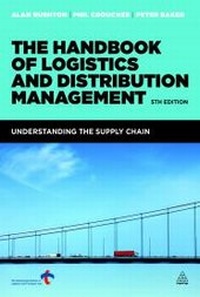
The Handbook of Logistics and Distribution Management
Understanding the Supply Chain
5th Edition
Published on 3. January 2014
Book
Paperback/Softback
720 pages
978-0-7494-6627-5 (ISBN)
Description
The Handbook of Logistics and Distribution Management provides an introduction to fundamental elements of modern logistics and distribution. It explores all stages of the supply chain from raw materials through to the final distribution of the finished product. This handbook covers vital areas, including: concepts of logistics and distribution; planning for logistics; procurement and inventory decisions; warehousing and storage; freight transport; and operational management.
The 5th edition of The Handbook of Logistics and Distribution Management has been radically updated to reflect the latest advances in logistics and covers new topics studied on academic and professional courses. There are brand new chapters on humanitarian logistics, multichannel fulfilment and reverse logistics, as well as detailed discussion of the latest trends and issues that confront logistics.
The Handbook of Logistics and Distribution Management is a practical handbook and an essential reference for logistics and supply chain practitioners as well as students undertaking professional examinations and degrees in the field of logistics and supply chain.
The 5th edition of The Handbook of Logistics and Distribution Management has been radically updated to reflect the latest advances in logistics and covers new topics studied on academic and professional courses. There are brand new chapters on humanitarian logistics, multichannel fulfilment and reverse logistics, as well as detailed discussion of the latest trends and issues that confront logistics.
The Handbook of Logistics and Distribution Management is a practical handbook and an essential reference for logistics and supply chain practitioners as well as students undertaking professional examinations and degrees in the field of logistics and supply chain.
Reviews / Votes
"Now in its fourth edition, The Handbook of Logistics and Distribution Management provides invaluable technical information and is written in an accessible and informative manner. The new chapters on supply chain segmentation, air transport, maritime transport and outsourcing are a welcome addition. I would recommend this as one of the most readable books available for logistics and supply chain students and professionals around the world." * Dorothea Carvalho, Director of Professional Development, CILT * "A whopping 720 pages filled with a wealth of information on all aspects of the supply chain, from raw materials through to final distribution of the finished product." * Martijn Graat, Logisticsmatter.com * "This book defines the fundamental functions and elements of logistics and distribution, and provides a broad strategic framework for planning. Because planning strategies, distribution methods, and retail channels are constantly changing, supply chain and logistics managers will find this a good up-to-date reference tool, with actionable information and suggestions that they can apply today." * Jason McDowell, Inbound Logistics * "Intended, both as a reference for current logistics managers as well as a text for students, this updated edition includes new chapters on supply chain segmentation, air and marine transport, and the ever frequent decision to outsource. The latter can take place in a variety of areas, grouped here into the categories of warehousing, transport, and value added services. Although published in the UK and covering European Union legislation, most of the book is internationally applicable, treating standard issues of supply chain management." * Book News, Inc. * "This book does exactly what it says on the tin. It is perfect as a starting point for essay writing for students, or as a reference book for those working in logistics." * Logistics and Transport Focus *More details
Edition
5th Revised edition
Language
English
Place of publication
London
United Kingdom
Target group
College/higher education
Professional and scholarly
Edition type
Revised edition
Product notice
Paperback (trade)
Dimensions
Height: 240 mm
Width: 170 mm
Thickness: 40 mm
Weight
1220 gr
ISBN-13
978-0-7494-6627-5 (9780749466275)
Copyright in bibliographic data and cover images is held by Nielsen Book Services Limited or by the publishers or by their respective licensors: all rights reserved.
Schweitzer Classification
Other editions
New editions
Alan Rushton | Phil Croucher | Peter Baker
The Handbook of Logistics and Distribution Management
Understanding the Supply Chain
Book
02/2026
8th Edition
Kogan Page Ltd
€62.50
Shipment within 10-20 days
Persons
Alan Rushton is a Director of Dialog Consultants, and was formerly the Director of Graduate Programmes at the Centre for Logistics and Supply Chain Management at Cranfield University. He is also a Chartered Fellow of the CILT (UK).
Phil Croucher is Vice President-Supply Chain for Dalma Energy LLC, has an MSc in Logistics and Distribution Management from Cranfield University and is a Chartered Fellow of the CILT (UK).
Dr Peter Baker is an independent consultant and lecturer, a Visiting Fellow at Cranfield University and a Chartered Fellow of CILT (UK).
Phil Croucher is Vice President-Supply Chain for Dalma Energy LLC, has an MSc in Logistics and Distribution Management from Cranfield University and is a Chartered Fellow of the CILT (UK).
Dr Peter Baker is an independent consultant and lecturer, a Visiting Fellow at Cranfield University and a Chartered Fellow of CILT (UK).
Content
Section - ONE: Concepts of logistics and distribution;
Chapter - 01: Introduction to logistics and distribution;
Chapter - 02: Integrated logistics and the supply chain;
Chapter - 03: Customer service and logistics;
Chapter - 04: Channels of distribution;
Chapter - 05: Key issues and challenges for logistics and the supply chain;
Section - TWO: Planning for logistics;
Chapter - 06: Planning framework for logistics;
Chapter - 07: Logistics processes;
Chapter - 08: Supply chain segmentation;
Chapter - 09: Logistics network planning;
Chapter - 10: Logistics management and organization;
Chapter - 11: Multichannel fulfilment;
Chapter - 12: Manufacturing logistics;
Section - THREE: Procurement and inventory decisions;
Chapter - 13: Basic inventory planning and management;
Chapter - 14: Inventory and the supply chain;
Chapter - 15: Procurement and supply;
Section - FOUR: Warehousing and storage;
Chapter - 16: Principles of warehousing;
Chapter - 17: Storage and handling systems (palletized);
Chapter - 18: Storage and handling systems (non-palletized);
Chapter - 19: Order picking and packing;
Chapter - 20: Receiving and dispatch;
Chapter - 21: Warehouse design;
Chapter - 22: Warehouse management and information;
Section - FIVE: Freight transport;
Chapter - 23: International logistics: modal choice;
Chapter - 24: Maritime transport;
Chapter - 25: Air transport;
Chapter - 26: Rail and intermodal transport;
Chapter - 27: Road freight transport: vehicle selection;
Chapter - 28: Road freight transport: vehicle costing;
Chapter - 29: Road freight transport: planning and resourcing;
Section - SIX: Operational management;
Chapter - 30: Cost and performance monitoring;
Chapter - 31: Benchmarking;
Chapter - 32: Information and communication technology in the supply chain;
Chapter - 33: Outsourcing: services and decision criteria;
Chapter - 34: Outsourcing: the selection process;
Chapter - 35: Outsourcing management;
Chapter - 36: Security and safety in distribution;
Chapter - 37: Logistics and the environment;
Chapter - 38: Humanitarian logistics
Chapter - 01: Introduction to logistics and distribution;
Chapter - 02: Integrated logistics and the supply chain;
Chapter - 03: Customer service and logistics;
Chapter - 04: Channels of distribution;
Chapter - 05: Key issues and challenges for logistics and the supply chain;
Section - TWO: Planning for logistics;
Chapter - 06: Planning framework for logistics;
Chapter - 07: Logistics processes;
Chapter - 08: Supply chain segmentation;
Chapter - 09: Logistics network planning;
Chapter - 10: Logistics management and organization;
Chapter - 11: Multichannel fulfilment;
Chapter - 12: Manufacturing logistics;
Section - THREE: Procurement and inventory decisions;
Chapter - 13: Basic inventory planning and management;
Chapter - 14: Inventory and the supply chain;
Chapter - 15: Procurement and supply;
Section - FOUR: Warehousing and storage;
Chapter - 16: Principles of warehousing;
Chapter - 17: Storage and handling systems (palletized);
Chapter - 18: Storage and handling systems (non-palletized);
Chapter - 19: Order picking and packing;
Chapter - 20: Receiving and dispatch;
Chapter - 21: Warehouse design;
Chapter - 22: Warehouse management and information;
Section - FIVE: Freight transport;
Chapter - 23: International logistics: modal choice;
Chapter - 24: Maritime transport;
Chapter - 25: Air transport;
Chapter - 26: Rail and intermodal transport;
Chapter - 27: Road freight transport: vehicle selection;
Chapter - 28: Road freight transport: vehicle costing;
Chapter - 29: Road freight transport: planning and resourcing;
Section - SIX: Operational management;
Chapter - 30: Cost and performance monitoring;
Chapter - 31: Benchmarking;
Chapter - 32: Information and communication technology in the supply chain;
Chapter - 33: Outsourcing: services and decision criteria;
Chapter - 34: Outsourcing: the selection process;
Chapter - 35: Outsourcing management;
Chapter - 36: Security and safety in distribution;
Chapter - 37: Logistics and the environment;
Chapter - 38: Humanitarian logistics