

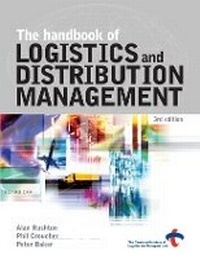
The Handbook of Logistics and Distribution Management
3rd Edition
Published on 3. June 2006
Book
Paperback/Softback
640 pages
978-0-7494-4669-7 (ISBN)
Description
Appealing to students, newly appointed managers and experienced practitioners alike, this definitive text explains the nuts and bolts of the modern logistics and distribution world in plain language.
Richly illustrated throughout, the third edition of this popular handbook has been completely restructured and fully revised to include the most up-to-date information. Essential areas such as manufacturing logistics, integrated logistics, process design and home delivery have been re-visited to provide an in-depth, thorough understanding.
There is a new chapter on receiving and despatch within the Warehouse and Storage section, as well as an explanation of new technologies in surrounding chapters such as radio frequency indentification (RFID), voice technology, satellite crane systems and dynamic pick systems. Together with additional information and examples of warehouse design, The Handbook of Logistics and Distribution Management is an invaluable guide for distribution, logistics and supply-chain managers, as well as students taking logistics-related degrees and professional qualifications.
Richly illustrated throughout, the third edition of this popular handbook has been completely restructured and fully revised to include the most up-to-date information. Essential areas such as manufacturing logistics, integrated logistics, process design and home delivery have been re-visited to provide an in-depth, thorough understanding.
There is a new chapter on receiving and despatch within the Warehouse and Storage section, as well as an explanation of new technologies in surrounding chapters such as radio frequency indentification (RFID), voice technology, satellite crane systems and dynamic pick systems. Together with additional information and examples of warehouse design, The Handbook of Logistics and Distribution Management is an invaluable guide for distribution, logistics and supply-chain managers, as well as students taking logistics-related degrees and professional qualifications.
Reviews / Votes
"Covers all the major aspects of logistics today. I would recommend anyone who is studying any logistics-related course to buy this book. It really is THE logistics handbook." Reader review"More details
Edition
3rd Revised edition
Language
English
Place of publication
London
United Kingdom
Target group
Professional and scholarly
Edition type
Revised edition
Product notice
Paperback (trade)
Dimensions
Height: 246 mm
Width: 189 mm
ISBN-13
978-0-7494-4669-7 (9780749446697)
Copyright in bibliographic data and cover images is held by Nielsen Book Services Limited or by the publishers or by their respective licensors: all rights reserved.
Schweitzer Classification
Other editions
New editions
Alan Rushton | Phil Croucher | Peter Baker
The Handbook of Logistics and Distribution Management
Book
06/2010
4th Edition
Kogan Page Ltd
€75.71
Article exhausted; check for reprint
Person
Alan Rushton is a Director of Dialog Consultants Ltd, a consultancy specialising in distribution, logistics and supply chain management He is formerly Director of Graduate Programmes at the Centre for Logsitics and Transportation, Cranfield School of Management.
Phil Croucher is regional manager of Land Transport for EGL Eagle Global Logistics and a Chartered Fellow of the Chartered Institute of Logistics and examiner for its MSc programme.
Peter Baker is a Lecturer at the Centre for Logistics and Supply Chain Management at Cranfield University. His previous industrial experience includes undertaking over 70 consultancy projects as a Manager in the Supply Chain Division of Deloitte Consulting. He is a Chartered Member of The Chartered Institute of Logistics and Transport (UK).
Phil Croucher is regional manager of Land Transport for EGL Eagle Global Logistics and a Chartered Fellow of the Chartered Institute of Logistics and examiner for its MSc programme.
Peter Baker is a Lecturer at the Centre for Logistics and Supply Chain Management at Cranfield University. His previous industrial experience includes undertaking over 70 consultancy projects as a Manager in the Supply Chain Division of Deloitte Consulting. He is a Chartered Member of The Chartered Institute of Logistics and Transport (UK).
Content
part 1 concepts of logistics and distribution 1 introduction to logistics and distribution introduction scope and definition historical perspective importance of logistics and distribution logistics and distribution structure summary 2 integrated logistics and the supply chain introduction the total logistics concept planning for distribution and logistics the financial impact of logistics globalization and integration integrated systems competitive advantage through logistics logistics and supply chain management summary 3 customer service and logistics introduction the importance of customer service the components of customer service two conceptual models of service quality developing a customer service policy levels of customer service measuring customer service the customer service explosion summary 4 channels of distribution introduction physical distribution channel types and structures channel selection third party or own account? different services that are offered key drivers for third-party distribution key issues in third-party distribution and logistics fourth-party logistics summary 5 key issues and challenges for logistics introduction the external environment manufacturing and supply distribution retailing the consumer summary part 2 planning for logistics 6 planning framework for logistics introduction pressures for change strategic planning overview logistics design strategy product characteristics the product life cycle packaging unit loads summary 7 logistics processes introduction the importance of logistics processes key logistics processes approach tools and techniques summary 8 logistics network planning introduction
PART 1 CONCEPTS OF LOGISTICS AND DISTRIBUTION
1 Introduction to logistics and distribution
Introduction
Scope and definition
Historical perspective
Importance of logistics and distribution
Logistics and distribution structure
Summary
2 Integrated logistics and the supply chain
Introduction
The total logistics concept
Planning for distribution and logistics
The financial impact of logistics
Globalization and integration
Integrated systems
Competitive advantage through logistics
Logistics and supply chain management
Summary
3 Customer service and logistics
Introduction
The importance of customer service
The components of customer service
Two conceptual models of service quality
Developing a customer service policy
Levels of customer service
Measuring customer service
The customer service explosion
Summary
4 Channels of distribution
Introduction
Physical distribution channel types and structures
Channel selection
Third party or own account?
Different services that are offered
Key drivers for third-party distribution
Key issues in third-party distribution and logistics
Fourth-party logistics
Summary
5 Key issues and challenges for logistics
Introduction
The external environment
Manufacturing and supply
Distribution
Retailing
The consumer
Summary
PART 2 PLANNING FOR LOGISTICS
6 Planning framework for logistics
Introduction
Pressures for change
Strategic planning overview
Logistics design strategy
Product characteristics
The product life cycle
Packaging
Unit loads
Summary
7 Logistics processes
Introduction
The importance of logistics processes
Key logistics processes
Approach
Tools and techniques
Summary
8 Logistics network planning
Introduction
The role of distribution centres and warehouses
Cost relationships
A planned approach or methodology
Initial analysis and option definition
Logistics modelling
Matching logistics strategy to business strategy
Site search and considerations
Summary
9 Logistics management and organization
Introduction
Relationships with other corporate functions
Logistics organizational structures
Organizational integration
The role of the logistics or distribution manager
Payment schemes
The selection of temporary staff and assets
Summary
10 Manufacturing and materials management
Introduction
Just-in-time
Manufacturing resource planning (MRPII)
Material requirements planning (MRP)
The MRP system
Flexible fulfilment (postponement)
The effects on distribution activities
Summary
PART 3 PROCUREMENT AND INVENTORY DECISIONS
11 Basic inventory planning and management
Introduction
The need to hold stocks
Types of stock-holding/inventory
The implications for other logistics functions
Inventory costs
Inventory replenishment systems
The economic order quantity
Demand forecasting
Summary
12 Inventory and the supply chain
Introduction
Problems with traditional approaches to inventory planning
Different inventory requirements
The lead-time gap
Inventory and time
Analysing time and inventory
Inventory planning for manufacturing
Inventory planning for retailing
Summary
13 Purchasing and supply
Introduction
Setting the procurement objectives
Managing the suppliers
Collaborative planning, forecasting and replenishment
Factory gate pricing
E-procurement
Summary
PART 4 WAREHOUSING AND STORAGE
14 Principles of warehousing
Introduction
The role of warehouses
Strategic issues affecting warehousing
Warehouse operations
Costs
Packaging and unit loads
Summary
15 Storage and handling systems (palletized)
Introduction
Pallet movement
Pallet stacking
Palletized storage
Palletized storage - comparison of systems
Summary
16 Storage and handling systems (non-palletized)
Introduction
Small item storage systems
Truck attachments
Long loads
Cranes
Conveyors
Automated guided vehicles
Hanging garment systems
Summary
17 Order picking and replenishment
Introduction
Order picking concepts
Order picking equipment
Sortation
Layout and slotting
Information in order picking
E-fulfilment
Picking productivity
Replenishment
Summary
18 Receiving and dispatch
Introduction
Receiving processes
Dispatch processes
Cross-docking
Equipment
Layouts
Summary
19 Warehouse design
Introduction
Design procedure
Summary
20 Warehouse management and information
Introduction
Operational management
Performance monitoring
Information technology
Data capture and transmission
Radio data communication
Summary
PART 5 FREIGHT TRANSPORT
21 International logistics: modal choice
Introduction
Method of selection
Operational factors
Transport mode characteristics
Consignment factors
Cost and service requirements
Aspects of international trade
Summary
22 Intermodal transport
Introduction
Intermodal equipment
Intermodal vehicles
Intermodal infrastructure
Freight facilities grants
Track access grants
Company neutral revenue support grants
Summary
23 Road freight transport: vehicle selection
Introduction
Main vehicle types
Types of operation
Load types and characteristics
Main types of vehicle body
The wider implications of vehicle selection
Vehicle acquisition
Summary
24 Road freight transport: vehicle costing
Introduction
Reasons for road freight transport vehicle costing
The main types of costing system
Vehicle standing costs
Vehicle running costs
Overhead costs
Costing the total transport operation
Whole life costing
Vehicle cost comparisons
Zero-based budgets
Summary
25 Road freight transport: legislation
Introduction
Operator licensing
Driver licensing
Drivers' hours regulations
The Road Transport Directive
Tachographs
Vehicle dimensions
The Immigration and Asylum Act 1999
Summary
Further reading
26 Road freight transport: planning and resourcing
Introduction
Need for planning
Fleet management
Main types of road freight transport
Transport resource requirements
Vehicle routeing and scheduling issues
Data requirements
Manual methods of vehicle routeing and scheduling
An example of manual routeing and scheduling
Computer routeing and scheduling
Other information system applications
Summary
PART 6 OPERATIONAL MANAGEMENT
27 Cost and performance monitoring
Introduction
Why monitor?
Different approaches to cost and performance monitoring
What to measure against?
An operational planning and control system
Good practice
Influencing factors
Detailed and key measures
Summary
28 Benchmarking
Introduction
Why should an organization engage in benchmarking?
How to conduct a benchmarking exercise
Formal benchmarking systems
Benchmarking distribution operations
Summary
29 Information and communication technology in the supply chain
Introduction
Basic communication
Supply chain planning
Warehousing
Inventory
Transport
Other applications
Trading using the internet - e-commerce
Summary
30 Outsourcing: the selection process
Introduction
Approach
Summary
31 Security and safety in distribution
Introduction
International security measures
Strategic security measures
Tactical security measures
Safety in the distribution centre and warehouse
Summary
32 Logistics and the environment
Introduction
The European Union and environmental legislation
Logistics and environmental best practice
Alternative fuels
Summary
1 Introduction to logistics and distribution
Introduction
Scope and definition
Historical perspective
Importance of logistics and distribution
Logistics and distribution structure
Summary
2 Integrated logistics and the supply chain
Introduction
The total logistics concept
Planning for distribution and logistics
The financial impact of logistics
Globalization and integration
Integrated systems
Competitive advantage through logistics
Logistics and supply chain management
Summary
3 Customer service and logistics
Introduction
The importance of customer service
The components of customer service
Two conceptual models of service quality
Developing a customer service policy
Levels of customer service
Measuring customer service
The customer service explosion
Summary
4 Channels of distribution
Introduction
Physical distribution channel types and structures
Channel selection
Third party or own account?
Different services that are offered
Key drivers for third-party distribution
Key issues in third-party distribution and logistics
Fourth-party logistics
Summary
5 Key issues and challenges for logistics
Introduction
The external environment
Manufacturing and supply
Distribution
Retailing
The consumer
Summary
PART 2 PLANNING FOR LOGISTICS
6 Planning framework for logistics
Introduction
Pressures for change
Strategic planning overview
Logistics design strategy
Product characteristics
The product life cycle
Packaging
Unit loads
Summary
7 Logistics processes
Introduction
The importance of logistics processes
Key logistics processes
Approach
Tools and techniques
Summary
8 Logistics network planning
Introduction
The role of distribution centres and warehouses
Cost relationships
A planned approach or methodology
Initial analysis and option definition
Logistics modelling
Matching logistics strategy to business strategy
Site search and considerations
Summary
9 Logistics management and organization
Introduction
Relationships with other corporate functions
Logistics organizational structures
Organizational integration
The role of the logistics or distribution manager
Payment schemes
The selection of temporary staff and assets
Summary
10 Manufacturing and materials management
Introduction
Just-in-time
Manufacturing resource planning (MRPII)
Material requirements planning (MRP)
The MRP system
Flexible fulfilment (postponement)
The effects on distribution activities
Summary
PART 3 PROCUREMENT AND INVENTORY DECISIONS
11 Basic inventory planning and management
Introduction
The need to hold stocks
Types of stock-holding/inventory
The implications for other logistics functions
Inventory costs
Inventory replenishment systems
The economic order quantity
Demand forecasting
Summary
12 Inventory and the supply chain
Introduction
Problems with traditional approaches to inventory planning
Different inventory requirements
The lead-time gap
Inventory and time
Analysing time and inventory
Inventory planning for manufacturing
Inventory planning for retailing
Summary
13 Purchasing and supply
Introduction
Setting the procurement objectives
Managing the suppliers
Collaborative planning, forecasting and replenishment
Factory gate pricing
E-procurement
Summary
PART 4 WAREHOUSING AND STORAGE
14 Principles of warehousing
Introduction
The role of warehouses
Strategic issues affecting warehousing
Warehouse operations
Costs
Packaging and unit loads
Summary
15 Storage and handling systems (palletized)
Introduction
Pallet movement
Pallet stacking
Palletized storage
Palletized storage - comparison of systems
Summary
16 Storage and handling systems (non-palletized)
Introduction
Small item storage systems
Truck attachments
Long loads
Cranes
Conveyors
Automated guided vehicles
Hanging garment systems
Summary
17 Order picking and replenishment
Introduction
Order picking concepts
Order picking equipment
Sortation
Layout and slotting
Information in order picking
E-fulfilment
Picking productivity
Replenishment
Summary
18 Receiving and dispatch
Introduction
Receiving processes
Dispatch processes
Cross-docking
Equipment
Layouts
Summary
19 Warehouse design
Introduction
Design procedure
Summary
20 Warehouse management and information
Introduction
Operational management
Performance monitoring
Information technology
Data capture and transmission
Radio data communication
Summary
PART 5 FREIGHT TRANSPORT
21 International logistics: modal choice
Introduction
Method of selection
Operational factors
Transport mode characteristics
Consignment factors
Cost and service requirements
Aspects of international trade
Summary
22 Intermodal transport
Introduction
Intermodal equipment
Intermodal vehicles
Intermodal infrastructure
Freight facilities grants
Track access grants
Company neutral revenue support grants
Summary
23 Road freight transport: vehicle selection
Introduction
Main vehicle types
Types of operation
Load types and characteristics
Main types of vehicle body
The wider implications of vehicle selection
Vehicle acquisition
Summary
24 Road freight transport: vehicle costing
Introduction
Reasons for road freight transport vehicle costing
The main types of costing system
Vehicle standing costs
Vehicle running costs
Overhead costs
Costing the total transport operation
Whole life costing
Vehicle cost comparisons
Zero-based budgets
Summary
25 Road freight transport: legislation
Introduction
Operator licensing
Driver licensing
Drivers' hours regulations
The Road Transport Directive
Tachographs
Vehicle dimensions
The Immigration and Asylum Act 1999
Summary
Further reading
26 Road freight transport: planning and resourcing
Introduction
Need for planning
Fleet management
Main types of road freight transport
Transport resource requirements
Vehicle routeing and scheduling issues
Data requirements
Manual methods of vehicle routeing and scheduling
An example of manual routeing and scheduling
Computer routeing and scheduling
Other information system applications
Summary
PART 6 OPERATIONAL MANAGEMENT
27 Cost and performance monitoring
Introduction
Why monitor?
Different approaches to cost and performance monitoring
What to measure against?
An operational planning and control system
Good practice
Influencing factors
Detailed and key measures
Summary
28 Benchmarking
Introduction
Why should an organization engage in benchmarking?
How to conduct a benchmarking exercise
Formal benchmarking systems
Benchmarking distribution operations
Summary
29 Information and communication technology in the supply chain
Introduction
Basic communication
Supply chain planning
Warehousing
Inventory
Transport
Other applications
Trading using the internet - e-commerce
Summary
30 Outsourcing: the selection process
Introduction
Approach
Summary
31 Security and safety in distribution
Introduction
International security measures
Strategic security measures
Tactical security measures
Safety in the distribution centre and warehouse
Summary
32 Logistics and the environment
Introduction
The European Union and environmental legislation
Logistics and environmental best practice
Alternative fuels
Summary