

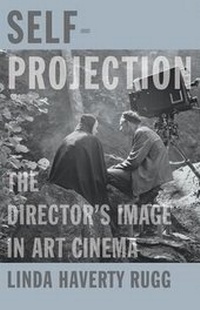
Self-Projection
The Director's Image in Art Cinema
Published on 1. March 2014
Book
Hardback
248 pages
978-0-8166-9123-4 (ISBN)
Description
In 1957, a decade before Roland Barthes announced the death of the author, Francois Truffaut called for a new era in which films would "resemble the person who made" them and be "even more personal" than an autobiographical novel. More than five decades on, it seems that Barthes has won the argument when it comes to most film critics. The cinematic author, we are told, has been dead for a long time. Yet Linda Haverty Rugg contends not only that the art cinema auteur never died, but that the films of some of the most important auteurs are intensely, if complexly, related to the lives and self-images of their directors. Self-Projection explores how nondocumentary narrative art films create alternative forms of collaborative self-representation and selfhood.
The book examines the work of celebrated directors who plant autobiographical traces in their films, including Truffaut, Bergman, Fellini, Tarkovsky, Herzog, Allen, Almodovar, and von Trier. It is not simply that these directors, and many others like them, make autobiographical references or occasionally appear in their films, but that they tie their films to their life stories and communicate that link to their audiences. Projecting a new kind of selfhood, these directors encourage identifications between themselves and their work even as they disavow such connections. And because of the collaborative and technological nature of filmmaking, the director's self-projection involves actors, audience, and the machines and institution of the cinema as well.
Lively and accessible, Self-Projection sheds new light on the films of these iconic directors and on art cinema in general, ultimately showing how film can transform not only the autobiographical act but what it means to have a self.
The book examines the work of celebrated directors who plant autobiographical traces in their films, including Truffaut, Bergman, Fellini, Tarkovsky, Herzog, Allen, Almodovar, and von Trier. It is not simply that these directors, and many others like them, make autobiographical references or occasionally appear in their films, but that they tie their films to their life stories and communicate that link to their audiences. Projecting a new kind of selfhood, these directors encourage identifications between themselves and their work even as they disavow such connections. And because of the collaborative and technological nature of filmmaking, the director's self-projection involves actors, audience, and the machines and institution of the cinema as well.
Lively and accessible, Self-Projection sheds new light on the films of these iconic directors and on art cinema in general, ultimately showing how film can transform not only the autobiographical act but what it means to have a self.
More details
Language
English
Place of publication
Minnesota
United States
Target group
Professional and scholarly
Illustrations
28
Dimensions
Height: 216 mm
Width: 140 mm
Thickness: 25 mm
ISBN-13
978-0-8166-9123-4 (9780816691234)
Copyright in bibliographic data and cover images is held by Nielsen Book Services Limited or by the publishers or by their respective licensors: all rights reserved.
Schweitzer Classification
Person
Linda Haverty Rugg is professor in the Scandinavian department at the University of California, Berkeley. Her first book, Picturing Ourselves: Photography and Autobiography, won the Modern Language Association's Aldo and Jeanne Scaglione Prize for Comparative Literature.
Content
Contents
Acknowledgments
Introduction. Without a You, No I: Cinematic Self-Projection1. The Director's Body2. The Director Plays Director3. Actor, Avatar4. Self-Projection and the Cinematic ApparatusConclusion: The Eye/I of the Auteur
NotesBibliographyFilmographyIndex
Acknowledgments
Introduction. Without a You, No I: Cinematic Self-Projection1. The Director's Body2. The Director Plays Director3. Actor, Avatar4. Self-Projection and the Cinematic ApparatusConclusion: The Eye/I of the Auteur
NotesBibliographyFilmographyIndex