

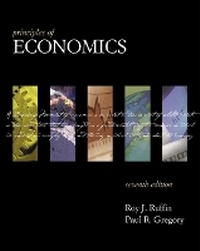
Principles of Economics
7th Edition
Published on 18. December 2000
Book
Hardback
800 pages
978-0-321-07730-1 (ISBN)
Description
Through its Defining Moments theme, the Ruffin/Gregory text provides a historical basis for students to understand the economic theories and policies of today. Defining Moments outline the ideas behind the most important events of economics-the Industrial Revolution, the Rise and Fall of Socialism, the Great Depression, Globalization, and the Information Revolution. In addition to thoroughly updated micro- and macroeconomics coverage, the new edition features a wealth of up-to-date boxed examples and all-new pedagogical features, including Learning Objectives, Chapter Puzzles, and Web Questions.
More details
Edition
7th edition
Language
English
Place of publication
United States
Publishing group
Pearson Education (US)
Target group
Professional and scholarly
Dimensions
Height: 260 mm
Width: 210 mm
Thickness: 30 mm
Weight
1719 gr
ISBN-13
978-0-321-07730-1 (9780321077301)
Copyright in bibliographic data and cover images is held by Nielsen Book Services Limited or by the publishers or by their respective licensors: all rights reserved.
Schweitzer Classification
Other editions
Previous edition
Roy J. Ruffin
PRIN MACRO 199&PRIN MICRO-ECON 97NATNL PKG
Book
12/1998
6th Edition
Prentice Hall
€108.93
Article exhausted; check for reprint
Content
I. INTRODUCTION.
1. Economics and the World Around Us: Defining Moments.
2. Unlimited Wants, Scarce Resources.
3. The Price System and the Economic Problem.
4. Demand and Supply.
5. Unintended Consequences.
II. PRODUCT MARKETS.
6. Elasticity of Demand and Supply.
7. Demand and Utility.
8. Economic Organization: Property Rights and the Firm.
9. Productivity and Costs.
10. Perfect Competition.
11. Monopoly and Monopolistic Competition.
12. Competition, Efficiency, and Innovation.
13. The Game of Oligopoly.
14. Regulation and Antitrust.
15. The Economics of Information.
III. FACTOR MARKETS.
16. Factor Markets.
17. Labor: The Human Factor.
18. Interest, Rent, and Profit.
19. Inequality, Income Distribution, and Poverty.
IV. MICROECONOMIC ISSUES.
20. Market Failure, the Environment, and Natural Resources.
21. Government Spending, Taxation, and the Economy.
22. Public Choice.
V. GROWTH AND FLUCTUATION.
23. Macroeconomics: Growth and Cycles.
24. Measuring Output and Growth.
25. Saving and Investment.
26. Economic Growth.
27. Aggregate Supply and Aggregate Demand.
VI. MONEY AND DEBT.
28. Money, Interest, and Prices.
29. The Banking System.
30. Monetary Policy.
31.Fiscal Policy, Debt, and Deficits.
VII. STABILIZATION.
32. Inflation.
33. Unemployment, Stagflation, and the "New Economy".
34. Business Cycles.
VIII. THE WORLD ECONOMY.
35. International Trade.
36. Protection and Free Trade.
37. The International Monetary System.
38. The Economics of Transition.
39. Economic Development: The "Haves" and the "Have- Nots".
1. Economics and the World Around Us: Defining Moments.
2. Unlimited Wants, Scarce Resources.
3. The Price System and the Economic Problem.
4. Demand and Supply.
5. Unintended Consequences.
II. PRODUCT MARKETS.
6. Elasticity of Demand and Supply.
7. Demand and Utility.
8. Economic Organization: Property Rights and the Firm.
9. Productivity and Costs.
10. Perfect Competition.
11. Monopoly and Monopolistic Competition.
12. Competition, Efficiency, and Innovation.
13. The Game of Oligopoly.
14. Regulation and Antitrust.
15. The Economics of Information.
III. FACTOR MARKETS.
16. Factor Markets.
17. Labor: The Human Factor.
18. Interest, Rent, and Profit.
19. Inequality, Income Distribution, and Poverty.
IV. MICROECONOMIC ISSUES.
20. Market Failure, the Environment, and Natural Resources.
21. Government Spending, Taxation, and the Economy.
22. Public Choice.
V. GROWTH AND FLUCTUATION.
23. Macroeconomics: Growth and Cycles.
24. Measuring Output and Growth.
25. Saving and Investment.
26. Economic Growth.
27. Aggregate Supply and Aggregate Demand.
VI. MONEY AND DEBT.
28. Money, Interest, and Prices.
29. The Banking System.
30. Monetary Policy.
31.Fiscal Policy, Debt, and Deficits.
VII. STABILIZATION.
32. Inflation.
33. Unemployment, Stagflation, and the "New Economy".
34. Business Cycles.
VIII. THE WORLD ECONOMY.
35. International Trade.
36. Protection and Free Trade.
37. The International Monetary System.
38. The Economics of Transition.
39. Economic Development: The "Haves" and the "Have- Nots".