

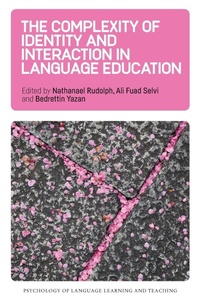
The Complexity of Identity and Interaction in Language Education
Published on 7. August 2020
Book
Paperback/Softback
312 pages
978-1-78892-741-3 (ISBN)
Description
This book addresses two critical calls pertaining to language education. Firstly, for attention to be paid to the transdisciplinary nature and complexity of learner identity and interaction in the classroom and secondly, for the need to attend to conceptualizations of and approaches to manifestations of (in)equity in the sociohistorical contexts in which they occur. Collectively, the chapters envision classrooms and educational institutions as sites both shaping and shaped by larger (trans)communal negotiations of being and belonging, in which individuals affirm and/or problematize essentialized and idealized nativeness and community membership. The volume, comprised of chapters contributed by a diverse array of researcher-practitioners living, working and/or studying around the globe, is intended to inform, empower and inspire stakeholders in language education to explore, potentially reimagine, and ultimately critically and practically transform, the communities in which they live, work and/or study.
Reviews / Votes
As labels for people and practices proliferate in contemporary scholarship with sometimes inconsistent conceptualizations of language education, this book brings these theories to bear on situated interactions. It transcends disciplinary boundaries by drawing from the wealth of available scholarly resources for interpretation. Thus it provides much-needed clarity on the way these conceptualizations play out for different educational outcomes. * Suresh Canagarajah, Pennsylvania State University, USA * Resistant to the vacuous pitfalls of reductionism, this dynamic volume draws from an impressively broad range of contexts and collaborators to scrutinize how identities of tangible substance and complexity are realized as impacting upon the seen and unseen powers and processes within language education. * Damian J. Rivers, Future University Hakodate, Japan * For educators who are feeling increasingly pushed towards efficiency, speed, and productivity, and therefore often towards limited and reductionist understandings of identity, this volume's call to focus on complexity is refreshing. The collection of voices from an expansive range of geographical, institutional, and social contexts offers a variety of approaches to considering identity work in the context of our everyday interactions. * Suhanthie Motha, University of Washington, USA * From a methodological and theoretical perspective, the volume presents a variety of promising approaches for scholars designing studies on these issues, which is one of its primary contributions to a field long dominated by positivist and experimental models of research [...] the volume would be a worthwhile addition to teacher educators' libraries, a potential text for second language acquisition courses - particularly for those planning to teach at the university and adult levels - and a useful supplemental resource for research-focused applied linguistics courses. -- Melissa B Hauber-OEzer, George Mason University, USA * LINGUIST List 32.2198 *More details
Series
Language
English
Place of publication
Bristol
United Kingdom
Target group
College/higher education
Dimensions
Height: 234 mm
Width: 156 mm
Thickness: 17 mm
Weight
474 gr
ISBN-13
978-1-78892-741-3 (9781788927413)
DOI
10.21832/RUDOLP7420
Copyright in bibliographic data and cover images is held by Nielsen Book Services Limited or by the publishers or by their respective licensors: all rights reserved.
Schweitzer Classification
Other editions
Additional editions
Nathanael Rudolph | Ali Fuad Selvi | Bedrettin Yazan
The Complexity of Identity and Interaction in Language Education
Book
08/2020
Multilingual Matters
€185.50
Shipment within 3-4 weeks
Nathanael Rudolph | Ali Fuad Selvi | Bedrettin Yazan
The Complexity of Identity and Interaction in Language Education
E-Book
08/2020
Multilingual Matters
€24.49
Available for download
Persons
Nathanael Rudolph is an Associate Professor of Sociolinguistics and Language Education at Kindai University in Higashiosaka, Japan. His research interests include translingual practice, critical approaches to language teacher and learner identity, and (in)equity in (and beyond) language education.
Ali Fuad Selvi is an Assistant Professor and Chair of the Teaching English as a Foreign Language Program at Middle East Technical University, Northern Cyprus Campus. His research interests include Global Englishes and its implications for language learning and teaching.
Bedrettin Yazan is an Assistant Professor of Educational Linguistics at the University of Alabama, USA. His research interests include language teacher learning and identity, language policy and planning, World Englishes, and collaboration between ESL and content-area teachers.
Ali Fuad Selvi is an Assistant Professor and Chair of the Teaching English as a Foreign Language Program at Middle East Technical University, Northern Cyprus Campus. His research interests include Global Englishes and its implications for language learning and teaching.
Bedrettin Yazan is an Assistant Professor of Educational Linguistics at the University of Alabama, USA. His research interests include language teacher learning and identity, language policy and planning, World Englishes, and collaboration between ESL and content-area teachers.
Content
Nathanael Rudolph, Ali Fuad Selvi, and Bedrettin Yazan: Introduction: The Complexity of Identity and Interaction in Language Education
Section I: Learners, Teachers, and the "Ares," "Cans" and "Shoulds" of Being and Becoming
Chapter 1: Syed Abdul Manan, Maya Khemlani David, Liaquat Ali Channa and Francisco Perlas Dumanig: The Monolingual Bias: A Critique of Idealization and Essentialization in ELT in Pakistan
Chapter 2: Meike Wernicke: Constructing "Other" Identities as a French Second Language Teacher
Chapter 3: Lobat Asadi, Stephanie Moody and Yolanda Padron: "English is the Commercial Language Whereas Spanish is the Language of My Emotions:" An Exploration of TESOL and Bilingual Teacher Identity and Translanguaging Ideologies
Chapter 4: Veronique Lemoine-Bresson: Identity Dynamics in the Speeches of Language Teachers' in French and German Primary Schools: How Do They Go About Constructing "Interculturality"?
Chapter 5: Jeremy Gombin-Sperling and Melanie Baker Robbins: English in Cuba: Reflections on a Study of Cuban Teachers' and Students' Relationships to English
Section II: Teacher Identity As/In/Beyond Practice
Chapter 6: Seyma Toker: From Being a Language Teacher to Becoming a Graduate Student-Teacher: in the Midst of Professional Identities
Chapter 7: Naashia Mohamed: Who am I and Where Do I Fit In: A Narrative Analysis of One Teacher's Shifting Identities
Chapter 8: April Salerno and Elena Andrei: Suntem Profesori / We Are Teachers: Self-Exploration as a Pathway to Language Teacher Education
Chapter 9: Alfredo Urzua: Teacher Identity Construction in Progress: The Role of Classroom Observations and Interactive Reflective Practices in Language Teacher Education
Chapter 10: Sedat Akayoglu, Babuerhan UEzuem and Bedrettin Yazan: Preservice Teachers' Cultural Identity Construction in Telecollaboration
Section III: Learner Negotiations of Identity in and Beyond the Classroom
Chapter 11: Shinji Kawamitsu: Meaning-Making as a Site of Struggle: One Japanese Language Learner's Negotiation with Identity and Writing
Chapter 12: Adolfo Arrieta and Nayibe Rosado: Negotiating Complex Identities through Positionings in On-Going Interaction: A Case Study in a Foreign Language Teacher Education Program in Colombia
Chapter 13: Sarah Hopkyns: Dancing Between English And Arabic: Complexities in Emirati Cultural Identities
Chapter 14: Eliana Hirano and Caroline Payant: The Story of Tabasum: An Exploration of a Refugee Student's Developing Identities
Glenn Toh: Afterword
Section I: Learners, Teachers, and the "Ares," "Cans" and "Shoulds" of Being and Becoming
Chapter 1: Syed Abdul Manan, Maya Khemlani David, Liaquat Ali Channa and Francisco Perlas Dumanig: The Monolingual Bias: A Critique of Idealization and Essentialization in ELT in Pakistan
Chapter 2: Meike Wernicke: Constructing "Other" Identities as a French Second Language Teacher
Chapter 3: Lobat Asadi, Stephanie Moody and Yolanda Padron: "English is the Commercial Language Whereas Spanish is the Language of My Emotions:" An Exploration of TESOL and Bilingual Teacher Identity and Translanguaging Ideologies
Chapter 4: Veronique Lemoine-Bresson: Identity Dynamics in the Speeches of Language Teachers' in French and German Primary Schools: How Do They Go About Constructing "Interculturality"?
Chapter 5: Jeremy Gombin-Sperling and Melanie Baker Robbins: English in Cuba: Reflections on a Study of Cuban Teachers' and Students' Relationships to English
Section II: Teacher Identity As/In/Beyond Practice
Chapter 6: Seyma Toker: From Being a Language Teacher to Becoming a Graduate Student-Teacher: in the Midst of Professional Identities
Chapter 7: Naashia Mohamed: Who am I and Where Do I Fit In: A Narrative Analysis of One Teacher's Shifting Identities
Chapter 8: April Salerno and Elena Andrei: Suntem Profesori / We Are Teachers: Self-Exploration as a Pathway to Language Teacher Education
Chapter 9: Alfredo Urzua: Teacher Identity Construction in Progress: The Role of Classroom Observations and Interactive Reflective Practices in Language Teacher Education
Chapter 10: Sedat Akayoglu, Babuerhan UEzuem and Bedrettin Yazan: Preservice Teachers' Cultural Identity Construction in Telecollaboration
Section III: Learner Negotiations of Identity in and Beyond the Classroom
Chapter 11: Shinji Kawamitsu: Meaning-Making as a Site of Struggle: One Japanese Language Learner's Negotiation with Identity and Writing
Chapter 12: Adolfo Arrieta and Nayibe Rosado: Negotiating Complex Identities through Positionings in On-Going Interaction: A Case Study in a Foreign Language Teacher Education Program in Colombia
Chapter 13: Sarah Hopkyns: Dancing Between English And Arabic: Complexities in Emirati Cultural Identities
Chapter 14: Eliana Hirano and Caroline Payant: The Story of Tabasum: An Exploration of a Refugee Student's Developing Identities
Glenn Toh: Afterword