

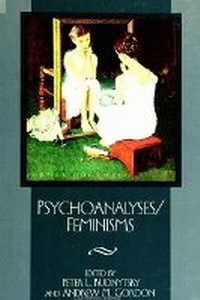
Psychoanalyses / Feminisms
Published on 16. December 1999
Book
Hardback
238 pages
978-0-7914-4377-4 (ISBN)
Description
Probes the complementary yet contested relations between psychoanalysis and feminism, emphasizing the plural nature of each.
Bringing together twelve provocative and iconoclastic contributions by leading scholars and new voices, this book probes the complementary yet contested relations between various forms of contemporary psychoanalysis and feminism. The intention is not simply to juxtapose these two preeminent intellectual movements of the twentieth century, but to highlight the manifold nature of each. The contributors use and interrogate Freud, Lacan, Klein, Irigaray, Riviere, and Jessica Benjamin, as well as object-relations theory, self psychology, and Horneyan theory as they discuss the work of such writers as D. H. Lawrence, Emily Bronte, Virginia Woolf, and Kathy Acker.
If feminism has insisted that "the personal is political," psychoanalysis argues that no realm of human life is impervious to unconscious motives, which may subvert a subject's avowed intentions. Although Freud remains a point of reference, he is now important as a symptom of the crises of Western patriarchal culture as well as for his epoch-making theoretical ideas. Because feminism and psychoanalysis unsettle each other's complacencies, they rekindle their own radical potential, and what may be perhaps termed their "marriage" has proven, as this book amply shows, to be both enduring and fecund.
Contributors include Ranita Chatterjee, Patricia Reid Eldredge, David Galef,Claire Kahane, Lynne Layton, Veronique Machelidon, Michelle A. Masse, Peter L. Rudnytsky, Barbara Schapiro, Madelon Sprengnether, Maureen Turim, and David Willbern.
Bringing together twelve provocative and iconoclastic contributions by leading scholars and new voices, this book probes the complementary yet contested relations between various forms of contemporary psychoanalysis and feminism. The intention is not simply to juxtapose these two preeminent intellectual movements of the twentieth century, but to highlight the manifold nature of each. The contributors use and interrogate Freud, Lacan, Klein, Irigaray, Riviere, and Jessica Benjamin, as well as object-relations theory, self psychology, and Horneyan theory as they discuss the work of such writers as D. H. Lawrence, Emily Bronte, Virginia Woolf, and Kathy Acker.
If feminism has insisted that "the personal is political," psychoanalysis argues that no realm of human life is impervious to unconscious motives, which may subvert a subject's avowed intentions. Although Freud remains a point of reference, he is now important as a symptom of the crises of Western patriarchal culture as well as for his epoch-making theoretical ideas. Because feminism and psychoanalysis unsettle each other's complacencies, they rekindle their own radical potential, and what may be perhaps termed their "marriage" has proven, as this book amply shows, to be both enduring and fecund.
Contributors include Ranita Chatterjee, Patricia Reid Eldredge, David Galef,Claire Kahane, Lynne Layton, Veronique Machelidon, Michelle A. Masse, Peter L. Rudnytsky, Barbara Schapiro, Madelon Sprengnether, Maureen Turim, and David Willbern.
Reviews / Votes
"I think the intersection of feminist theory and psychoanalysis is one of the most exciting, innovative areas in current scholarship. The articles here make interventions into literary, philosophical and cultural studies in an original and thought-provoking way." -Tina Chanter, University of MemphisMore details
Series
Language
English
Place of publication
Albany, NY
United States
Target group
College/higher education
Professional and scholarly
US School Grade: College Graduate Student and over
Weight
454 gr
ISBN-13
978-0-7914-4377-4 (9780791443774)
Copyright in bibliographic data and cover images is held by Nielsen Book Services Limited or by the publishers or by their respective licensors: all rights reserved.
Schweitzer Classification
Persons
Peter L. Rudnytsky is Professor of English at the University of Florida and a corresponding Member of the Institute for Contemporary Psychoanalysis in Los Angeles. He is the author of Freud and Oedipus and The Psychoanalytic Vocation: Rank, Winnicott, and the Legacy of Freud. Andrew M. Gordon is Associate Professor of English at the University of Florida, and Director of the Institute for the Psychological Study of the Arts. He is the author of An American Dreamer: A Psychoanalytic Study of the Fiction of Norman Mailer.
Content
Introduction
Peter L. Rudnytsky
PART I. REREADING FREUD
1. Mourning Freud
Madelon Sprengnether
2. "Mother, Do You Have a Wiwimaker, Too?": Freud's Representation of Female Sexuality in the Case of Little Hans
Peter L. Rudnytsky
3. Of Footnotes and Fathers: Reading Irigaray with Kofman
Ranita Chatterjee
PART II. FASHIONING FEMININITY
4. Marlene, Maggie Thatcher, and the Emperor of Morocco: The Psychic Structure of Caryl Churchill's Top Girls
Patricia Reid Eldredge
5. Dishing It Out: Patterns of Women's Sadism in Literature
David Galef
6. Masquerade: A Feminine or Feminist Strategy?
Veronique Machelidon
PART III. GENDERED MIRRORS
7. Sadomasochism as Intersubjective Breakdown in D.H. Lawrence's "The Woman Who Rode Away"
Barbara Schapiro
8. "He's More Myself than I Am": Narcissism and Gender in Wuthering Heights
Michelle A. Masse
9. Looking Back at the Mirror: Cinematic Revisions
Maureen Turim
PART IV. VOYAGES OUT
10. The Woman with a Knife and the Chicken without a Head: Fantasms of Rage and Emptiness
Claire Kahane
11. Playing Scrabble with My Mother
David Willbern
12. Trauma, Gender Identity, and Sexuality: Discourses of Fragmentation
Lynne Layton
Contributors
Index
Peter L. Rudnytsky
PART I. REREADING FREUD
1. Mourning Freud
Madelon Sprengnether
2. "Mother, Do You Have a Wiwimaker, Too?": Freud's Representation of Female Sexuality in the Case of Little Hans
Peter L. Rudnytsky
3. Of Footnotes and Fathers: Reading Irigaray with Kofman
Ranita Chatterjee
PART II. FASHIONING FEMININITY
4. Marlene, Maggie Thatcher, and the Emperor of Morocco: The Psychic Structure of Caryl Churchill's Top Girls
Patricia Reid Eldredge
5. Dishing It Out: Patterns of Women's Sadism in Literature
David Galef
6. Masquerade: A Feminine or Feminist Strategy?
Veronique Machelidon
PART III. GENDERED MIRRORS
7. Sadomasochism as Intersubjective Breakdown in D.H. Lawrence's "The Woman Who Rode Away"
Barbara Schapiro
8. "He's More Myself than I Am": Narcissism and Gender in Wuthering Heights
Michelle A. Masse
9. Looking Back at the Mirror: Cinematic Revisions
Maureen Turim
PART IV. VOYAGES OUT
10. The Woman with a Knife and the Chicken without a Head: Fantasms of Rage and Emptiness
Claire Kahane
11. Playing Scrabble with My Mother
David Willbern
12. Trauma, Gender Identity, and Sexuality: Discourses of Fragmentation
Lynne Layton
Contributors
Index