

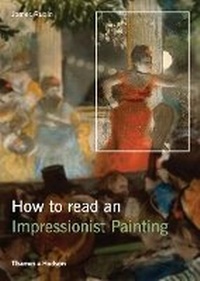
How to Read an Impressionist Painting
Will be published approx. on 11. November 2013
Book
Paperback/Softback
408 pages
978-0-500-97057-7 (ISBN)
Description
How to Read an Impressionist Painting is a new, original exploration of the hugely popular and revolutionary 19th-century art movement. James Rubin organizes his discussion by subject matter, rather than by artist, looking at urban views and city life, interiors and still life, family and friends, and other common themes. By avoiding an artist-based structure, and without the convention of a chronological approach, he provides readers with the tools to think critically and analytically about Impressionism as a movement, and offers a new understanding of the collective momentum that drove the artists to work with such originality and commitment to modern themes and pictorial originality.
Reviews / Votes
'Beautiful ... fascinating ... perfect as preparation for a visit to a gallery and an inspiration to see more art' - Good Book GuideMore details
Language
English
Place of publication
London
United Kingdom
Illustrations
Illustrated in colour throughout
Dimensions
Height: 240 mm
Width: 168 mm
ISBN-13
978-0-500-97057-7 (9780500970577)
Copyright in bibliographic data and cover images is held by Nielsen Book Services Limited or by the publishers or by their respective licensors: all rights reserved.
Schweitzer Classification
Person
James Henry Rubin is an art historian specializing in the history, theory
and criticism of nineteenth-century European art, especially that of
France. He is currently Professor of Art History at The State University
of New York at Stony Brook, where he was department chair for fifteen
years.
and criticism of nineteenth-century European art, especially that of
France. He is currently Professor of Art History at The State University
of New York at Stony Brook, where he was department chair for fifteen
years.
Content
1. Predecessors and Innovators * 2. Colleagues and Patrons * 3. Family and Friends * 4. Urban Views and City Life * 5. Fashion and Entertainment * 6. Technology and Industry * 7. Politics and Society * 8. Interiors and Still Life * 9. Renewal and Revival * 10. Gender and Sexuality * 11. Promenades and Travel * 12. Sport and Outdoor Leisure 13. Light and Air * 14.Techniques and Other Media * 15. Late Work and Legacy