

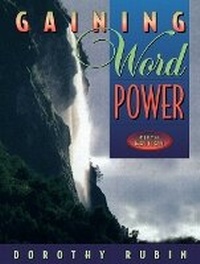
Gaining Word Power
5th Edition
Published on 14. February 2000
Book
Paperback/Softback
401 pages
978-0-205-29863-1 (ISBN)
Description
Gaining Word Power helps college students build and retain better vocabularies and become more effective strategic readers.
Based on more than thirty years of the author's teaching experience, this comprehensive vocabulary book generates a basic college-level vocabulary quickly, effectively, and pleasurably. It incorporates a number of proven vocabulary-building approaches that are grounded in sound learning theory. In each self-contained lesson, words are presented on graduated levels of difficulty, followed by challenging exercises and writing activities, then reinforced by immediate access to solutions. This enables students to progress at their own pace and evaluate their progress.
Although this text has a distinct pedagogical structure, a variety of practices, crossword puzzles, writing exercises, analogy activities, and numerous cartoons throughout challenge students to learn using a variety of strategies while continuously emphasizing the reading-writing connection.
Based on more than thirty years of the author's teaching experience, this comprehensive vocabulary book generates a basic college-level vocabulary quickly, effectively, and pleasurably. It incorporates a number of proven vocabulary-building approaches that are grounded in sound learning theory. In each self-contained lesson, words are presented on graduated levels of difficulty, followed by challenging exercises and writing activities, then reinforced by immediate access to solutions. This enables students to progress at their own pace and evaluate their progress.
Although this text has a distinct pedagogical structure, a variety of practices, crossword puzzles, writing exercises, analogy activities, and numerous cartoons throughout challenge students to learn using a variety of strategies while continuously emphasizing the reading-writing connection.
More details
Edition
5th edition
Language
English
Place of publication
United States
Publishing group
Pearson Education (US)
Target group
Professional and scholarly
Dimensions
Height: 233 mm
Width: 177 mm
Thickness: 19 mm
Weight
614 gr
ISBN-13
978-0-205-29863-1 (9780205298631)
Copyright in bibliographic data and cover images is held by Nielsen Book Services Limited or by the publishers or by their respective licensors: all rights reserved.
Schweitzer Classification
Other editions
New editions
Dorothy Rubin
Gaining Word Power
Book
08/2002
6th Edition
Pearson
€43.32
Article is exhausted; no reprint
Content
Each chapter contains "Special Content Words," "Chapter Words in Sentences," "Chapter Words in a Paragraph," "Gaining Word Power on the Internet," "Crossword Puzzle," "Analogies," "Multiple-Choice Vocabulary Test," "Scoring of Tests," "Additional Practice Sets," and "Chapter True/False Test."
Introduction to Gaining Word Power.
The Importance of Vocabulary Growth.
The Organization of This Book.
How Lessons Are Presented.
End-of-Chapter Activities.
How Words Are Presented.
Special Notes.
Extra Word Power.
Additional Words.
Understanding Analogies.
Pronunciation Key.
Understanding the Term Overlearning.
Suggestions on How to Study Vocabulary.
I. VOCABULARY DERIVED FROM COMBINING FORMS AND CONTEXT CLUES.
Introduction: Word Meaning Strategies.
Combining Forms. Context Clues.
Chapter 1.
Lesson 1: anni, annu, enni; aut, auto; bi; bio; graph; graphy; logy; ology, ped, pod.
Lesson 2: geo; meter; micro; phon, phono; scope; scrib, scrip; tele.
Lesson 3: contra; dic, dict; gram; phob, phobo; spect; uni.
Chapter 2.
Lesson 4: cent, centi; cred; dec, deca, deci; kilo; milli; port.
Lesson 5: agog, agogue; ali; arch, archy, cracy, crat; dem, demo; glot; mon, mono; olig; oligo; theo.
Lesson 6: anthrop; anthropo; gamy; gen; geno; heter, hetero; hom, homo; leg, legis, lex; mis, miso; poly.
Chapter 3.
Lesson 7: aqua, aqui; astro; naut; omni; poten; sci, scio; ven, veni, vent; vid, vis.
Lesson 8: cide; capit; corp, corpor; em, en; frater, fratr; mors, mort; pathy; syl, sym, syn.
Lesson 9: aud, audi; bene; cura; fac, fect, fic, loc, loco; man, manu; nomin, onym; pseudo.
Chapter 4.
Lesson 10: biblio; cata; dia; epi; fin; fer; log, logo; pro.
Lesson 11: cap, cep; derm, dermo; gnosi, gnosis; gyn, gyno; hypo; ped, pedo; ri, ridi, risi; temp, tempo, tempor; tox, toxo.
Lesson 12: archae, archaeo; brevi; cede, ceed; chron, chrono; crypt, crypto; cycl, cyclo; duc; sequi; tain, ten, tent.
Chapter 5.
Lesson 13: ambi; belli, bello; civ, civis; mega; pac, pax, philo, polis, post; tend, tens, tent; voc, vox.
Lesson 14: dorm; ego, err; hyper; luc, lum; nov; peri; soph; sist, sta.
Lesson 15: anima, animus; equi; feder, fid, fide; hypn, hypno; magna, miss, mitt; nasc, nat; pon, pos; pop.
II. VOCABULARY DERIVED PRIMARILY FROM CONTEXT CLUES.
Introduction.
Chapter 6.
Lesson 16: candid, frustrate, inquisitive, integrate, naive, segregate, sustain, tacit, verse, verbose.
Lesson 17: affluent, amnesty, covert, curtail, fatal, fictitious, hostile, lethal, overt, relevant.
Lesson 18: alternative, concise, famish, fatigue, formidable, mundane, nostalgic, optimist, pessimist, sentimental.
Chapter 7.
Lesson 19: affirm, coincidence, delete, dilemma, diligent, disdain, eradicate, haughty, isolate, pertinent.
Lesson 20: adaptation, antecedent, colleague, intricate, interrogate, persevere, precedent, reliable, reluctant, significant.
Lesson 21: allot, asset, conservative, covet, economize, frugal, liability, liberal, modify, stagnant.
Chapter 8.
Lesson 22: aesthetic, affront, antagonize, attitude, characteristic, derogatory, euphemism, hypocrite, inclination, intimidate.
Lesson 23: apprehensive, bland, discreet, docile, infamous, initiate, miscellaneous, omission, scrutinize, unanimous.
Lesson 24: acquisition, adept, adversary, anecdote, contagious, exotic, gregarious, passive, trite, turmoil.
Appendix: The Dictionary.
Uses of the Dictionary.
Dictionary Activities.
Glossary.
Combining Forms Presented in Gaining Word Power.
Vocabulary Words Presented in Gaining Word Power.
Additional Words Presented in Gaining Word Power.
Answer Key.
Introduction to Gaining Word Power.
The Importance of Vocabulary Growth.
The Organization of This Book.
How Lessons Are Presented.
End-of-Chapter Activities.
How Words Are Presented.
Special Notes.
Extra Word Power.
Additional Words.
Understanding Analogies.
Pronunciation Key.
Understanding the Term Overlearning.
Suggestions on How to Study Vocabulary.
I. VOCABULARY DERIVED FROM COMBINING FORMS AND CONTEXT CLUES.
Introduction: Word Meaning Strategies.
Combining Forms. Context Clues.
Chapter 1.
Lesson 1: anni, annu, enni; aut, auto; bi; bio; graph; graphy; logy; ology, ped, pod.
Lesson 2: geo; meter; micro; phon, phono; scope; scrib, scrip; tele.
Lesson 3: contra; dic, dict; gram; phob, phobo; spect; uni.
Chapter 2.
Lesson 4: cent, centi; cred; dec, deca, deci; kilo; milli; port.
Lesson 5: agog, agogue; ali; arch, archy, cracy, crat; dem, demo; glot; mon, mono; olig; oligo; theo.
Lesson 6: anthrop; anthropo; gamy; gen; geno; heter, hetero; hom, homo; leg, legis, lex; mis, miso; poly.
Chapter 3.
Lesson 7: aqua, aqui; astro; naut; omni; poten; sci, scio; ven, veni, vent; vid, vis.
Lesson 8: cide; capit; corp, corpor; em, en; frater, fratr; mors, mort; pathy; syl, sym, syn.
Lesson 9: aud, audi; bene; cura; fac, fect, fic, loc, loco; man, manu; nomin, onym; pseudo.
Chapter 4.
Lesson 10: biblio; cata; dia; epi; fin; fer; log, logo; pro.
Lesson 11: cap, cep; derm, dermo; gnosi, gnosis; gyn, gyno; hypo; ped, pedo; ri, ridi, risi; temp, tempo, tempor; tox, toxo.
Lesson 12: archae, archaeo; brevi; cede, ceed; chron, chrono; crypt, crypto; cycl, cyclo; duc; sequi; tain, ten, tent.
Chapter 5.
Lesson 13: ambi; belli, bello; civ, civis; mega; pac, pax, philo, polis, post; tend, tens, tent; voc, vox.
Lesson 14: dorm; ego, err; hyper; luc, lum; nov; peri; soph; sist, sta.
Lesson 15: anima, animus; equi; feder, fid, fide; hypn, hypno; magna, miss, mitt; nasc, nat; pon, pos; pop.
II. VOCABULARY DERIVED PRIMARILY FROM CONTEXT CLUES.
Introduction.
Chapter 6.
Lesson 16: candid, frustrate, inquisitive, integrate, naive, segregate, sustain, tacit, verse, verbose.
Lesson 17: affluent, amnesty, covert, curtail, fatal, fictitious, hostile, lethal, overt, relevant.
Lesson 18: alternative, concise, famish, fatigue, formidable, mundane, nostalgic, optimist, pessimist, sentimental.
Chapter 7.
Lesson 19: affirm, coincidence, delete, dilemma, diligent, disdain, eradicate, haughty, isolate, pertinent.
Lesson 20: adaptation, antecedent, colleague, intricate, interrogate, persevere, precedent, reliable, reluctant, significant.
Lesson 21: allot, asset, conservative, covet, economize, frugal, liability, liberal, modify, stagnant.
Chapter 8.
Lesson 22: aesthetic, affront, antagonize, attitude, characteristic, derogatory, euphemism, hypocrite, inclination, intimidate.
Lesson 23: apprehensive, bland, discreet, docile, infamous, initiate, miscellaneous, omission, scrutinize, unanimous.
Lesson 24: acquisition, adept, adversary, anecdote, contagious, exotic, gregarious, passive, trite, turmoil.
Appendix: The Dictionary.
Uses of the Dictionary.
Dictionary Activities.
Glossary.
Combining Forms Presented in Gaining Word Power.
Vocabulary Words Presented in Gaining Word Power.
Additional Words Presented in Gaining Word Power.
Answer Key.