

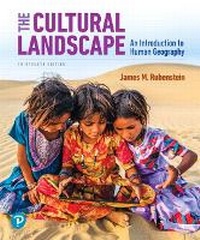
Cultural Landscape, The
An Introduction to Human Geography
13th Edition
Published on 25. February 2019
Book
Hardback
576 pages
978-0-13-511615-9 (ISBN)
Description
The Cultural Landscape: An Introduction to Human Geography uses a structured learning path to explore the patterns and processes of Earth's human landscapes. Rubenstein weaves themes such as globalization throughout the text, with a clear, engaging organization and presentation.
The 13th Edition incorporates the latest data and applied examples of human geography. It helps you connect global concepts and phenomena to your local geography, while engaging you in active debate around essential topics of human geography.
The 13th Edition incorporates the latest data and applied examples of human geography. It helps you connect global concepts and phenomena to your local geography, while engaging you in active debate around essential topics of human geography.
More details
Edition
13th edition
Language
English
Place of publication
United States
Publishing group
Pearson Education (US)
Target group
College/higher education
Dimensions
Height: 285 mm
Width: 236 mm
Thickness: 22 mm
Weight
1544 gr
ISBN-13
978-0-13-511615-9 (9780135116159)
Copyright in bibliographic data and cover images is held by Nielsen Book Services Limited or by the publishers or by their respective licensors: all rights reserved.
Schweitzer Classification
Other editions
Previous edition
Book
08/2019
12th Edition
Pearson
€181.97
Article exhausted; check different version
Person
About our author Dr. James M. Rubenstein received his B.A. from the University of Chicago in 1970, M.Sc. from the London School of Economics and Political Science in 1971, and Ph.D. from Johns Hopkins University in 1975. He is Professor of Geography at Miami University, where he teaches urban and human geography. Dr. Rubenstein also conducts research in the automotive industry and has published three books on the subject: The Changing U.S. Auto Industry: A Geographical Analysis (Routledge); Making and Selling Cars: Innovation and Change in the U.S. Auto Industry (The Johns Hopkins University Press); and Who Really Made Your Car? Restructuring and Geographic Change in the Auto Industry (W.E. Upjohn Institute, with Thomas Klier). Dr. Rubenstein is also the author of Contemporary Human Geography, as well as Introduction to Contemporary Geography. He also writes a weekly column about local food for the Oxford Press. Winston, a lab-husky mix with one brown eye and one blue eye, takes Dr. Rubenstein for long walks in the woods every day. Thanks to Ursula Roma for the photo.
Content
1. This Is Geography
1.1 Why Is Geography a Science?
1.2 Why Is Every Place Unique?
1.3 Why Are Different Places Similar?
1.4 Why Are Some Actions Not Sustainable?
2. Population & Health
2.1 Where Are People Distributed?
2.2 Why is Population Increasing?
2.3 Why Does Health Vary by Region?
2.4 Why Might Population Change in the Future?
3. Migration
3.1 Where Are Migrants Distributed?
3.2 Where Do People Migrate Within Countries?
3.3 Why Do People Migrate?
3.4 Why Do Migrants Face Challenges?
4. Culture & Social Media
4.1 Where Are Culture Groups Distributed?
4.2 Where Are Leisure & Material Culture Distributed?
4.3 Why Is Access to Culture Unequal?
4.4 Why Do Cultures Face Sustainability Challenges?
5. Languages
5.1 Where Are Languages Distributed?
5.2 Why Do Languages Diffuse?
5.3 Why Do Languages Vary Among Places?
5.4 Why Do Languages Survive or Perish?
6. Religions
6.1 Where Are Religions Distributed?
6.2 Why Do Religions Have Distinctive Distributions?
6.3 Why Do Religions Organize Space in Specific Patterns?
6.4 Why Do Territorial Conflicts Arise Among Religious Groups?
7. Ethnicities
7.1 Where Are Ethnicities Distributed?
7.2 Why Do Ethnicities Have Distinctive Distributions?
7.3 Why Might Ethnicities Face Conflicts?
7.4 Why Do Ethnic Cleansing & Genocide Occur?
8. Political Geography
8.1 Where Are States Distributed?
8.2 Why Are States Challenging to Create?
8.3 Why Do States Face Threats?
8.4 Why Do States Have Distinctive Geographic Structure?
9. Food & Agriculture
9.1 Why Do People Consume Different Foods?
9.2 Where Did Agriculture Originate?
9.3 Where Is Agriculture Distributed?
9.4 Why Do Farmers Face Sustainability Challenges?
10. Development
10.1 Why Does Development Vary Among Countries?
10.2 Where Are Inequalities in Development Distributed?
10.3 Why Do Countries Face Development Challenges?
10.4 Why Are Countries Able to Make Progress in Development?
11. Industry & Energy
11.1 Where Is Industry Distributed?
11.2 Why Do Industries Face Energy Challenges?
11.3 Why Do Industries Face Pollution Challenges?
11.4 Why Are Industries Changing Locations?
12. Services & Settlements
12.1 Where Are Services Distributed?
12.2 Where Are Consumer Services Distributed?
12.3 Where Are Business Services Distributed?
12.4 Why Do Services Cluster in Settlements?
13. Urban Patterns
13.1 Why Are Cities Challenging to Define?
13.2 Where Are People Distributed in Urban Areas?
13.3 Why Do Urban Areas Expand?
13.4 Why Might Cities Be More Sustainable?
Summary & Review
Afterword: Careers in Geography
Appendix: Map Scale and Projections
Glossary
Credits
Map Index
1.1 Why Is Geography a Science?
1.2 Why Is Every Place Unique?
1.3 Why Are Different Places Similar?
1.4 Why Are Some Actions Not Sustainable?
2. Population & Health
2.1 Where Are People Distributed?
2.2 Why is Population Increasing?
2.3 Why Does Health Vary by Region?
2.4 Why Might Population Change in the Future?
3. Migration
3.1 Where Are Migrants Distributed?
3.2 Where Do People Migrate Within Countries?
3.3 Why Do People Migrate?
3.4 Why Do Migrants Face Challenges?
4. Culture & Social Media
4.1 Where Are Culture Groups Distributed?
4.2 Where Are Leisure & Material Culture Distributed?
4.3 Why Is Access to Culture Unequal?
4.4 Why Do Cultures Face Sustainability Challenges?
5. Languages
5.1 Where Are Languages Distributed?
5.2 Why Do Languages Diffuse?
5.3 Why Do Languages Vary Among Places?
5.4 Why Do Languages Survive or Perish?
6. Religions
6.1 Where Are Religions Distributed?
6.2 Why Do Religions Have Distinctive Distributions?
6.3 Why Do Religions Organize Space in Specific Patterns?
6.4 Why Do Territorial Conflicts Arise Among Religious Groups?
7. Ethnicities
7.1 Where Are Ethnicities Distributed?
7.2 Why Do Ethnicities Have Distinctive Distributions?
7.3 Why Might Ethnicities Face Conflicts?
7.4 Why Do Ethnic Cleansing & Genocide Occur?
8. Political Geography
8.1 Where Are States Distributed?
8.2 Why Are States Challenging to Create?
8.3 Why Do States Face Threats?
8.4 Why Do States Have Distinctive Geographic Structure?
9. Food & Agriculture
9.1 Why Do People Consume Different Foods?
9.2 Where Did Agriculture Originate?
9.3 Where Is Agriculture Distributed?
9.4 Why Do Farmers Face Sustainability Challenges?
10. Development
10.1 Why Does Development Vary Among Countries?
10.2 Where Are Inequalities in Development Distributed?
10.3 Why Do Countries Face Development Challenges?
10.4 Why Are Countries Able to Make Progress in Development?
11. Industry & Energy
11.1 Where Is Industry Distributed?
11.2 Why Do Industries Face Energy Challenges?
11.3 Why Do Industries Face Pollution Challenges?
11.4 Why Are Industries Changing Locations?
12. Services & Settlements
12.1 Where Are Services Distributed?
12.2 Where Are Consumer Services Distributed?
12.3 Where Are Business Services Distributed?
12.4 Why Do Services Cluster in Settlements?
13. Urban Patterns
13.1 Why Are Cities Challenging to Define?
13.2 Where Are People Distributed in Urban Areas?
13.3 Why Do Urban Areas Expand?
13.4 Why Might Cities Be More Sustainable?
Summary & Review
Afterword: Careers in Geography
Appendix: Map Scale and Projections
Glossary
Credits
Map Index