


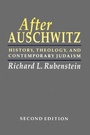
After Auschwitz
History, Theology, and Contemporary Judaism
2nd Edition
Published on 26. June 1992
Book
Hardback
384 pages
978-0-8018-4284-9 (ISBN)
Description
When first published in 1966, After Auschwitz made headlines and sparked controversy as Jewish "death-of-God" theology. But as the first work by a respected modern theologian to define the Holocaust in religious as well as demographic terms, its greater importance gradually emerged. Today it ranks as a seminal work of modern Jewish thought and culture. In this substantially revised and expanded edition, Richard L. Rubenstein returns to old questions and addresses new issues with the same passion and spirit that characterized his original work.
With the first edition of After Auschwitz, Rubenstein virtually invented Holocaust theology. He argued that Jews (and Christians) who accept the traditional belief that God has chosen Israel and acts providentially in history must either interpret that Holocaust as divine punishment or as the most radical challenge ever to traditional belief. Unable to defend traditional faith, Rubenstein turned to psychoanalysis, sociology, and history to defend religious institutions and ritual. The discussion he originated continued unabated.
The revised After Auschwitz remains as much a book about the human condition as a book about God. While retaining essential material from the 1966 edition, Rubenstein offers his latest thinking on the issues of belief and tradition after the Holocaust. He also deals extensively with events making headlines and shaping contemporary Jewish thinking and theology, such as the Palestinian question and Judaism in post-communist Eastern Eurpe. Facing the threat of Holy War and future Holocaust, questioning the possibility of genuine peace, exploring mysticism and other religions, this After Auschwitz is as challenging-and may provde as controversial-as the original.
With the first edition of After Auschwitz, Rubenstein virtually invented Holocaust theology. He argued that Jews (and Christians) who accept the traditional belief that God has chosen Israel and acts providentially in history must either interpret that Holocaust as divine punishment or as the most radical challenge ever to traditional belief. Unable to defend traditional faith, Rubenstein turned to psychoanalysis, sociology, and history to defend religious institutions and ritual. The discussion he originated continued unabated.
The revised After Auschwitz remains as much a book about the human condition as a book about God. While retaining essential material from the 1966 edition, Rubenstein offers his latest thinking on the issues of belief and tradition after the Holocaust. He also deals extensively with events making headlines and shaping contemporary Jewish thinking and theology, such as the Palestinian question and Judaism in post-communist Eastern Eurpe. Facing the threat of Holy War and future Holocaust, questioning the possibility of genuine peace, exploring mysticism and other religions, this After Auschwitz is as challenging-and may provde as controversial-as the original.
Reviews / Votes
All of the essays in this edition are passionate and provocative and some are brilliant. As the summation of decades of burningly honest inquiry into some of the most fundamental issues in modern history, this work will remain one of the seminal books of this generation.-Australian Jewish Times
More details
Series
Edition
second edition
Language
English
Place of publication
Baltimore, MD
United States
Target group
College/higher education
Professional and scholarly
Edition type
Revised edition
Dimensions
Height: 229 mm
Width: 152 mm
Weight
709 gr
ISBN-13
978-0-8018-4284-9 (9780801842849)
DOI
10.56021/9780801842849
Copyright in bibliographic data is held by Nielsen Book Services Limited or its licensors: all rights reserved.
Schweitzer Classification
Other editions
Additional editions
Book
06/1992
2nd Edition
Johns Hopkins University Press
€35.50
Article not available for order
Person
Richard L. Rubenstein is Rober O. Lawton Distinguished Professor of Religion and Codirector of the Humanities Institute at Florida State University. His other books include The Religious Imagination, The Cunning of History: Mass Death and the American Future, The Age of Triage, and, with John K. Roth, Approaches to Auschwitz.
Content
Preface
Preface to the first edition
Part I. The Encounter of Christian and Jew
Chapter 1. The Dean and the Chosen People
Chapter 2. Person and Myth in the Judeo-Christian Encounter
Chapter 3. Religion and the Origins of the Death Camps: A Psychoanalytic Interpretation
Chapter 4. The Auschwitz Convent Controversy
Part II. The Meaning of the Holocaust
Chapter 5. The Unmastered Trauma: Interpreting the Holocaust
Chapter 6. Modernization and the Politics of Extermination: Genocide in the Historical Context
Chapter 7. Covenant, Holocaust, and Intifada
Part III. Theology and Contemporary Judaism
Chapter 8. Covenant and Divinity: The Holocaust and the Problematics of Religious Faith, Part 1
Chapter 9. Covenant and Divinity: The Holocaust and the Problematics of Religious Faith, Part 1
Chapter 10. The Rebirth of Israel in Contemporary Jewish Theology
Chapter 11. War, Zionism, and Sacred Space
Chapter 12. The Meaning of Torah in Contemporary Jewish Theology
Chapter 13. Death-of-God Theology and Judaism
Chapter 14. Jews, Israel, and Liberation Theology
Chapter 15. Muslims, Jews, and the Western World: A Jewish View
Chapter 16. God after the Death of God
Notes
Acknowledgements
Index
Preface to the first edition
Part I. The Encounter of Christian and Jew
Chapter 1. The Dean and the Chosen People
Chapter 2. Person and Myth in the Judeo-Christian Encounter
Chapter 3. Religion and the Origins of the Death Camps: A Psychoanalytic Interpretation
Chapter 4. The Auschwitz Convent Controversy
Part II. The Meaning of the Holocaust
Chapter 5. The Unmastered Trauma: Interpreting the Holocaust
Chapter 6. Modernization and the Politics of Extermination: Genocide in the Historical Context
Chapter 7. Covenant, Holocaust, and Intifada
Part III. Theology and Contemporary Judaism
Chapter 8. Covenant and Divinity: The Holocaust and the Problematics of Religious Faith, Part 1
Chapter 9. Covenant and Divinity: The Holocaust and the Problematics of Religious Faith, Part 1
Chapter 10. The Rebirth of Israel in Contemporary Jewish Theology
Chapter 11. War, Zionism, and Sacred Space
Chapter 12. The Meaning of Torah in Contemporary Jewish Theology
Chapter 13. Death-of-God Theology and Judaism
Chapter 14. Jews, Israel, and Liberation Theology
Chapter 15. Muslims, Jews, and the Western World: A Jewish View
Chapter 16. God after the Death of God
Notes
Acknowledgements
Index