

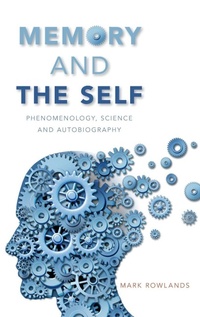
Memory and the Self
Phenomenology, Science and Autobiography
Published on 8. December 2016
Book
Hardback
224 pages
978-0-19-024146-9 (ISBN)
Description
The idea that our memories, in some sense, make us who we are, is a common one-and not at all implausible. After all, what could make us who we are if not the things we have experienced, thought, felt and desired on these idiosyncratic pathways through space and time that we call lives? And how can we retain these experiences, thoughts, feelings and desires if not through memory? On the other hand, most of what we have experienced has been forgotten. And there is now a considerable body of evidence that suggests that, even when we think we remember, our memories are likely to be distorted, sometimes beyond recognition. Imagine writing your autobiography, only to find that that most of it has been redacted, and much of the rest substantially rewritten. What would hold this book together? What would make it the unified and coherent account of a life?
The answer, Mark Rowlands argues, lies, partially hidden, in a largely unrecognized form of memory-Rilkean memory. A Rilkean memory is produced when the content of a memory is lost but the act of remembering endures, in a new, mutated, form: a mood, a feeling, or a behavioral disposition. Rilkean memories play a significant role in holding the self together in the face of the poverty and inaccuracy of the contents of memory. But Rilkean memories are important not just because of what they are, but also because of what they were before they became such memories. Acts of remembering sculpt the contents of memories out of the slabs of remembered episodes. Our acts of remembering ensure that we are in the content of each of our memories-present in the way a sculptor is present in his creation-even when this content is lamentably sparse and endemically inaccurate.
The answer, Mark Rowlands argues, lies, partially hidden, in a largely unrecognized form of memory-Rilkean memory. A Rilkean memory is produced when the content of a memory is lost but the act of remembering endures, in a new, mutated, form: a mood, a feeling, or a behavioral disposition. Rilkean memories play a significant role in holding the self together in the face of the poverty and inaccuracy of the contents of memory. But Rilkean memories are important not just because of what they are, but also because of what they were before they became such memories. Acts of remembering sculpt the contents of memories out of the slabs of remembered episodes. Our acts of remembering ensure that we are in the content of each of our memories-present in the way a sculptor is present in his creation-even when this content is lamentably sparse and endemically inaccurate.
Reviews / Votes
I find Rolands' book to be an innovative and thoughtful analysis of memory and its relationship to self; one that I would recommend as a useful addition to a philosophical practitioner's collection. * Catherine Monnet, Journal of the APPA * Memory and the Self is an intriguing account of forms of memory and the role they play in making us who we are. It makes a significant contribution to our understanding episodic memory, and elucidates how, over and beyond our episodic memories Rilkean memories may help hold the self together over time. * Christopher Jude McCarroll, Macquarie University, The Journal of Mind and Behavior * Memory and the Self is a fascinating book that has all the qualities of good philosophical writing... a very pleasant book to read that truly deserves to be read, reread, and discussed by those interested in philosophy of mind and in memory. * Marina Trakas ( Academie de Caen), Phenomenological Reviews * Rowlands' view is quite innovative and original, and he skillfully combines his views on phenomenology, literary studies, philosophy of mind, and the empirical psychology...Memory and the Self is a recommendable book, on account of Rowlands' original philosophical views, as well as his lively literary style. * Majid Davoody Beni, Metapsychology Online Reviews *More details
Language
English
Place of publication
New York
United States
Target group
College/higher education
Dimensions
Height: 240 mm
Width: 161 mm
Thickness: 17 mm
Weight
505 gr
ISBN-13
978-0-19-024146-9 (9780190241469)
Copyright in bibliographic data and cover images is held by Nielsen Book Services Limited or by the publishers or by their respective licensors: all rights reserved.
Schweitzer Classification
Other editions
Additional editions
E-Book
10/2016
1st Edition
OUP eBook
€43.99
Available for download
E-Book
10/2016
1st Edition
OUP eBook
€33.99
Available for download
Person
Mark Rowlands is Professor of Philosophy at the University of Miami. He is the author of eighteen books and over a hundred journal articles, chapters and reviews, and his work has been translated into more than twenty languages. His memoir, The Philosopher and the Wolf, became an international bestseller.
Content
Preface and Acknowledgments
1. Memory and the Self: An Adumbration of Some Major Themes
2. The Varieties of Remembering
3. Rilkean Memory
4. The Metaphysical and the Autobiographical Self
5. The Problem of Forgetting
6. The Problem of Falsity
7. Rilkean Memory and the Style of a Person
8. The Presence of Self in Memory
9. The Content of Memory
10. The Waters of Lethe
References
Index
1. Memory and the Self: An Adumbration of Some Major Themes
2. The Varieties of Remembering
3. Rilkean Memory
4. The Metaphysical and the Autobiographical Self
5. The Problem of Forgetting
6. The Problem of Falsity
7. Rilkean Memory and the Style of a Person
8. The Presence of Self in Memory
9. The Content of Memory
10. The Waters of Lethe
References
Index