

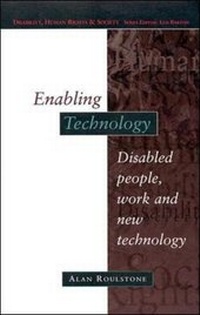
Enabling Technology
Published on 16. April 1998
Book
Paperback/Softback
160 pages
978-0-335-19801-6 (ISBN)
Description
*What is the significance of new microchip technologies for disabled workers/job seekers?
*How is new technology enabling some disabled workers to gain enhanced access to employment and a more enabling employment?
*What are the policy implications of the research findings and the reevaluation of the role of new technology?
There is much evidence to suggest that disabled people are less likely to be afforded the same rights as able-bodied workers in accessing jobs, equal employment rights and equal access to the workplace. Using a social barriers model of disability Enabling Technology addresses the role of new technology in reducing the environmental and attitude barriers disabled people have commonly faced in the field of employment. This work is critical of established writings on disability and new technology and suggests that by adopting a medical model of disability such analyses have misrepresented the benefits of new technology for disabled people. A social barriers model views the benefits of new technology as inhering in its potential to rehabilitate disabling environments. The book addresses the urgent need to reframe policies on technology access away from a welfarist 'eligibility' model to a 'social rights' approach, one where disabled people are centrally involved in the framing, operation and review of technology access policy.
Enabling Technology is recommended reading for students and researchers in disability studies, applied social sciences and the sociology of work. It is also of relevance to those working in rehabilitation medicine and occupational therapy.
*How is new technology enabling some disabled workers to gain enhanced access to employment and a more enabling employment?
*What are the policy implications of the research findings and the reevaluation of the role of new technology?
There is much evidence to suggest that disabled people are less likely to be afforded the same rights as able-bodied workers in accessing jobs, equal employment rights and equal access to the workplace. Using a social barriers model of disability Enabling Technology addresses the role of new technology in reducing the environmental and attitude barriers disabled people have commonly faced in the field of employment. This work is critical of established writings on disability and new technology and suggests that by adopting a medical model of disability such analyses have misrepresented the benefits of new technology for disabled people. A social barriers model views the benefits of new technology as inhering in its potential to rehabilitate disabling environments. The book addresses the urgent need to reframe policies on technology access away from a welfarist 'eligibility' model to a 'social rights' approach, one where disabled people are centrally involved in the framing, operation and review of technology access policy.
Enabling Technology is recommended reading for students and researchers in disability studies, applied social sciences and the sociology of work. It is also of relevance to those working in rehabilitation medicine and occupational therapy.
Reviews / Votes
"...informative and engaging." - Public AdministrationMore details
Language
English
Place of publication
Milton Keynes
United Kingdom
Target group
Professional and scholarly
Illustrations
Bibliography, index
Dimensions
Height: 229 mm
Width: 150 mm
Thickness: 13 mm
Weight
290 gr
ISBN-13
978-0-335-19801-6 (9780335198016)
Copyright in bibliographic data and cover images is held by Nielsen Book Services Limited or by the publishers or by their respective licensors: all rights reserved.
Schweitzer Classification
Person
Alan Roulstone is currently Programme Director for Social Sciences at the University of Sunderland where he lectures in Disability Studies and Work, Leisure and Employment. He obtained a PhD in Disability Studies at the Open University in 1995 and has previously lectured in Employment Studies and Law at Staffordshire University.
Content
Introduction
Part one
Issues in enabling technology
Disability and new technology
a barriers approach
The promise of new technology
Researching new technology
the road to nowhere?
Unpromising environments
structured employment and technology
The special aids to employment scheme
an enabling force?
Part two
Disabled workers and new technology
Pathways to work with new technology
Enabling technology
the benefits of new technology
Resilient barriers
continued limits to enabling technology
Part three
Conclusions and policy points
Conclusions
Enabling technology policy and social rights
Bibliography
Index.
Part one
Issues in enabling technology
Disability and new technology
a barriers approach
The promise of new technology
Researching new technology
the road to nowhere?
Unpromising environments
structured employment and technology
The special aids to employment scheme
an enabling force?
Part two
Disabled workers and new technology
Pathways to work with new technology
Enabling technology
the benefits of new technology
Resilient barriers
continued limits to enabling technology
Part three
Conclusions and policy points
Conclusions
Enabling technology policy and social rights
Bibliography
Index.