

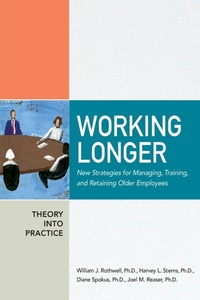
Working Longer
New Strategies for Managing, Training, and Retaining Older Employees
Published on 13. April 2018
Book
Paperback/Softback
272 pages
978-0-8144-7392-4 (ISBN)
Description
While many employers have traditionally viewed their younger employees as their most precious assets, the truth is that their more seasoned workers are often their most valuable. Written by experts in the field of workforce education and the management of older workers, Working Longer provides readers with the tools they need to nurture and empower these vital employees. You'll discover: creative strategies for recruiting retirees and developing a senior-friendly workplace; career and performance management techniques for effectively motivating and engaging older workers; and instructional design facilitation methods that will enable older workers to upgrade their skills. In the face of an unparalleled talent shortage, the knowledge, skills, and capabilities of baby boomers and senior employees are more critical than ever. With compassion, wisdom, and essential tips to help leaders guide corporate strategy with their ageing workforce in mind, Working Longer shows employers how to value, coach, and keep their top talent.
More details
Language
English
Place of publication
United States
Publishing group
HarperCollins Focus
Target group
Professional and scholarly
Dimensions
Height: 229 mm
Width: 152 mm
Thickness: 16 mm
Weight
449 gr
ISBN-13
978-0-8144-7392-4 (9780814473924)
Copyright in bibliographic data and cover images is held by Nielsen Book Services Limited or by the publishers or by their respective licensors: all rights reserved.
Schweitzer Classification
Persons
WILLIAM J. ROTHWELL, PH.D., SPHR, CPLP FELLOW, is Professor of Workplace Learning and Performance at Pennsylvania State University and President of Rothwell Associates, a premier human resources consulting firm. Harvey Stearns, Ph.D. (Akron, OH) is the Director of the Institute for Lifespan Development and Gerontology at the University of Akron. Diane Spokus (University Park, PA) is an adjunct instructor at Penn State University. Joel Reaser (Arlington, VA) is S. V. P. at the National Older Worker Career Center. Harvey Stearns, Ph.D. (Akron, OH) is the Director of the Institute for Lif Joel Reaser (Arlington, VA) is S. V. P. at the National Older Worker Career Center. Harvey Stearns, Ph.D. (Akron, OH) is the Director of the Institute for Lifespan Development and Gerontology at the University of Akron.
Content
Contents
Forewordxi
Prefacexv
Acknowledgments xxiii
Advance Organizer for This Book xxv
Part I Introduction1
Chapter 1
Older Adult Workers in Today's Work World3
Defining Adult and Older Adult Workers 6
Self-Management 9
Organizational Issues 13
Working Longer 15
Changes in the Work Environment16
Challenges to Be Faced18
Work in the Same Organization or Move?21
Careers in Later Life23
Support from Employers29
Decision Making and Work Opportunities32
Midlife Changes 33
Summary35
Chapter 2
Adapting the Workplace to Accommodate Physiological Age-Related Changes in Older Adults 36
Aging: A Global View 40
Biological Aging 40
Psychological Aging 50
Social Aging 52
Older Adults Continuing to Work 53
Designing the Workplace for Older Americans 54
Stereotypes About Aging56
The Americans With Disabilities Act57
Minorities in the Workplace63
Work Issues66
Active Older Workers66
Adapting the Workplace for Older Adults67
Summary 68
Chapter 3
How to Train Older Adults: Aging Influences on Cognitive Tasks 69
Translating What We Know into Adult and Older Worker Training72
Summary 80
Part II Design83
Chapter 4
Instructional Design for Training Older Workers85
ADDIE Model85
Individual Differences98
Training99
The Value of Training Older Workers101
How Older Adults Learn Best104
Guidelines for Training Older Adults105
Transferring Training Results105
Training Modalities106
Older Adults as Learners107
Diversity Training109
Summary110
Chapter 5
Improving Learning Performance112
Workplace Learning Competence and Its Importance112
Workplace Learning Competence and Workplace Learning Climate 113
Learner Characteristics of Older Versus Younger Adults116
Implications of Learning Principles for Training Older Adults117
Summary126
Chapter 6
Career Development for Adults and Older Workers127
Self-Management: Career and Retirement127
Obstacles to Self-Management144
Models of Career Development146
Looking to the Future151
Recommendations155
Future Directions157
Summary158
Part III Managing Organizational Knowledge167
Chapter 7
What Employers Can Do to Plan for an Aging Workforce169
The Evolving Workplace169
Getting Ahead of the Trends172
Action Steps for Preparing for the Workforce of the Future197
Summary 200
Appendix: Resources List201
Notes214
About the Authors234
Index239
Forewordxi
Prefacexv
Acknowledgments xxiii
Advance Organizer for This Book xxv
Part I Introduction1
Chapter 1
Older Adult Workers in Today's Work World3
Defining Adult and Older Adult Workers 6
Self-Management 9
Organizational Issues 13
Working Longer 15
Changes in the Work Environment16
Challenges to Be Faced18
Work in the Same Organization or Move?21
Careers in Later Life23
Support from Employers29
Decision Making and Work Opportunities32
Midlife Changes 33
Summary35
Chapter 2
Adapting the Workplace to Accommodate Physiological Age-Related Changes in Older Adults 36
Aging: A Global View 40
Biological Aging 40
Psychological Aging 50
Social Aging 52
Older Adults Continuing to Work 53
Designing the Workplace for Older Americans 54
Stereotypes About Aging56
The Americans With Disabilities Act57
Minorities in the Workplace63
Work Issues66
Active Older Workers66
Adapting the Workplace for Older Adults67
Summary 68
Chapter 3
How to Train Older Adults: Aging Influences on Cognitive Tasks 69
Translating What We Know into Adult and Older Worker Training72
Summary 80
Part II Design83
Chapter 4
Instructional Design for Training Older Workers85
ADDIE Model85
Individual Differences98
Training99
The Value of Training Older Workers101
How Older Adults Learn Best104
Guidelines for Training Older Adults105
Transferring Training Results105
Training Modalities106
Older Adults as Learners107
Diversity Training109
Summary110
Chapter 5
Improving Learning Performance112
Workplace Learning Competence and Its Importance112
Workplace Learning Competence and Workplace Learning Climate 113
Learner Characteristics of Older Versus Younger Adults116
Implications of Learning Principles for Training Older Adults117
Summary126
Chapter 6
Career Development for Adults and Older Workers127
Self-Management: Career and Retirement127
Obstacles to Self-Management144
Models of Career Development146
Looking to the Future151
Recommendations155
Future Directions157
Summary158
Part III Managing Organizational Knowledge167
Chapter 7
What Employers Can Do to Plan for an Aging Workforce169
The Evolving Workplace169
Getting Ahead of the Trends172
Action Steps for Preparing for the Workforce of the Future197
Summary 200
Appendix: Resources List201
Notes214
About the Authors234
Index239