

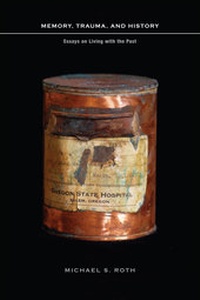
Memory, Trauma, and History
Essays on Living with the Past
Published on 1. November 2011
Book
Hardback
336 pages
978-0-231-14568-8 (ISBN)
Description
In these essays, Michael S. Roth uses psychoanalysis to build a richer understanding of history, and then takes a more expansive conception of history to decode the cultural construction of memory. He first examines the development in nineteenth-century France of medical criteria for diagnosing memory disorders, which signal fundamental changes in the understanding of present and past. He next explores links between historical consciousness and issues relating to the psyche, including trauma and repression and hypnosis and therapy. Roth turns to the work of postmodern theorists in connection with the philosophy of history and then examines photography's capacity to capture traces of the past. He considers how we strive to be faithful to the past even when we don't care about getting it right or using it productively. Roth concludes with essays defending pragmatic and reflexive liberal education. Drawing on his experiences as a teacher and academic leader, he speaks of living with the past without being dominated by it.
Reviews / Votes
Roth rules! A compulsive peeper into the corners of the historical past, he is the visual historian's historian. Not only because Roth is smart, not only because he finds odd things that captured people's attention in the past, not only because he is theoretically sophisticated without being dogmatic, but also because as a thinker and writer he is always able to engage his audience on every topic. -- Sander L. Gilman, Emory University With critical agility and grace, Roth's life-affirming and judicious work urges us to absorb the critical lessons of postmodern irony and resist the lure of cold and superior sophistication in favor of efforts to find meaning in ever renewed inquiries into who we think we are and what we want to be. -- Carolyn J. Dean, Brown University, author of Aversion and Erasure: The Fate of the Victim after the Holocaust In this excellent work, Roth provides sobering antidotes to recent hyperboles, claiming the most abject forms of victimization and trauma have recently become the ultimate forms of legitimation. A lucid, boldly interdisciplinary book, Roth's work will stimulate exchange among historians, critical theorists, literary critics, students of visual culture, and all readers concerned about the fate of liberal education. -- Dominick La Capra, Cornell University This collection revises our normal conceptions of the relation between 'history' and 'the past.' Roth's essays challenge us to rethink the links among history, psychoanalysis, philosophy, and the body. -- Hayden White, University of California, Santa Cruz exceptional and wide-ranging -- Robert Eaglestone Times Higher Education Not only does it stand out as a profound interdisciplinary study on the multilayered facets of (collective) memory and its (re)construction, but it is in itself a valuable record of contemporary discourses on memory, since its essays were written over more than twenty years. -- David Kerler Modern Language ReviewMore details
Language
English
Place of publication
New York
United States
Product notice
Trade binding
Illustrations
15 illus.
Dimensions
Height: 229 mm
Width: 152 mm
Weight
567 gr
ISBN-13
978-0-231-14568-8 (9780231145688)
Copyright in bibliographic data and cover images is held by Nielsen Book Services Limited or by the publishers or by their respective licensors: all rights reserved.
Schweitzer Classification
Other editions
Additional editions
Book
11/2011
Columbia University Press
€34.66
Shipment within 10-20 days
E-Book
11/2011
1st Edition
Columbia University Press
from
€48.29
Available for download
Person
Michael S. Roth is the president of Wesleyan University and the author of five books, including The Ironist's Cage: Trauma, Memory, and the Construction of History and Knowing and History: Appropriations of Hegel in Twentieth-Century France. He has also edited several books of intellectual and cultural history, and he curated an exhibition entitled Sigmund Freud: Conflict and Culture, which opened at the Library of Congress.