

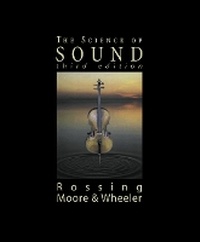
Science of Sound, The
3rd Edition
Published on 18. January 2002
Book
Hardback
808 pages
978-0-8053-8565-6 (ISBN)
Description
The Science of Sound is widely recognised as the leading textbook in the field.
It provides an excellent introduction to acoustics for students without college physics or a strong background in mathematics. In the 3rd Edition, Richard Moore and Paul Wheeler join Tom Rossing in updating The Science of Sound to include a wide range of important technological developments in the field of acoustics. Exercises and review questions have been added to the end of each chapter to help students study the material.
It provides an excellent introduction to acoustics for students without college physics or a strong background in mathematics. In the 3rd Edition, Richard Moore and Paul Wheeler join Tom Rossing in updating The Science of Sound to include a wide range of important technological developments in the field of acoustics. Exercises and review questions have been added to the end of each chapter to help students study the material.
More details
Edition
3rd edition
Language
English
Place of publication
Upper Saddle River
United States
Target group
Professional and scholarly
Dimensions
Height: 236 mm
Width: 199 mm
Thickness: 46 mm
Weight
1490 gr
ISBN-13
978-0-8053-8565-6 (9780805385656)
Copyright in bibliographic data and cover images is held by Nielsen Book Services Limited or by the publishers or by their respective licensors: all rights reserved.
Schweitzer Classification
Other editions
Previous edition
Thomas Rossing | Thomas D. Rossing | Richard F. Moore
Science of Sound, The
Pearson New International Edition
Book
11/2013
3rd Edition
Pearson Education Limited
€90.49
Shipment within 10-20 days
Persons
Thomas D. Rossing completed his B.A. at Luther College in 1950, his M.S. and Ph.D. at Iowa State University in 1954. His dissertation was in the field of molecular physics. After graduating, he went into industrial research, and from there, he went to teaching. Currently, he is a professor at Northern Illinois University.
Professor Rossing has published more than 200 papers and ten books. He is a Fellow of the Acoustical Society of America and of the American Association for the Advancement of Science. He has held about a dozen research positions other than at his home institution-in national laboratories, in research universities, and in several other countries. The Acoustical Society of America awarded him the Silver Medal in Musical Acoustics.
Professor Rossing has published more than 200 papers and ten books. He is a Fellow of the Acoustical Society of America and of the American Association for the Advancement of Science. He has held about a dozen research positions other than at his home institution-in national laboratories, in research universities, and in several other countries. The Acoustical Society of America awarded him the Silver Medal in Musical Acoustics.
Content
I. VIBRATIONS, WAVES, AND SOUNDS.
1. What is Sound?
2. Vibrating Systems.
3. Waves.
4. Resonance.
II. PERCEPTION AND MEASUREMENT OF SOUND.
5. Hearing.
6. Sound Pressure, Power, and Loudness.
7. Pitch and Timbre.
8. Combination Tones and Harmony.
9. Musical Scales and Temperament.
III. MUSICAL INSTRUMENTS.
10. String Instruments.
11. Brass Instruments.
12. Woodwind Instruments.
13. Percussion Instruments.
14. Keyboard Instruments.
IV. THE HUMAN VOICE.
15. Speech Production.
16. Speech Recognition, Analysis, and Synthesis.
17. Singing.
V. ELECTROACOUSTICS.
18. Electronic Circuits.
19. Loudspeakers.
20. Microphones, Amplifiers, and Tuners.
21. Digital Circuits and Techniques.
22. Sound Recording.
VI. ROOM ACOUSTICS.
23. Auditorium Acoustics.
24. Electronic Reinforcement of Sound.
25. Small Rooms, Home Listening Rooms and Recording Studios.
VII. ELECTRONIC AND COMPUTER MUSIC.
26. Music Technology and its Origins.
27. Analog Electronic Music.
28. Digital Audio and Processing.
29. Computer Music and Virtual Acoustics.
VIII. ENVIRONMENTAL SOUND.
30. Noise in the Environment.
31. Effects of Noise on People.
32. Control of Noise.
1. What is Sound?
2. Vibrating Systems.
3. Waves.
4. Resonance.
II. PERCEPTION AND MEASUREMENT OF SOUND.
5. Hearing.
6. Sound Pressure, Power, and Loudness.
7. Pitch and Timbre.
8. Combination Tones and Harmony.
9. Musical Scales and Temperament.
III. MUSICAL INSTRUMENTS.
10. String Instruments.
11. Brass Instruments.
12. Woodwind Instruments.
13. Percussion Instruments.
14. Keyboard Instruments.
IV. THE HUMAN VOICE.
15. Speech Production.
16. Speech Recognition, Analysis, and Synthesis.
17. Singing.
V. ELECTROACOUSTICS.
18. Electronic Circuits.
19. Loudspeakers.
20. Microphones, Amplifiers, and Tuners.
21. Digital Circuits and Techniques.
22. Sound Recording.
VI. ROOM ACOUSTICS.
23. Auditorium Acoustics.
24. Electronic Reinforcement of Sound.
25. Small Rooms, Home Listening Rooms and Recording Studios.
VII. ELECTRONIC AND COMPUTER MUSIC.
26. Music Technology and its Origins.
27. Analog Electronic Music.
28. Digital Audio and Processing.
29. Computer Music and Virtual Acoustics.
VIII. ENVIRONMENTAL SOUND.
30. Noise in the Environment.
31. Effects of Noise on People.
32. Control of Noise.