

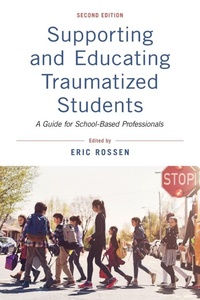
Supporting and Educating Traumatized Students
A Guide for School-Based Professionals
2nd Edition
Published on 2. April 2020
Book
Paperback/Softback
432 pages
978-0-19-005273-7 (ISBN)
Description
Traumatic or adverse experiences are pervasive among school-aged children and youth. Trauma undermines students' ability to learn, form relationships, and manage their feelings and behavior. School-based professionals working with traumatized students are often unaware of their complex needs or how to meet them within the hours of the typical school day.
The second edition of Supporting and Educating Traumatized Students is a comprehensive guide for understanding and assisting students with a history of trauma. Designed specifically for professionals in mental health and education settings, this volume combines content and expertise from practitioners, researchers, and other experts with backgrounds in education, school psychology, school social work, school administration, resilience, school policy, and trauma. The book provides a thorough background on current research in trauma and its impact on school functioning; administrative and policy considerations; and a broad set of practical and implementable strategies and resources for adapting and differentiating instruction, modifying the classroom and school environments, and building competency for students and staff. New chapters address topics such as post-traumatic growth, interpersonal violence, and trauma screening and assessment among others. Educators can continue to use this updated edition as a reference and ongoing resource, with the ability to quickly and easily access a variety of school-based strategies to help improve educational and social outcomes for traumatized students.
The second edition of Supporting and Educating Traumatized Students is a comprehensive guide for understanding and assisting students with a history of trauma. Designed specifically for professionals in mental health and education settings, this volume combines content and expertise from practitioners, researchers, and other experts with backgrounds in education, school psychology, school social work, school administration, resilience, school policy, and trauma. The book provides a thorough background on current research in trauma and its impact on school functioning; administrative and policy considerations; and a broad set of practical and implementable strategies and resources for adapting and differentiating instruction, modifying the classroom and school environments, and building competency for students and staff. New chapters address topics such as post-traumatic growth, interpersonal violence, and trauma screening and assessment among others. Educators can continue to use this updated edition as a reference and ongoing resource, with the ability to quickly and easily access a variety of school-based strategies to help improve educational and social outcomes for traumatized students.
Reviews / Votes
Finally, a resource for traumatized children in educational settings!!! These children have so often had their reactions and behaviors misunderstood as conduct and learning difficultiesthis book gives teachers, administrators and parents information and strategies to offer these children effective assistance * Christine A. Courtois, PhD, ABPP, , Licensed Psychologist, Private Practice, Washington, DC (now retired), Consultant/Trainer, Trauma Psychology and Trauma Treatment, Bethany Beach, DE, CoAuthor, Treating Complex Trauma: A Sequenced, Relationshipbased Approach, Author, Healing the Incest Wound: Adult Survivors in Therapy * As a supervisor of schoolbased mental health practitioners, I highly recommend the second edition of Supporting and Educating Traumatized Students. The chapters incorporate reallife examples and practical solutions that can be used in any educational setting. The second edition provides additional supports for systemwide change in section three. This is an additional bonus for any school administrator who wants to support trauma informed practices in their schools. * Christina Conolly, PsyD, NCSP, , Director, Division of Psychological Services, Montgomery County Public Schools * For educators hoping to increase their knowledge and deepen their practice, this book has a wealth of information, strategies and traumainformed considerations to support students.A It includes ways to increase safety, compassionate relationships, and empowerment. Practical strategies for classrooms and schoolwide policies allow multiple entry points for educators. * Joyce Dorado, PhD, Director, University of California, San Francisco, HEARTS (Healthy Environments and Response to Trauma in Schools) *More details
Edition
2nd Revised edition
Language
English
Place of publication
New York
United States
Target group
Professional and scholarly
Edition type
Revised edition
Dimensions
Height: 234 mm
Width: 156 mm
Thickness: 24 mm
Weight
649 gr
ISBN-13
978-0-19-005273-7 (9780190052737)
Copyright in bibliographic data and cover images is held by Nielsen Book Services Limited or by the publishers or by their respective licensors: all rights reserved.
Schweitzer Classification
Other editions
Additional editions
E-Book
01/2020
2nd Edition
OUP eBook
€35.49
Available for download
E-Book
01/2020
2nd Edition
OUP eBook
€35.49
Available for download
Person
Eric Rossen, PhD, NCSP, is a Nationally Certified School Psychologist, the director of professional development and standards for the National Association of School Psychologists (NASP), a licensed psychologist in Maryland, and a credentialed National Register Health Service psychologist. He has worked in public schools and in independent practice and has served as a college instructor and adjunct faculty at the University of Missouri and Prince George's Community College.
Content
SECTION 1: Introduction to Trauma and Its Impact on School Functioning
Chapter 1: The Evolution of Trauma Informed Schools
Kathryn Simon, Sidonia Compton, and Stacy Overstreet
Chapter 2: How the Traumatic Experiences of Students Manifest in School Settings
Ron Hertel and Mona M. Johnson
Chapter 3: A Trauma-Informed Culturally-Responsive (TICR) Approach in the Classroom
Isaiah Pickens
Chapter 4: Instructional Strategies for a Trauma Informed Classroom
Hannah M. Grossman
Chapter 5: Understanding Posttraumatic Adjustment Trajectories in School-Age Youth: Supporting Stress Resistance, Resilient Recovery, and Growth
Christopher M. Layne and Stevan Hobfoll
SECTION 2: Potential Sources of Trauma and Implications for Classroom Instruction and School-Based Interventions
Chapter 6: Immigrant Students
Lyn Morland and Dina Birman
Chapter 7: Students Experiencing Homelessness
Diana Bowman and Patricia A. Popp
Chapter 8: Students Exposed to Community Violence
Dorothy Rohde-Collins
Chapter 9: Research and Best Practices to Support Students with Incarcerated Parents
Megan Sullivan
Chapter 10: Students with Parents Involved in Substance Abuse or Dependence
Celeste M. Malone, Tierra T. Ellis, and DeLon Isom
Chapter 11: Students Exposed to Domestic Violence
Lisa Weed Phifer
Chapter 12: Supporting Grieving Students
David Schonfeld and Thomas Demaria
Chapter 13: Students from Military Families
Mark C. Pisano
Chapter 14: Students Affected by Child Maltreatment
Delphine Collin-Vezina
Chapter 15: Students affected by interpersonal violence
Viann N. Nguyen-Feng, Tim Carroll, and Lindsey King
Chapter 16: Supporting Students Following Crises and Natural Disasters
Benjamin S. Fernandez
SECTION 3: Administrative and Policy Considerations
Chapter 17: Addressing Secondary Traumatic Stress in Trauma Informed Schools
Brenda Sweeney and James Caringi
Chapter 18: Trauma screening and assessment
Katie Eklund, Taylor Koriakin, Sandy Chafouleas, and Sophia Dodge
Chapter 19: Design as the Missing Variable in Trauma-Informed Schools
Dak Kopec and J. Davis Harte
Chapter 20: Developing School Staff Buy-In for Trauma-Informed Schools
Courtney N. Baker, Julia M. Augenstern, Stephanie A. Moberg, Nyx Robey, and Megan C. Saybe
Chapter 21: Effective Implementation and Evaluation of Trauma-Informed Schools
Elizabeth Cook and Pamela Black
Chapter 1: The Evolution of Trauma Informed Schools
Kathryn Simon, Sidonia Compton, and Stacy Overstreet
Chapter 2: How the Traumatic Experiences of Students Manifest in School Settings
Ron Hertel and Mona M. Johnson
Chapter 3: A Trauma-Informed Culturally-Responsive (TICR) Approach in the Classroom
Isaiah Pickens
Chapter 4: Instructional Strategies for a Trauma Informed Classroom
Hannah M. Grossman
Chapter 5: Understanding Posttraumatic Adjustment Trajectories in School-Age Youth: Supporting Stress Resistance, Resilient Recovery, and Growth
Christopher M. Layne and Stevan Hobfoll
SECTION 2: Potential Sources of Trauma and Implications for Classroom Instruction and School-Based Interventions
Chapter 6: Immigrant Students
Lyn Morland and Dina Birman
Chapter 7: Students Experiencing Homelessness
Diana Bowman and Patricia A. Popp
Chapter 8: Students Exposed to Community Violence
Dorothy Rohde-Collins
Chapter 9: Research and Best Practices to Support Students with Incarcerated Parents
Megan Sullivan
Chapter 10: Students with Parents Involved in Substance Abuse or Dependence
Celeste M. Malone, Tierra T. Ellis, and DeLon Isom
Chapter 11: Students Exposed to Domestic Violence
Lisa Weed Phifer
Chapter 12: Supporting Grieving Students
David Schonfeld and Thomas Demaria
Chapter 13: Students from Military Families
Mark C. Pisano
Chapter 14: Students Affected by Child Maltreatment
Delphine Collin-Vezina
Chapter 15: Students affected by interpersonal violence
Viann N. Nguyen-Feng, Tim Carroll, and Lindsey King
Chapter 16: Supporting Students Following Crises and Natural Disasters
Benjamin S. Fernandez
SECTION 3: Administrative and Policy Considerations
Chapter 17: Addressing Secondary Traumatic Stress in Trauma Informed Schools
Brenda Sweeney and James Caringi
Chapter 18: Trauma screening and assessment
Katie Eklund, Taylor Koriakin, Sandy Chafouleas, and Sophia Dodge
Chapter 19: Design as the Missing Variable in Trauma-Informed Schools
Dak Kopec and J. Davis Harte
Chapter 20: Developing School Staff Buy-In for Trauma-Informed Schools
Courtney N. Baker, Julia M. Augenstern, Stephanie A. Moberg, Nyx Robey, and Megan C. Saybe
Chapter 21: Effective Implementation and Evaluation of Trauma-Informed Schools
Elizabeth Cook and Pamela Black