

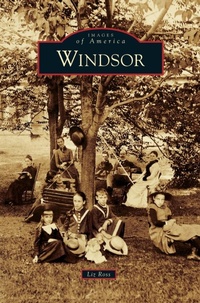
Windsor
Published on 30. April 2012
Book
Hardback
130 pages
978-1-5316-5062-9 (ISBN)
Description
Nestled in the shadow of beautiful Mount Ascutney and bordering the banks of the Connecticut River, Windsor was known as a manufacturing town from the 1800s through the mid-1900s. In the 1800s, groundbreaking manufacturing techniques were launched here, and in the 1900s, Scribner editor and Windsor resident Maxwell Perkins discovered a trio of America's literary greats: F. Scott Fitzgerald, Ernest Hemingway, and Thomas Wolfe. Vermont was the first state to declare that it would not tolerate slavery within its boundaries. During the 19th century through the 20th century, Windsor became an attractive destination for many city folks from New York; artists, writers, architects, and politicians came to the bustling town. Windsor brings to light the important and colorful history of the town that gave birth to the state of Vermont in the 1700s.
More details
Language
English
Product notice
sewn/stitched
Cloth over boards
Dimensions
Height: 250 mm
Width: 175 mm
Thickness: 12 mm
Weight
417 gr
ISBN-13
978-1-5316-5062-9 (9781531650629)
Copyright in bibliographic data and cover images is held by Nielsen Book Services Limited or by the publishers or by their respective licensors: all rights reserved.
Schweitzer Classification
Person
Liz Ross has been active in Women's and Gay Liberation and socialist politics since the early 1970s. She is a founder member and now life member of the Australian Lesbian and Gay Archives (ALGA). As a union delegate in the 1980s and 1990s she was involved in and has written extensively about workers struggles including 'Dedication doesn't pay the rent! The 1986 Victorian Nurses Strike' in Sandra Bloodworth and Tom O'Lincoln (eds) Rebel Women in Australian Working Class History and Dare to Struggle, Dare to Win! Builders Labourers Fight Deregistration, 1981-94. Liz is also the author of Revolution is for us: the left and gay liberation in Australia, reprinted by Interventions in 2019.