

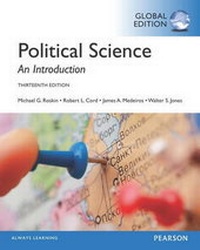
Political Science: An Introduction with MyPolSciLab, Global Edition
13th Edition
Published on 22. September 2014
Book
Mixed media product
978-1-292-06007-1 (ISBN)
Description
Explains the basics of political science
Political Science: An Introduction, 13/e, provides a comprehensive and jargon-free introduction to the field's basic concepts and themes. It draws examples from the U.S. and other countries to introduce the entire field of political science to new readers. The authors stress how exciting politics can be, balancing practical and theoretical knowledge.
Political Science: An Introduction, 13/e, provides a comprehensive and jargon-free introduction to the field's basic concepts and themes. It draws examples from the U.S. and other countries to introduce the entire field of political science to new readers. The authors stress how exciting politics can be, balancing practical and theoretical knowledge.
More details
Other editions
Previous edition
Michael G. Roskin | Robert L. Cord | James A. Medeiros
Political Science Pearson New International Edition, plus MyPoliSciLab without eText
Book
07/2013
12th Edition
Pearson Education Limited
€108.86
Article exhausted; check for reprint
Content
PART I: THE BASES OF POLITICS
Chapter 1: Politics and Political Science
Chapter 2: Theories
Chapter 3: Ideologies
Chapter 4: States
Chapter 5: Constitutions
Chapter 6: Regimes
PART II: POLITICAL ATTITUDES
Chapter 7: Political Culture
Chapter 8: Public Opinion
PART III: POLITICAL INTERACTIONS
Chapter 9: Political Communication
Chapter 10: Interest Groups
Chapter 11: Parties
Chapter 12: Elections
PART IV: POLITICAL INSTITUTIONS
Chapter 13: Legislatures
Chapter 14: Executives and Bureaucracies
Chapter 15: Judiciaries
PART VI: WHAT POLITICAL SYSTEMS DO
Chapter 16: Political Economy
Chapter 17: Political Violence
Chapter 18: International Relations
Chapter 1: Politics and Political Science
Chapter 2: Theories
Chapter 3: Ideologies
Chapter 4: States
Chapter 5: Constitutions
Chapter 6: Regimes
PART II: POLITICAL ATTITUDES
Chapter 7: Political Culture
Chapter 8: Public Opinion
PART III: POLITICAL INTERACTIONS
Chapter 9: Political Communication
Chapter 10: Interest Groups
Chapter 11: Parties
Chapter 12: Elections
PART IV: POLITICAL INSTITUTIONS
Chapter 13: Legislatures
Chapter 14: Executives and Bureaucracies
Chapter 15: Judiciaries
PART VI: WHAT POLITICAL SYSTEMS DO
Chapter 16: Political Economy
Chapter 17: Political Violence
Chapter 18: International Relations