

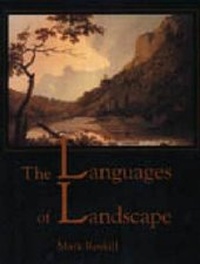
The Languages of Landscape
Published on 12. December 1996
Book
Hardback
304 pages
978-0-271-01553-8 (ISBN)
Description
In The Languages of Landscape, Mark Roskill employs a new approach to understanding Western landscape art, from antiquity to the present, by linking the concerns of its creators to the ways in which such art was viewed in successive periods or contexts. Roskill uses new methodologies deriving from sociology, anthropology, the study of rhetorical theory, and especially a version of visual semiotics for this analysis.
The discussion covers artists not usually associated with landscape, such as Goya and Gericault, as well as major figures such as Bruegel and Duerer. Roskill ranges over topics of current interest such as the gendering of art; art in the service of colonialism; popularized uses of landscape; and the imagery of war-scarred countryside. He addresses issues of intertextuality; audience awareness; response to social and industrial developments; the tropologies of rhetoric as they apply to visual imagery; and the problematic status of landscape art in this century.
Thematically organized within a loosely chronological framework, The Languages of Landscape combines detailed analysis of specific examples with supporting material, related texts of the time, and a larger theoretical exposition. At the same time it serves as a reference work on basic topics such as the rise of independent landscape and the picturesque and the sublime. Eighty illustrations, including twelve in color, accompany the text, and an appended glossary of technical and linguistic terms is provided.
The discussion covers artists not usually associated with landscape, such as Goya and Gericault, as well as major figures such as Bruegel and Duerer. Roskill ranges over topics of current interest such as the gendering of art; art in the service of colonialism; popularized uses of landscape; and the imagery of war-scarred countryside. He addresses issues of intertextuality; audience awareness; response to social and industrial developments; the tropologies of rhetoric as they apply to visual imagery; and the problematic status of landscape art in this century.
Thematically organized within a loosely chronological framework, The Languages of Landscape combines detailed analysis of specific examples with supporting material, related texts of the time, and a larger theoretical exposition. At the same time it serves as a reference work on basic topics such as the rise of independent landscape and the picturesque and the sublime. Eighty illustrations, including twelve in color, accompany the text, and an appended glossary of technical and linguistic terms is provided.
More details
Language
English
Place of publication
Pennsylvania
United States
Target group
College/higher education
Professional and scholarly
Product notice
sewn/stitched
Illustrations
12 Halftones, color; 68 Halftones, black and white
Dimensions
Height: 279 mm
Width: 216 mm
Thickness: 21 mm
Weight
1021 gr
ISBN-13
978-0-271-01553-8 (9780271015538)
Copyright in bibliographic data and cover images is held by Nielsen Book Services Limited or by the publishers or by their respective licensors: all rights reserved.
Schweitzer Classification
Person
Mark Roskill is Professor of the History of Modern Art at the University of Massachusetts at Amherst. He is the author of, most recently, Klee, Kandinsky, and the Thought of Their Time: A Critical Perspective (1992), The Interpretation of Pictures (1989), and What Is Art History? (1976; rev. ed. 1989).