

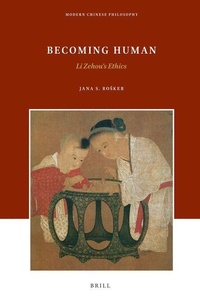
Becoming Human
Li Zehou's Ethics
Published on 23. January 2020
Book
Hardback
346 pages
978-90-04-42365-7 (ISBN)
Description
The book Becoming Human: Li Zehou's Ethics offers a critical introduction and in-depth analysis of Li Zehou's moral philosophy and ethics. Li Zehou, who is one of the most influential contemporary Chinese philosophers, believes that ethics is the most important philosophical discipline. He aims to revive, modernize, develop, and complement Chinese traditional ethics through what he calls "transformative creation" (??????). He takes Chinese ethics, which represents the main pillar of Chinese philosophy, as a vital basis for his elaborations on certain aspects of Kant's, Marx's and other Western theoreticians' thoughts on ethics, and hopes to contribute in this way to the development of a new global ethics for all of humankind.
Reviews / Votes
"...an introduction to Li's ethical thought, such as the bookunder review here, is a greatly needed contribution, as it illuminates facets of
his thought that have, thus far, not been adequately dealt with by Western
scholars. Its author, Jana Rosker, professor at the University of Ljubljana, is one
of the leading Western scholars on modern Chinese philosophy and also on Li
Zehou's thought." - Karl-Heinz Pohl, Trier University, Germany in Journal of
Chinese Studies, No. 73
"Finding a suitable way that helps to sysytematize and interpret in a coherent manner such a profoundly
rich work is a challenging task that Rosker's work does not only execute masterfully but does it with style.
This book is a must read for all enthusiasts of Chinese culture, both classical and modern, and a great
guidebook for students of twentieth-century Chinese social and ethical thought." - Lehel Balogh,
Hokkaido University in Religious Studies Review, Vol. 47, No. 3 (September 2021).
More details
Series
Language
English
Place of publication
Leiden
Netherlands
Target group
Professional and scholarly
Product notice
sewn/stitched
Cloth over boards
Dimensions
Height: 235 mm
Width: 155 mm
Thickness: 26 mm
Weight
667 gr
ISBN-13
978-90-04-42365-7 (9789004423657)
Copyright in bibliographic data and cover images is held by Nielsen Book Services Limited or by the publishers or by their respective licensors: all rights reserved.
Schweitzer Classification
Person
Jana S. Rosker studied Sinology and obtained her PhD degree at Vienna University in Austria. She is the author of numerous influential works on Chinese philosophy, including Following His Own Path: Li Zehou and Contemporary Chinese Thought (SUNY 2019).
Content
Notes on References, Bibliography, and Translation
Prologue: Li Zehou, His Life and Work
1 The Importance of Ethics
2 General Philosophical System and Crucial Concepts
?1?Anthropo-Historical Ontology and the Question of Becoming Human
?2?Sedimentation
?3?Subjectality
?4?One-World-View and Du ? as a Dynamic Method of "Grasping the Proper Measure"
3 Ethical Thought: an Overview
4 Ethics and Morality
?1?Unfolding the Difference: Etymological Meanings and Later Connotations
?2?Li Zehou's Distinction
?3?Historical and Developmental Foundations: From Qing ? as Collective Emotionality to Qing ? as Individual Emotion
?4?Two Kinds of Morality
?5?Political Philosophy and Moral Psychology
5 Epistemological Approaches and Ontological Foundations
?1?The Ethics of Pragmatic Reason
?2?The Emotio-Rational Structure and the Fusion of Reason and Emotions (Qing ?)
?3?Emotion-Based Substance
6 Harmony and Justice
?1?Individualism vs. Relationalism
?2?Harmony Is Higher than Justice
?3?Utilitarianism, Communitarianism and the Response to Sandel
?4?Western and Chinese Liberalism
7 Humanization of Inner Nature
?1?The Shaping of Free Will and the Role of Moral Emotions
?2?Transformation of the Empirical into the Transcendental
?3?The Forgotten Significance of Rituality
?4?The Capacity of Humanness and the Relation between Right and Good
8 Inspirations, Combinations and Critiques
?1?Classical Confucianism and Traditional Chinese Ethics
?2?Neo-Confucian Philosophies and Modern New Confucianism
?3?From Kant to Marx and Back
?4?Further Dialogues with the West
9 Theoretical and Methodological Innovations
10 Epilogue: Learning to Be Human
Appendix: General Scheme of Ethics
Sources and Literature
?1?Primary Sources (Li Zehou's Works in Chinese)
?2?Primary Sources (Li Zehou's Works in Western Languages)
?3?With Co-Authors
?4?Secondary Literature
Index of Proper Names
Index of Specific Terms, Phrases and Titles (Chinese-English)
Prologue: Li Zehou, His Life and Work
1 The Importance of Ethics
2 General Philosophical System and Crucial Concepts
?1?Anthropo-Historical Ontology and the Question of Becoming Human
?2?Sedimentation
?3?Subjectality
?4?One-World-View and Du ? as a Dynamic Method of "Grasping the Proper Measure"
3 Ethical Thought: an Overview
4 Ethics and Morality
?1?Unfolding the Difference: Etymological Meanings and Later Connotations
?2?Li Zehou's Distinction
?3?Historical and Developmental Foundations: From Qing ? as Collective Emotionality to Qing ? as Individual Emotion
?4?Two Kinds of Morality
?5?Political Philosophy and Moral Psychology
5 Epistemological Approaches and Ontological Foundations
?1?The Ethics of Pragmatic Reason
?2?The Emotio-Rational Structure and the Fusion of Reason and Emotions (Qing ?)
?3?Emotion-Based Substance
6 Harmony and Justice
?1?Individualism vs. Relationalism
?2?Harmony Is Higher than Justice
?3?Utilitarianism, Communitarianism and the Response to Sandel
?4?Western and Chinese Liberalism
7 Humanization of Inner Nature
?1?The Shaping of Free Will and the Role of Moral Emotions
?2?Transformation of the Empirical into the Transcendental
?3?The Forgotten Significance of Rituality
?4?The Capacity of Humanness and the Relation between Right and Good
8 Inspirations, Combinations and Critiques
?1?Classical Confucianism and Traditional Chinese Ethics
?2?Neo-Confucian Philosophies and Modern New Confucianism
?3?From Kant to Marx and Back
?4?Further Dialogues with the West
9 Theoretical and Methodological Innovations
10 Epilogue: Learning to Be Human
Appendix: General Scheme of Ethics
Sources and Literature
?1?Primary Sources (Li Zehou's Works in Chinese)
?2?Primary Sources (Li Zehou's Works in Western Languages)
?3?With Co-Authors
?4?Secondary Literature
Index of Proper Names
Index of Specific Terms, Phrases and Titles (Chinese-English)