

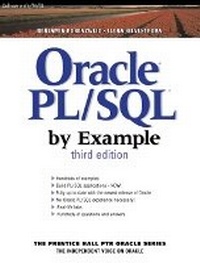
Oracle PL/SQL by Example
3rd Edition
Published on 18. September 2003
Book
Paperback/Softback
768 pages
978-0-13-117261-6 (ISBN)
Description
A new edition of this title is available, ISBN-10: 0137144229 ISBN-13: 9780137144228
More details
Edition
3rd edition
Language
English
Place of publication
Upper Saddle River
United States
Publishing group
Pearson Education (US)
Target group
College/higher education
Dimensions
Height: 174 mm
Width: 234 mm
Thickness: 35 mm
Weight
1175 gr
ISBN-13
978-0-13-117261-6 (9780131172616)
Copyright in bibliographic data and cover images is held by Nielsen Book Services Limited or by the publishers or by their respective licensors: all rights reserved.
Schweitzer Classification
Other editions
New editions
Benjamin Rosenzweig | Elena Rakhimov
Oracle PL/SQL by Example
Book
03/2015
5th Edition
Pearson
€56.00
Shipment within 15-20 days
Benjamin Rosenzweig | Elena Rakhimov
Oracle PL/SQL by Example
Book
08/2008
4th Edition
Prentice Hall
€54.46
Article exhausted; check for reprint
Previous edition
Benjamin Rosenzweig | Elena Silvestrova
Oracle PL/SQL Interactive Workbook
Book
11/2002
2nd Edition
Prentice Hall
€37.13
Article exhausted; check for reprint
Content
Acknowledgments.
About the Authors.
Introduction.
1. Programming Concepts.
Lab 1.1 The Nature of a Computer Program and Programming Languages. Lab 1.2 Good Programming Practices. Chapter 1 Test Your Thinking.
2. PL/SQL Concepts.
Lab 2.1 PL/SQL in Client-Server Architecture. Lab 2.2 PL/SQL in SQL*Plus. Chapter 2 Test Your Thinking.
3. General Programming Language Fundamentals.
Lab 3.1 PL/SQL Programming Fundamentals. Nested Blocks, and Labels. Chapter 3 Test Your Thinking.
4. SQL in PL/SQL.
Lab 4.1 Making Use of DML in PL/SQL. Lab 4.2 Making Use of SAVEPOINT. Chapter 4 Test Your Thinking.
5. Conditional Control: IF Statements.
Lab 5.1 IF Statements. Lab 5.2 ELSIF Statements. Lab 5.3 Nested IF Statements. Chapter 5 Test Your Thinking.
6. Conditional Control: Case Statements.
Lab 6.1 CASE Statements. Lab 6.2 CASE Expressions. Lab 6.3 NULLIF and COALESCE Functions. Chapter 6 Test Your Thinking.
7. Error Handling and Built-In Exceptions.
Lab 7.1 Handling Errors. Lab 7.2 Built-In Exceptions. Chapter 7 Test Your Thinking.
8. Iterative Control.
Lab 8.1 Simple Loops. Lab 8.2 WHILE Loops. Lab 8.3 Numeric FOR Loops. Lab 8.4 Nested Loops. Chapter 8 Test Your Thinking.
9. Introduction to Cursors.
Lab 9.1 Cursor Manipulation. Lab 9.2 Using Cursor FOR Loops and Nesting Cursors. Chapter 9 Test Your Thinking.
10. Exceptions.
Lab 10.1 Exception Scope. Lab 10.2 User-Defined Exceptions. Lab 10.3 Exception Propagation. Chapter 10 Test Your Thinking.
11. Exceptions: Advanced Concepts.
Lab 11.1 RAISE_APPLICATION_ERROR. Lab 11.2 EXCEPTION_INIT Pragma. Lab 11.3 SQLCODE and SQLERRM. Chapter 11 Test Your Thinking.
12. Procedures.
Lab 12.1 Creating Procedures. Lab 12.2 Passing Parameters In and Out of Procedures. Chapter 12 Test Your Thinking.
13. Functions.
Lab 13.1 Creating and Using Functions. Chapter 13 Test Your Thinking.
14. Packages.
Lab 14.1 The Benefits of Utilizing Packages. Chapter 14 Test Your Thinking.
15. Advanced Cursors.
Lab 15.1 Using Parameters with Cursors and FOR UPDATE Cursors. Lab 15.2 Cursor Variables.
16. Stored Code.
Lab 16.1 Gathering Stored Code Information. Chapter 16 Test Your Thinking.
17. Triggers.
Lab 17.1 What Triggers Are. Lab 17.2 Types of Triggers. Lab 17.3 Mutating Table Issues. Chapter 17 Test Your Thinking.
18. Collections.
Lab 18.1 PL/SQL Tables. Lab 18.2 Varrays. Lab 18.3 Multilevel Collections. Chapter 18 Test Your Thinking.
19. Records.
Lab 19.1 Records. Lab 19.2 Nested Records. Lab 19.3 Collections of Records. Chapter 19 Test Your Thinking.
20. Native Dynamic SQL.
Lab 20.1 EXECUTE IMMEDIATE Statements. Lab 20.2 OPEN-FOR, FETCH, and CLOSE Statements. Chapter 20. Test Your Thinking.
21. Oracle Supplied Packages.
Lab 21.1 Make Use of Oracle Supplied Packages.
Appendix A: Answers to Self-Review Questions.
Appendix B: PL/SQL Formatting Guide.
Appendix C: Student Database Schema.
Appendix D: Answers to Test Your Thinking Sections.
Appendix E: ANSI SQL Standards.
Index.
About the Authors.
Introduction.
1. Programming Concepts.
Lab 1.1 The Nature of a Computer Program and Programming Languages. Lab 1.2 Good Programming Practices. Chapter 1 Test Your Thinking.
2. PL/SQL Concepts.
Lab 2.1 PL/SQL in Client-Server Architecture. Lab 2.2 PL/SQL in SQL*Plus. Chapter 2 Test Your Thinking.
3. General Programming Language Fundamentals.
Lab 3.1 PL/SQL Programming Fundamentals. Nested Blocks, and Labels. Chapter 3 Test Your Thinking.
4. SQL in PL/SQL.
Lab 4.1 Making Use of DML in PL/SQL. Lab 4.2 Making Use of SAVEPOINT. Chapter 4 Test Your Thinking.
5. Conditional Control: IF Statements.
Lab 5.1 IF Statements. Lab 5.2 ELSIF Statements. Lab 5.3 Nested IF Statements. Chapter 5 Test Your Thinking.
6. Conditional Control: Case Statements.
Lab 6.1 CASE Statements. Lab 6.2 CASE Expressions. Lab 6.3 NULLIF and COALESCE Functions. Chapter 6 Test Your Thinking.
7. Error Handling and Built-In Exceptions.
Lab 7.1 Handling Errors. Lab 7.2 Built-In Exceptions. Chapter 7 Test Your Thinking.
8. Iterative Control.
Lab 8.1 Simple Loops. Lab 8.2 WHILE Loops. Lab 8.3 Numeric FOR Loops. Lab 8.4 Nested Loops. Chapter 8 Test Your Thinking.
9. Introduction to Cursors.
Lab 9.1 Cursor Manipulation. Lab 9.2 Using Cursor FOR Loops and Nesting Cursors. Chapter 9 Test Your Thinking.
10. Exceptions.
Lab 10.1 Exception Scope. Lab 10.2 User-Defined Exceptions. Lab 10.3 Exception Propagation. Chapter 10 Test Your Thinking.
11. Exceptions: Advanced Concepts.
Lab 11.1 RAISE_APPLICATION_ERROR. Lab 11.2 EXCEPTION_INIT Pragma. Lab 11.3 SQLCODE and SQLERRM. Chapter 11 Test Your Thinking.
12. Procedures.
Lab 12.1 Creating Procedures. Lab 12.2 Passing Parameters In and Out of Procedures. Chapter 12 Test Your Thinking.
13. Functions.
Lab 13.1 Creating and Using Functions. Chapter 13 Test Your Thinking.
14. Packages.
Lab 14.1 The Benefits of Utilizing Packages. Chapter 14 Test Your Thinking.
15. Advanced Cursors.
Lab 15.1 Using Parameters with Cursors and FOR UPDATE Cursors. Lab 15.2 Cursor Variables.
16. Stored Code.
Lab 16.1 Gathering Stored Code Information. Chapter 16 Test Your Thinking.
17. Triggers.
Lab 17.1 What Triggers Are. Lab 17.2 Types of Triggers. Lab 17.3 Mutating Table Issues. Chapter 17 Test Your Thinking.
18. Collections.
Lab 18.1 PL/SQL Tables. Lab 18.2 Varrays. Lab 18.3 Multilevel Collections. Chapter 18 Test Your Thinking.
19. Records.
Lab 19.1 Records. Lab 19.2 Nested Records. Lab 19.3 Collections of Records. Chapter 19 Test Your Thinking.
20. Native Dynamic SQL.
Lab 20.1 EXECUTE IMMEDIATE Statements. Lab 20.2 OPEN-FOR, FETCH, and CLOSE Statements. Chapter 20. Test Your Thinking.
21. Oracle Supplied Packages.
Lab 21.1 Make Use of Oracle Supplied Packages.
Appendix A: Answers to Self-Review Questions.
Appendix B: PL/SQL Formatting Guide.
Appendix C: Student Database Schema.
Appendix D: Answers to Test Your Thinking Sections.
Appendix E: ANSI SQL Standards.
Index.