

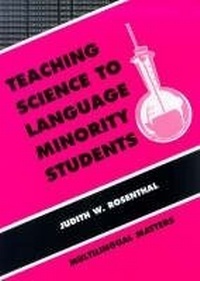
Teaching Science to Language Minority Students
Published on 30. November 1995
Book
Paperback/Softback
216 pages
978-1-85359-272-0 (ISBN)
Description
In the USA, the number of college students with limited English proficiency is increasing. Even after successfully completing a course of English as a second language, many face both linguistic and cultural barriers in mainstream classes. This book focuses on both the theory and practice of assisting such students, especially in the sciences. As the number of non-native English speaking students increases at colleges and universities, innovative approaches are needed to successfully educate this population and how science is taught may be crucial. Instruction in the students' native language may become increasingly important in attracting and retaining non-native English speakers in college. This book is aimed primarily at staff who teach science to LEP undergraduates, but others who should be interested include staff involved with postgraduate students and high school science teachers.
More details
Series
Language
English
Place of publication
Bristol
United Kingdom
Publishing group
Channel View Publications Ltd
Target group
Professional and scholarly
Dimensions
Height: 245 mm
Width: 174 mm
Thickness: 12 mm
Weight
400 gr
ISBN-13
978-1-85359-272-0 (9781853592720)
Copyright in bibliographic data and cover images is held by Nielsen Book Services Limited or by the publishers or by their respective licensors: all rights reserved.
Schweitzer Classification
Other editions
Additional editions
Judith Rosenthal
Teaching Science to Language Minority Students
Book
11/1995
Multilingual Matters
€94.22
Article exhausted; check different version
Content
Prologue
1. Defining the Issues
2. Second Language Acquisition Theory and its Application to Undergraduate Science Teaching
3. The Many Cultures of the Science Classroom
4. Learning Styles, Science Instruction, and Ethnicity
5. How Instructors Can Help Limited English Proficient Students in Traditional Science Courses
6. Issues Related to Rhetoric, Writing and Reading
7. Case Studies I: Providing Academic Support to Science Students Who are Still Learning English
8. The Theoretical Basis for Linguistically Modified Science Instruction
9. Case Studies II: Linguistically Modified Ways of Teaching Science to Undergraduates of Limited English Proficiency
1. Defining the Issues
2. Second Language Acquisition Theory and its Application to Undergraduate Science Teaching
3. The Many Cultures of the Science Classroom
4. Learning Styles, Science Instruction, and Ethnicity
5. How Instructors Can Help Limited English Proficient Students in Traditional Science Courses
6. Issues Related to Rhetoric, Writing and Reading
7. Case Studies I: Providing Academic Support to Science Students Who are Still Learning English
8. The Theoretical Basis for Linguistically Modified Science Instruction
9. Case Studies II: Linguistically Modified Ways of Teaching Science to Undergraduates of Limited English Proficiency