

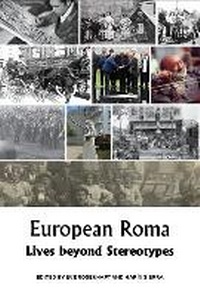
European Roma
Lives beyond Stereotypes
Published on 1. March 2022
Book
Hardback
352 pages
978-1-80085-656-1 (ISBN)
Description
An Open Access edition of this book is available on the Liverpool University Press website and the OAPEN library.
This book, designed as a resource for scholars, educators, activists and non-specialist readers, presents the results of new research on the role of Romani groups in European culture and society since the nineteenth century. Its specific focus is on the ways in which Romani actors, in their interactions with non-Romanies, have contributed to shaping Europe's public spaces. Twelve chapters recount the experiences and accomplishments of individuals and families, from across Europe (England, France, Spain, Germany, Poland, Hungary, Romania and Finland) and Canada. All based on new research, and maintaining a focus on the real lives and activities of Romani people rather than on the perspective of the majority societies, these studies exemplify the creative presence of Romani people in the fields of politics, economics and culture. We see them as writers, artists and performers, political activists and resistance fighters, traders and entrepreneurs, circus and cinema managers and purveyors of popular science. Sensitive to the ambivalent position from which Roma act, the cases are linked and contextualized by a general introduction and by section introductions written by leading scholars of Romani studies with expertise in history, ethnography, musicology, literary and discourse studies and visual culture. The volume is richly illustrated, including many images that have never been published before, and includes an extensive bibliography / guide to further reading.
Contributors to the volume: Begona Barrera, Beatriz Carrillo de los Reyes, Malte Gasche, Pawel Lechowski, Anna G. Piotrowska, Laurence Prempain, Juan Pro, Eve Rosenhaft, Carolina Garcia Sanz, Maria Sierra, and Tamara West.
This book, designed as a resource for scholars, educators, activists and non-specialist readers, presents the results of new research on the role of Romani groups in European culture and society since the nineteenth century. Its specific focus is on the ways in which Romani actors, in their interactions with non-Romanies, have contributed to shaping Europe's public spaces. Twelve chapters recount the experiences and accomplishments of individuals and families, from across Europe (England, France, Spain, Germany, Poland, Hungary, Romania and Finland) and Canada. All based on new research, and maintaining a focus on the real lives and activities of Romani people rather than on the perspective of the majority societies, these studies exemplify the creative presence of Romani people in the fields of politics, economics and culture. We see them as writers, artists and performers, political activists and resistance fighters, traders and entrepreneurs, circus and cinema managers and purveyors of popular science. Sensitive to the ambivalent position from which Roma act, the cases are linked and contextualized by a general introduction and by section introductions written by leading scholars of Romani studies with expertise in history, ethnography, musicology, literary and discourse studies and visual culture. The volume is richly illustrated, including many images that have never been published before, and includes an extensive bibliography / guide to further reading.
Contributors to the volume: Begona Barrera, Beatriz Carrillo de los Reyes, Malte Gasche, Pawel Lechowski, Anna G. Piotrowska, Laurence Prempain, Juan Pro, Eve Rosenhaft, Carolina Garcia Sanz, Maria Sierra, and Tamara West.
Reviews / Votes
'This is an outstanding collection of studies which demonstrate that European Romani groups historically made significant contributions to our common past as artists and activists, traders and musicians, mobile entertainers in circuses or pioneers of travelling cinema. Without hiding the effects of stigma these people suffer or downplaying the tragic consequences of the genocidal regimes of the twentieth century, the authors show that Roma were far from being passive victims of the societies they are part of; they pursue and succeed to realize their own ambitions. Some of the fine biographies in this volume remind us that even from a disadvantaged social position Roma acted also as cultural agents for the broader society co-producing European history.'Laszlo Foszto, ISPMN, Romanian Institute for Research on National Minorities
More details
Language
English
Place of publication
Liverpool
United Kingdom
Target group
Professional and scholarly
Illustrations
42 Illustrations, black and white
Dimensions
Height: 239 mm
Width: 163 mm
ISBN-13
978-1-80085-656-1 (9781800856561)
Copyright in bibliographic data and cover images is held by Nielsen Book Services Limited or by the publishers or by their respective licensors: all rights reserved.
Schweitzer Classification
Persons
Eve Rosenhaft is Professor of German Historical Studies, University of Liverpool. Maria Sierra is Professor of Contemporary History, University of Seville.
Content
AcknowledgementsList of IllustrationsContributorsGeneral Introduction by Eve Rosenhaft and Maria Sierra
Section One: PoliticsIntroduction: The Spaces of Politics: Roma Experiences of Citizenship by Maria SierraChapter 1 Helios Gomez: To be Roma in the Revolution by Juan ProChapter 2 The Long Road in Search of a Tzigane Language: Sandra Jayat by Begona BarreraChapter 3 Ronald Lee: Discovering Romanestan between Canada and Europe by Carolina Garcia Sanz
Section Two: Economic lifeIntroduction: Travelling and Trading - Romani Horse Dealers in the Making of Europe's Economic Multiculture by Eve Rosenhaft and Tamara WestChapter 4 Intersecting Lives: The Brough Hill Fair as Biography-in-Pieces by Tamara WestChapter 5 "Invaders" - Mobility and Economy in the Lives of the Laubinger Family by Eve Rosenhaft and Tamara WestChapter 6 The Florians, the Habedanks and the Horse Fair at Wehlau by Eve Rosenhaft Section Three: MusicIntroduction: The Space for/of Romani Music by Anna G. PiotrowskaChapter 7 Romani Virtuosi - A Multifaceted Portrait by Anna G. Piotrowska Chapter 8 From the History of the Lautari in Romania by Anna G. Piotrowska Chapter 9 The Story of Corroro, a Musical Genius from Krakow by Anna G. Piotrowska in collaboration with Pawel Lechowski
Section Four: Circus People and ShowmenIntroduction: Romani Groups in the Public Space of the Circus and Other Showgrounds by Malte GascheChapter 10 Travelling Cinema: When Roma Put the World within One's Grasp by Laurence PrempainChapter 11 From Where They Were: Resistance by Romani Circus People during the Second World War by Laurence PrempainChapter 12 Cowboys and Indians: Wild West Shows as Portals to Exotic Otherness and the Big, Wide World by Malte Gasche
Afterword by Beatriz CarrilloBibliographyIndex
Section One: PoliticsIntroduction: The Spaces of Politics: Roma Experiences of Citizenship by Maria SierraChapter 1 Helios Gomez: To be Roma in the Revolution by Juan ProChapter 2 The Long Road in Search of a Tzigane Language: Sandra Jayat by Begona BarreraChapter 3 Ronald Lee: Discovering Romanestan between Canada and Europe by Carolina Garcia Sanz
Section Two: Economic lifeIntroduction: Travelling and Trading - Romani Horse Dealers in the Making of Europe's Economic Multiculture by Eve Rosenhaft and Tamara WestChapter 4 Intersecting Lives: The Brough Hill Fair as Biography-in-Pieces by Tamara WestChapter 5 "Invaders" - Mobility and Economy in the Lives of the Laubinger Family by Eve Rosenhaft and Tamara WestChapter 6 The Florians, the Habedanks and the Horse Fair at Wehlau by Eve Rosenhaft Section Three: MusicIntroduction: The Space for/of Romani Music by Anna G. PiotrowskaChapter 7 Romani Virtuosi - A Multifaceted Portrait by Anna G. Piotrowska Chapter 8 From the History of the Lautari in Romania by Anna G. Piotrowska Chapter 9 The Story of Corroro, a Musical Genius from Krakow by Anna G. Piotrowska in collaboration with Pawel Lechowski
Section Four: Circus People and ShowmenIntroduction: Romani Groups in the Public Space of the Circus and Other Showgrounds by Malte GascheChapter 10 Travelling Cinema: When Roma Put the World within One's Grasp by Laurence PrempainChapter 11 From Where They Were: Resistance by Romani Circus People during the Second World War by Laurence PrempainChapter 12 Cowboys and Indians: Wild West Shows as Portals to Exotic Otherness and the Big, Wide World by Malte Gasche
Afterword by Beatriz CarrilloBibliographyIndex