


Evolutionary Biology of Ageing
Published on 15. November 1990
Book
Hardback
233 pages
978-0-19-506133-8 (ISBN)
Description
This unique book looks at the biology of aging from a fundamentally new perspective, one based on evolutionary theory rather than traditional concepts which emphasize molecular and cellular processes. The basis for this approach lies in the fact that natural selection, as a powerful determining force, tends to decline in importance with age. Many of the characteristics we associate with aging, the author argues, are more the result of this decline than any mechanical imperative contained within organic structures. This theory in turn yields the most fruitful avenues for seeking answers to the problem of aging, and should be recognized as the intellectual core of gerontology and the foundation for future research. The author ably surveys the vast literature on aging, presenting mathematical, experimental, and comparative findings to illustrate and support the central thesis. The result is the first complete synthesis of this vital field. Evolutionary biologists, gerontologists, and all those concerned with the science of aging will find it a stimulating, strongly argued account.
More details
Language
English
Place of publication
New York
United States
Target group
College/higher education
Professional and scholarly
Illustrations
48 line drawings
ISBN-13
978-0-19-506133-8 (9780195061338)
Copyright in bibliographic data is held by Nielsen Book Services Limited or its licensors: all rights reserved.
Schweitzer Classification
Other editions
Additional editions
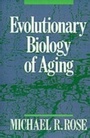
Michael R. Rose
Evolutionary Biology of Aging
E-Book
10/1994
1st Edition
OUP eBook
€138.99
Available for download
Person
Content
The evolutionary theory of ageing; observation of ageing; experimental tests of the evolutionary theory of ageing; genetic mechanisms form the evolution of ageing; comparative biology of ageing; an evolutionary perspective on organismal theories of ageing; an evolutionary perspective on cellular and molecular theories of ageing; the future of gerontology.