

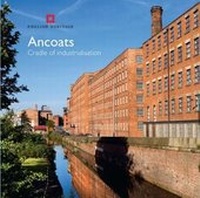
Ancoats
The cradle of industrialisation
Published on 20. September 2011
Book
Paperback/Softback
108 pages
978-1-84802-027-6 (ISBN)
Description
First hailed as a wonder of the new industrial world, to later 19th-century commentators the name Ancoats became synonymous with dark satanic mills and urban poverty. This book intends to raise awareness of the wide range and varied character of the historic mills, buildings and canals which constitute the Ancoats townscape, and the forces and trends which have contributed to its appearance. It outlines, through its buildings, how the area and its community have evolved over the last two and a half centuries. As well as the local person interested in his or her city and its history this book will appeal to all those with an interest in the growth of towns and cities, and in social history and the legacy of socio-economic, industrial and technological change within the built environment. It will also be of interest to planners and conservation officers dealing with regeneration issues.
Reviews / Votes
'Enlivened by many excellent illustrations, Ancoats: Cradle of industrialisation tells this complex story with a meaningful level of detail and is a welcome addition to English Heritage's Informed Conservation series.'Ken Moth, The Victorian
More details
Series
Language
English
Place of publication
Swindon
United Kingdom
Illustrations
90 illustrations; 90 Illustrations
Dimensions
Height: 210 mm
Width: 210 mm
Weight
353 gr
ISBN-13
978-1-84802-027-6 (9781848020276)
Copyright in bibliographic data and cover images is held by Nielsen Book Services Limited or by the publishers or by their respective licensors: all rights reserved.
Schweitzer Classification
Persons
Author and Editor. Julian Holder is Lecturer in the History and Theory of Architecture department at the University of Salford.
Content
Acknowledgements Foreword 1. Introduction 2. Pre-industrial Ancoats 3. Canal and factories 4. The pioneer suburb and its workers 5. The architecture of social concern 6. Decline, a respite, then fall 7. History with a future References Further reading