

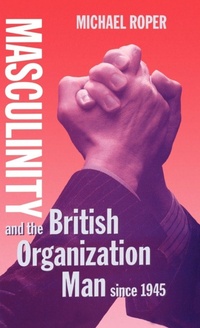
Masculinity and the British Organization Man since 1945
Published on 20. January 1994
Book
Hardback
272 pages
978-0-19-825693-9 (ISBN)
Description
The post-war period is often regarded as a time when Britain underwent its managerial revolution, the family firm and the "gentleman amateur" giving way to the large bureaucracy and the trained management expert. Yet the conception of modern management as an objective process could hardly be further from the truth. Drawing on detailed life-history interviews with the post-war generation of "organization men", this study explores the intimacies that operate among men in management. It argues that despite the rise of professional management, relations between managers continue to function in highly subjective ways. The pleasure of technical innovation or of seeing a new product through to the market, the mixture of rivalry and patronage that surrounds management succession, the hard bargaining of industrial relations: at every level, managerial functions involve the dramatization of emotions among men.
By challenging the enduring myth of the rational organization man, this book sheds new light on gender segregation in management. It argues that the exclusion of women from senior positions cannot be understood simply as the outcome of unprofessional practices. A focus on the emotional relations between male managers reveals the psychic dimensions of exclusionary behaviour. An "emotional economy" flourishes among men in management, but its workings have been hidden by the myth of the rational organization man.
By challenging the enduring myth of the rational organization man, this book sheds new light on gender segregation in management. It argues that the exclusion of women from senior positions cannot be understood simply as the outcome of unprofessional practices. A focus on the emotional relations between male managers reveals the psychic dimensions of exclusionary behaviour. An "emotional economy" flourishes among men in management, but its workings have been hidden by the myth of the rational organization man.
Reviews / Votes
`Against the trend of recent books on women in management, this book explores the "emotional economy that operates between male managers" ... It is essentially about understanding the schizophrenic nature of corporate man, the underlying emotions that belie his dispassionate bureaucratic image ... a well structured, well-written and thoughtful book ... This book is not only a good read, but an attempt to get us to focus on "what ought to be".'Times Higher Education Supplement `read in conjunction with some of the classic studies by Dalton or Burns and Stalker, this study provides some persuasive and provocative insights into managerial lives and careers. Further, read carefully, this elegantly written study might provide readers with insights into their own institutions and their own daily working practices.'
Work, Employment and Society 'a well structured, well-written and thoughtful book ... This book is not only a good read, but an attempt to get us to focus on "what ought to be".'
Times Higher Education Supplement `Those looking for a more daring gift, notably modern women married to unreconstructed males, might slip their partner Michael Roper's Masculinity and the British Organization Man since 1945.'
Financial Times `read carefully, this elegantly written study might provide readers with insights into their own institutions and their own daily working practices'
Work, Employment and Society `most enjoyable read'
Financial Times 'Roper's stimulating examination of the life histories of 30 managers - 25 men and 5 women - challenges the myth of the rational organisational man ... This provocative book makes a remarkable contribution to our understanding of a neglected dimension of British management ... it deserves to be widely read by business historians.'
Alan McKinlay, Glasgow University, Business History Am impressive piece of research. His interviewing skills elicited sensitive and illuminating data ... The book's emphasis on the cultural and psychological dimensions of gender inequality will influence future research on gender and organizations. * American Journal of Sociology * This provocative book makes a remarkable contribution to our understanding of a neglected dimension of British management ... deserves to be widely read by business historians. * Business History * Bold and richly complex examination of the life histories of "organization men". * Management Learning * A detailed sociological argument. * International Journal of Management Long Range Planning Vo. 30 April 1997 *
More details
Language
English
Place of publication
Oxford
United Kingdom
Target group
Professional and scholarly
Illustrations
frontispiece, halftones
Dimensions
Height: 222 mm
Width: 145 mm
Thickness: 20 mm
Weight
518 gr
ISBN-13
978-0-19-825693-9 (9780198256939)
Copyright in bibliographic data and cover images is held by Nielsen Book Services Limited or by the publishers or by their respective licensors: all rights reserved.
Schweitzer Classification
Person
Content
Part 1 Masculinity and the rise of the organization man: the psychic realm of business; the eclipse of family capitalism. Part 2 Among men: "family romances" - management succession and the older man; the cult of toughness; "yesterday's model" - product fetishism and the cult of the producer. Part 3 Women and men: images of wives and secretaries; images of the "lady manager"; conclusion - the fall of the organization man? Appendices: the social backgrounds of organization man; biographical details.