

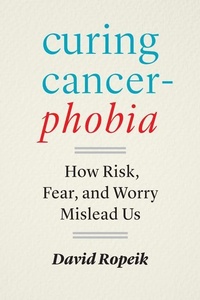
Curing Cancerphobia
How Risk, Fear, and Worry Mislead Us
Published on 23. January 2024
Book
Hardback
392 pages
978-1-4214-4740-7 (ISBN)
Description
Our fear of cancer causes great harm to individual health and to society.
The fear of cancer is understandable. But that fear is in some ways outdated, as it fails to account for the medical progress made against this family of diseases. In Curing Cancerphobia, David Ropeik reveals the fascinating historical and psychological roots of our fear of cancer and documents the dramatic health and financial harms caused when that fear exceeds the risk.
Fear of cancer drives millions for whom screening is not recommended to screen for the disease anyway, producing tens of thousands of emotionally damaging false positives and costing the US health care system an estimated $9.2 billion a year. At the same time, fear of cancer also causes many people for whom screening is recommended to avoid it altogether.
Modern screening technologies often identify cancers that do not spread or that grow so slowly they almost certainly will never cause harm in a person's lifetime. Yet many of these people, frightened by the word "cancer" in their diagnosis, understandably choose more aggressive and risky treatments than their clinical conditions require. These unnecessary treatments kill hundreds of people, cause severe side effects in thousands, and cost the health care system at least $5.2 billion a year.
Additionally, consumers spend billions of dollars on vitamins and supplements, organic food, and other products that promise to reduce our risk of cancer but do not actually reduce it. And an excessive fear of cancer causes resistance to potentially beneficial technologies like nuclear power and fluoridation of tap water. After documenting these harms, Ropeik offers tools and suggestions to help reduce the negative impacts of cancerphobia. Based on extensive research including interviews with experts and cancer patients, Curing Cancerphobia confronts our emotional relationship with the disease we fear more than any other.
The fear of cancer is understandable. But that fear is in some ways outdated, as it fails to account for the medical progress made against this family of diseases. In Curing Cancerphobia, David Ropeik reveals the fascinating historical and psychological roots of our fear of cancer and documents the dramatic health and financial harms caused when that fear exceeds the risk.
Fear of cancer drives millions for whom screening is not recommended to screen for the disease anyway, producing tens of thousands of emotionally damaging false positives and costing the US health care system an estimated $9.2 billion a year. At the same time, fear of cancer also causes many people for whom screening is recommended to avoid it altogether.
Modern screening technologies often identify cancers that do not spread or that grow so slowly they almost certainly will never cause harm in a person's lifetime. Yet many of these people, frightened by the word "cancer" in their diagnosis, understandably choose more aggressive and risky treatments than their clinical conditions require. These unnecessary treatments kill hundreds of people, cause severe side effects in thousands, and cost the health care system at least $5.2 billion a year.
Additionally, consumers spend billions of dollars on vitamins and supplements, organic food, and other products that promise to reduce our risk of cancer but do not actually reduce it. And an excessive fear of cancer causes resistance to potentially beneficial technologies like nuclear power and fluoridation of tap water. After documenting these harms, Ropeik offers tools and suggestions to help reduce the negative impacts of cancerphobia. Based on extensive research including interviews with experts and cancer patients, Curing Cancerphobia confronts our emotional relationship with the disease we fear more than any other.
Reviews / Votes
As an oncologist and caregiver of a spouse with cancer, I felt very close to the issues raised and the coverage of the subject matter. I hope that this book will reach a broad audience to stimulate an open discussion on this topic.-John L. Marshall, MD, Georgetown University Hospital In Curing Cancerphobia, Mr. Ropeik makes the case that, while screening saves lives in some cases, it has a modest lifesaving benefit overall, and also causes a fair bit of harm through overdiagnosis and overtreatment.The overall message of the book is an important one: Follow the science to find the right balance.
-Andre Picard, Globe and Mail Ropeik takes a deep dive into the world of cancer screening and raises a troubling question: Has screening, despite its clear medical and psychological benefits, inadvertently created an irrational fear of cancer-a cancerphobia-that, in turn, has needlessly frightened or harmed people?...He carefully sifts though often-conflicting evidence of overscreening, overdiagnosis, and overtreatment.
-Undark
More details
Language
English
Place of publication
Baltimore, MD
United States
Target group
Professional and scholarly
Illustrations
18 s/w Zeichnungen, 3 s/w Photographien bzw. Rasterbilder
18 Line drawings, black and white; 3 Halftones, black and white
Dimensions
Height: 160 mm
Width: 241 mm
Thickness: 32 mm
Weight
668 gr
ISBN-13
978-1-4214-4740-7 (9781421447407)
DOI
10.56021/9781421447407
Copyright in bibliographic data and cover images is held by Nielsen Book Services Limited or by the publishers or by their respective licensors: all rights reserved.
Schweitzer Classification
Other editions
Additional editions
E-Book
01/2024
Johns Hopkins University Press
€40.49
Available for download
Person
David Ropeik (BOSTON, MA) is a retired instructor who taught at Harvard University. He is the author of How Risky Is It, Really? Why Our Fears Don't Always Match the Facts. He was formerly an award-winning broadcast journalist in Boston, a science columnist for the Boston Globe, a board member of the Society of Environmental Journalists, and a Knight Science Journalism Fellow at the Massachusetts Institute of Technology.
Content
Introduction
Part One. The Origins of Our Fear of Cancer
Chapter 1. The Historical Roots
Chapter 2. The Psychological Roots
Part Two. The Costs to Individuals
Chapter 3. Overscreening, Overdiagnosis, Overtreatment: An Overview
Chapter 4. Breast Cancer: When Worry Causes Us to Do Too Much
Chapter 5. Prostate Cancer: When Worry Causes Us to Do Too Much
Chapter 6. Thyroid Cancer: When Worry Causes Us to Do Too Much
Chapter 7. Lung Cancer: When Worry Causes Us to Do Too Much
Chapter 8. Colorectal Cancer: When Worry Causes Us to Do Too Much
Chapter 9. Underscreening: When Fear Scares Us Out of Doing Enough
Chapter 10. Delayed Diagnosis: When Fear Scares Us Out of Doing Enough
Part Three. The Costs to Society
Chapter 11. The Stunning Economic Cost of Our Sometimes Excessive Fear of Cancer
Chapter 12. Environmentalism's Contribution to Our Fear of Cancer
Chapter 13. Other Societal Impacts of Our Fear of Cancer
Part Four. Reducing the Costs
Chapter 14. Combating Cancerphobia
Chapter 15. Combating Cancerphobia in Yourself
Acknowledgments
Notes
Index
Part One. The Origins of Our Fear of Cancer
Chapter 1. The Historical Roots
Chapter 2. The Psychological Roots
Part Two. The Costs to Individuals
Chapter 3. Overscreening, Overdiagnosis, Overtreatment: An Overview
Chapter 4. Breast Cancer: When Worry Causes Us to Do Too Much
Chapter 5. Prostate Cancer: When Worry Causes Us to Do Too Much
Chapter 6. Thyroid Cancer: When Worry Causes Us to Do Too Much
Chapter 7. Lung Cancer: When Worry Causes Us to Do Too Much
Chapter 8. Colorectal Cancer: When Worry Causes Us to Do Too Much
Chapter 9. Underscreening: When Fear Scares Us Out of Doing Enough
Chapter 10. Delayed Diagnosis: When Fear Scares Us Out of Doing Enough
Part Three. The Costs to Society
Chapter 11. The Stunning Economic Cost of Our Sometimes Excessive Fear of Cancer
Chapter 12. Environmentalism's Contribution to Our Fear of Cancer
Chapter 13. Other Societal Impacts of Our Fear of Cancer
Part Four. Reducing the Costs
Chapter 14. Combating Cancerphobia
Chapter 15. Combating Cancerphobia in Yourself
Acknowledgments
Notes
Index