

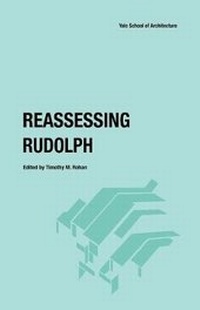
Reassessing Rudolph
Published on 6. February 2018
Book
Paperback/Softback
186 pages
978-0-300-22586-0 (ISBN)
Description
American architect Paul Rudolph (1918-1997) was internationally known in the 1950s and early 1960s for his powerful, large-scale concrete buildings. Hugely influential during his lifetime, Rudolph was one of the most significant American architects of his generation. To a remarkable extent, his reputation rose and fell with the fortunes of postwar modernism in America. This insightful book reconsiders Rudolph's architecture and the discipline's assessment of his projects. It includes nearly a dozen essays by well-known scholars in the fields of architectural and urban history, all of which shed new light on Rudolph's theories and practices. Contributions explore the architect's innovative use of materials, including plywood, Plexiglas, and exposed concrete; the places he lived and worked, from the Anglo-American axis to the Bengal delta; his affiliation with CIAM (Congres Internationaux d'Architecture Moderne); and currents within his philosophy of architecture.
Distributed for the Yale School of Architecture
Distributed for the Yale School of Architecture
More details
Language
English
Place of publication
United States
Target group
Professional and scholarly
Product notice
Paperback (trade)
Illustrations
25 color + 60 b-w illus.
Dimensions
Height: 262 mm
Width: 168 mm
Thickness: 10 mm
Weight
454 gr
ISBN-13
978-0-300-22586-0 (9780300225860)
Copyright in bibliographic data and cover images is held by Nielsen Book Services Limited or by the publishers or by their respective licensors: all rights reserved.
Schweitzer Classification