

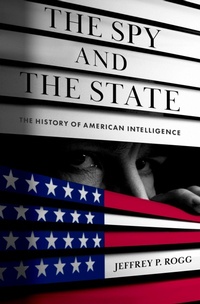
The Spy and the State
The History of American Intelligence
Published on 2. October 2025
Book
Hardback
632 pages
978-0-19-767873-2 (ISBN)
Description
A novel and comprehensive narrative of American intelligence from the Revolutionary War to the present day.
Intelligence is all around us. We read about it in the news, wonder who is spying on us through our phones or computers, and want to know what is happening in the shadows. The US Intelligence Community or IC, as insiders call it, is more powerful than ever, but also more vulnerable than it has been in decades. It is facing the threat of rival intelligence services from countries like Russia and China while fighting to keep up with new technology and the private sector. Still, the IC's greatest struggle is always with the American people, who expect it to keep the country safe but not at the cost of their liberty.
Arriving on the fiftieth anniversary of the "Year of Intelligence," The Spy and the State tells the complete history of American intelligence from the Revolutionary War to the present day. Based on original research and a new interpretation of US history, this masterful book by Jeffrey Rogg explores the origins and evolution of intelligence in America, including its overlooked role in some of the key events that shaped the nation. Along the way, Rogg identifies the historical underpinnings of intelligence controversies that have shaken the country to its constitutional foundations and have resurfaced in recent years. Moving beyond institutional histories of the FBI and CIA, he introduces the concept of US civil-intelligence relations to explain the interaction between intelligence and the society it serves.
While answering questions from the past, The Spy and the State poses new questions for the future that the United States must confront as intelligence gains ever greater importance in the twenty-first century.
Intelligence is all around us. We read about it in the news, wonder who is spying on us through our phones or computers, and want to know what is happening in the shadows. The US Intelligence Community or IC, as insiders call it, is more powerful than ever, but also more vulnerable than it has been in decades. It is facing the threat of rival intelligence services from countries like Russia and China while fighting to keep up with new technology and the private sector. Still, the IC's greatest struggle is always with the American people, who expect it to keep the country safe but not at the cost of their liberty.
Arriving on the fiftieth anniversary of the "Year of Intelligence," The Spy and the State tells the complete history of American intelligence from the Revolutionary War to the present day. Based on original research and a new interpretation of US history, this masterful book by Jeffrey Rogg explores the origins and evolution of intelligence in America, including its overlooked role in some of the key events that shaped the nation. Along the way, Rogg identifies the historical underpinnings of intelligence controversies that have shaken the country to its constitutional foundations and have resurfaced in recent years. Moving beyond institutional histories of the FBI and CIA, he introduces the concept of US civil-intelligence relations to explain the interaction between intelligence and the society it serves.
While answering questions from the past, The Spy and the State poses new questions for the future that the United States must confront as intelligence gains ever greater importance in the twenty-first century.
Reviews / Votes
We have waited a long time for a comprehensive look at American intelligence from George Washington to the present day that is both scholarly and readable. Jeffrey Rogg delivers! Intelligence professionals and history buffs alike will be in his debt. * Nicholas Reynolds, Author of Need to Know: World War II and the Rise of American Intelligence * This is an ambitious, sweeping, confident (remarkably so given that it is the author's first book), even exuberant book that should be welcomed as a major contribution to a field lacking a similar work. * Hugh Wilford, Author of The CIA: An Imperial History * I^'The Spy and the State' is as much of a historical account as it is a work of keen contemporary observation and incisive commentary. * Ralph L. DeFalco III, Law & Liberty * Sweeping....The book is a work of even-handed historical writing by an author with deep roots in national security studies....The book is also a balanced, thoughtful, and well-grounded discussion of the tumultuous growth of the national security intelligence bureaucracy, the professionalization of US intelligence, and the evolution of intelligence oversight. The Spy and the State is a significant accomplishment of genuine scholarship. * Robert L. DeFalco III, Law & Liberty * A critically informed historical narrative of the U.S. intelligence community, advancing the clear argument that tensions between intelligence practice and democratic values are not a phenomenon of the modern era but a longstanding issue whose roots reach back to the very founding of the United States.... Rogg's volume is unique, timely, and advances theoretical development and understanding of intelligence activity in democratic societies.... Unquestionably a foundational work for critically examining the evolution of the U.S. intelligence community. * Ante Batistic, International Journal of Intelligence and CounterIntelligence *More details
Language
English
Place of publication
New York
United States
Target group
College/higher education
Illustrations
34 black and white illustrations
Dimensions
Height: 239 mm
Width: 168 mm
Thickness: 42 mm
Weight
1044 gr
ISBN-13
978-0-19-767873-2 (9780197678732)
Copyright in bibliographic data and cover images is held by Nielsen Book Services Limited or by the publishers or by their respective licensors: all rights reserved.
Schweitzer Classification
Other editions
Additional editions
E-Book
04/2025
OUP USA
€20.49
Available for download
Person
Jeffrey P. Rogg is Senior Research Fellow at the Global and National Security Institute at the University of South Florida. He previously held academic positions at the Joint Special Operations University at US Special Operations Command, the Department of Intelligence and Security Studies at The Citadel, and the National Security Affairs Department at the US Naval War College. He has a BA from Swarthmore College, a JD from Villanova University, an MA in Security Studies from the Georgetown University School of Foreign Service, and a PhD in history from The Ohio State University. He serves on the boards of the International Journal of Intelligence and CounterIntelligence and the Society for Intelligence History. He lives in Tampa, Florida.
Content
Acknowledgments
Abbreviations
Introduction: The Secrets Behind the Stars and Stripes
Part One: The Eagle's Eyes: The Dawn of American Intelligence
Chapter 1: A Revolution Sub Rosa: The Shadow War for Independence
Chapter 2: The Founders, the First Citizen, and the First American Intelligence System
Chapter 3: Bitter Bedfellows: Ideology, Intelligence, and Opposition Politics
Chapter 4: The President's Fund for Part-Time Spies
Chapter 5: Uncivil-Intelligence Relations in the Civil War
Part Two: The Competition to Control Intelligence
Chapter 6: Intelligence in the Service of a New Empire and Old Institutions
Chapter 7: A Blurry Blue Line: The Origins of the FBI and Domestic Intelligence
Chapter 8: Intelligence in No Man's Land
Chapter 9: A Return to Normalcy
Chapter 10: Navigating the Gathering Storm with Hoover at the Helm
Chapter 11: Donovan's Finest Hour
Chapter 12: An Intelligence Failure and an Intelligence Insurgency
Chapter 13: Coordination at Last?
Part Three: The Covert Cold War and Construction of the Secret National Security State
Chapter 14: Central Intelligence and Central Problems
Chapter 15: The CIA and a Clash of Cultures
Chapter 16: New Oversight and New Organizations
Chapter 17: Who Will Watch the Watchers?
Chapter 18: Americanizing Intelligence?
Chapter 19: The Executive Strikes Back
Part Four: An American Intelligence State
Chapter 20: The Illusory Peace Dividend
Chapter 21: A New National Consensus and New National Security State
Chapter 22: Reform Without Resolution
Chapter 23: Revelation Without Reform
Chapter 24: In Intelligence We Trust?
Conclusion: America and the Intelligence Revolution
Notes
Bibliography
Index
Abbreviations
Introduction: The Secrets Behind the Stars and Stripes
Part One: The Eagle's Eyes: The Dawn of American Intelligence
Chapter 1: A Revolution Sub Rosa: The Shadow War for Independence
Chapter 2: The Founders, the First Citizen, and the First American Intelligence System
Chapter 3: Bitter Bedfellows: Ideology, Intelligence, and Opposition Politics
Chapter 4: The President's Fund for Part-Time Spies
Chapter 5: Uncivil-Intelligence Relations in the Civil War
Part Two: The Competition to Control Intelligence
Chapter 6: Intelligence in the Service of a New Empire and Old Institutions
Chapter 7: A Blurry Blue Line: The Origins of the FBI and Domestic Intelligence
Chapter 8: Intelligence in No Man's Land
Chapter 9: A Return to Normalcy
Chapter 10: Navigating the Gathering Storm with Hoover at the Helm
Chapter 11: Donovan's Finest Hour
Chapter 12: An Intelligence Failure and an Intelligence Insurgency
Chapter 13: Coordination at Last?
Part Three: The Covert Cold War and Construction of the Secret National Security State
Chapter 14: Central Intelligence and Central Problems
Chapter 15: The CIA and a Clash of Cultures
Chapter 16: New Oversight and New Organizations
Chapter 17: Who Will Watch the Watchers?
Chapter 18: Americanizing Intelligence?
Chapter 19: The Executive Strikes Back
Part Four: An American Intelligence State
Chapter 20: The Illusory Peace Dividend
Chapter 21: A New National Consensus and New National Security State
Chapter 22: Reform Without Resolution
Chapter 23: Revelation Without Reform
Chapter 24: In Intelligence We Trust?
Conclusion: America and the Intelligence Revolution
Notes
Bibliography
Index