

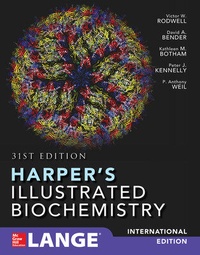
ISE Harper's Illustrated Biochemistry Thirty-First Edition
31st Edition
Published on 23. May 2018
Book
Paperback/Softback
978-1-260-28842-1 (ISBN)
Description
Gain a full understanding of the principles of biochemistry as it relates to clinical medicine
A Doody's Core Title for 2019!
The Thirty-First Edition of Harper's Illustrated Biochemistry continues to emphasize the link between biochemistry and the understanding of disease states, disease pathology, and the practice of medicine. Featuring a full-colour presentation and numerous medically relevant examples, Harper's presents a clear, succinct review of the fundamentals of biochemistry that every student must understand in order to succeed in medical school.
All 58 chapters help you understand the medical relevance of biochemistry:
* Full-colour presentation includes more than 600 illustrations
* Case studies emphasize the clinical relevance of biochemistry
* NEW CHAPTER on Biochemistry of Transition Metals addresses the importance and overall pervasiveness of transition metals
* Review Questions follow each of the eleven sections
* Boxed Objectives define the goals of each chapter
* Tables encapsulate important information
* Every chapter includes a section on the biomedical importance of a given topic
NEW TO THIS EDITION:
* Emphasis throughout on the integral relationship between biochemistry and disease, diagnostic pathology, and medical practice
* Hundreds of references to disease states throughout
* New chapter addressing the biochemical roles of transition metals
* Many updated review questions
* Frequent tables summarizing key links to disease states
* New text on cryo-electron microscopy (cryo-EM)
* Cover picture of the protein structure of the Zika virus, solved by cryo-EM
Applauded by medical students and online reviewers for its currency and engaging style, Harper's Illustrated Biochemistry is essential for USMLE (R) review and the single-best reference for learning the clinical relevance of any biochemistry topic.
Publisher's Note: Products purchased from Third Party sellers are not guaranteed by the publisher for quality, authenticity, or access to any online entitlements included with the product.
A Doody's Core Title for 2019!
The Thirty-First Edition of Harper's Illustrated Biochemistry continues to emphasize the link between biochemistry and the understanding of disease states, disease pathology, and the practice of medicine. Featuring a full-colour presentation and numerous medically relevant examples, Harper's presents a clear, succinct review of the fundamentals of biochemistry that every student must understand in order to succeed in medical school.
All 58 chapters help you understand the medical relevance of biochemistry:
* Full-colour presentation includes more than 600 illustrations
* Case studies emphasize the clinical relevance of biochemistry
* NEW CHAPTER on Biochemistry of Transition Metals addresses the importance and overall pervasiveness of transition metals
* Review Questions follow each of the eleven sections
* Boxed Objectives define the goals of each chapter
* Tables encapsulate important information
* Every chapter includes a section on the biomedical importance of a given topic
NEW TO THIS EDITION:
* Emphasis throughout on the integral relationship between biochemistry and disease, diagnostic pathology, and medical practice
* Hundreds of references to disease states throughout
* New chapter addressing the biochemical roles of transition metals
* Many updated review questions
* Frequent tables summarizing key links to disease states
* New text on cryo-electron microscopy (cryo-EM)
* Cover picture of the protein structure of the Zika virus, solved by cryo-EM
Applauded by medical students and online reviewers for its currency and engaging style, Harper's Illustrated Biochemistry is essential for USMLE (R) review and the single-best reference for learning the clinical relevance of any biochemistry topic.
Publisher's Note: Products purchased from Third Party sellers are not guaranteed by the publisher for quality, authenticity, or access to any online entitlements included with the product.
More details
Edition
31st edition
Language
English
Place of publication
OH
United States
Target group
College/higher education
Dimensions
Height: 277 mm
Width: 216 mm
Thickness: 28 mm
Weight
1561 gr
ISBN-13
978-1-260-28842-1 (9781260288421)
Copyright in bibliographic data and cover images is held by Nielsen Book Services Limited or by the publishers or by their respective licensors: all rights reserved.
Schweitzer Classification
Persons
Robert K. Murray, MD, PhD
Professor (Emeritus) of Biochemistry
University of Toronto
Toronto, Ontario Daryl K. Granner, MD
Joe C. Davis Professor of Biomedical Science
Director, Vanderbilt Diabetes Center
Professor of Molecular Physiology and Biophysics and of Medicine
Vanderbilt University
Nashville, Tennessee Peter A. Mayes, PhD, DSc
Emeritus Professor of Veterinary Biochemistry
Royal Veterinary College
University of London
London Victor W. Rodwell, PhD
Professor of Biochemistry
Purdue University
West Lafayette, Indiana
Professor (Emeritus) of Biochemistry
University of Toronto
Toronto, Ontario Daryl K. Granner, MD
Joe C. Davis Professor of Biomedical Science
Director, Vanderbilt Diabetes Center
Professor of Molecular Physiology and Biophysics and of Medicine
Vanderbilt University
Nashville, Tennessee Peter A. Mayes, PhD, DSc
Emeritus Professor of Veterinary Biochemistry
Royal Veterinary College
University of London
London Victor W. Rodwell, PhD
Professor of Biochemistry
Purdue University
West Lafayette, Indiana
Content
Section I: Structures & Functions of Proteins & Enzymes
Chapter 1: Biochemistry & Medicine
Chapter 2: Water & pH
Chapter 3: Amino Acids & Peptides
Chapter 4: Proteins: Determination of Primary Structure
Chapter 5: Proteins: Higher Orders of Structure
Section II: Enzymes: Kinetics, Mechanism, Regulation, & Role of Transition Metals
Chapter 6: Proteins: Myoglobin & Haemoglobin
Chapter 7: Enzymes: Mechanism of Action
Chapter 8: Enzymes: Kinetics
Chapter 9: Enzymes:Regulation of Activities
Chapter 10: The Biochemical Roles of Transition Metals
Section III: Bioenergetics
Chapter 11: Bioenergetics: The Role of ATP
Chapter 12: Biologic Oxidation
Chapter 13: The Respiratory Chain & Oxidative Phosphorylation
Section IV: Metabolism of Carbohydrates
Chapter 14: Overview of Metabolism & the Provision of Metabolic Fuels
Chapter 15:Carbohydrates of Physiological Significance
Chapter 16: The Citric Acid Cycle: The Central Pathway of Carbohydrate, Lipid, & Amino Acid Metabolism
Chapter 17: Glycolysis & the Oxidation of Pyruvate
Chapter 18: Metabolism of Glycogen
Chapter 19: Gluconeogenesis & the Control of Blood Glucose
Chapter 20: The Pentose Phosphate Pathway & Other Pathways of Hexose Metabolism
Section V: Metabolism of Lipids
Chapter 21: Lipids of Physiologic Significance
Chapter 22: Oxidation of Fatty Acids: Ketogenesis
Chapter 23: Biosynthesis of Fatty Acids & Eicosanoids
Chapter 24: Metabolism of Acylglycerols & Sphingolipids
Chapter 25: Lipid Transport & Storage
Chapter 26: Cholesterol Synthesis, Transport, & Excretion
Section VI: Metabolism of Proteins & Amino Acids
Chapter 27: Biosynthesis of the Nutritionally Nonessential Amino Acids
Chapter 28: Catabolism of Proteins & of Amino Acid Nitrogen
Chapter 29: Catabolism of the Carbon Skeletons of Amino Acids
Chapter 30: Conversion of Amino Acids to Specialized Products
Chapter 31: Porphyrins & Bile Pigments
Section VII: Structure, Function, & Replication of Informational Macromolecules
Chapter 32: Nucleotides
Chapter 33: Metabolism of Purine & Pyrimidine Nucleotides
Chapter 34: Nucleic Acid Structure & Function
Chapter 35: DNA Organisation, Replication, & Repair
Chapter 36: RNA Synthesis, Processing, & Modification
Chapter 37: Protein Synthesis & the Genetic Code
Chapter 38: Regulation of Gene Expression
Chapter 39: Molecular Genetics, Recombinant DNA, & Genomic Technology
Section VIII: Biochemistry of Extracellular & Intracellular Communication
Chapter 40: Membranes: Structure & Function
Chapter 41: The Diversity of the Endocrine System
Chapter 42: Hormone Action & Signal Transduction
Section IX: Special Topics (A)
Chapter 43: Nutrition, Digestion, & Absorption
Chapter 44: Micronutrients: Vitamins & Minerals
Chapter 45: Free Radicals & Antioxidant Nutrients
Chapter 46: Glycoproteins
Chapter 47: Metabolism of Xenobiotics
Chapter 48: Clinical Biochemistry
Section X: Special Topics (B)
Chapter 49: Intracellular Traffic & Sorting of Proteins
Chapter 50: The Extracellular Matrix
Chapter 51: Muscle& the Cytoskeleton
Chapter 52: Plasma Proteins & Immunoglobulins
Chapter 53: Red Blood Cells
Chapter 54: White Blood Cells
Section XI: Special Topics (C)
Chapter 55: Haemostasis & Thrombosis
Chapter 56: Cancer: An Overview
Chapter 57: The Biochemistry of Aging
Chapter 58: Biochemical Case Histories
Chapter 1: Biochemistry & Medicine
Chapter 2: Water & pH
Chapter 3: Amino Acids & Peptides
Chapter 4: Proteins: Determination of Primary Structure
Chapter 5: Proteins: Higher Orders of Structure
Section II: Enzymes: Kinetics, Mechanism, Regulation, & Role of Transition Metals
Chapter 6: Proteins: Myoglobin & Haemoglobin
Chapter 7: Enzymes: Mechanism of Action
Chapter 8: Enzymes: Kinetics
Chapter 9: Enzymes:Regulation of Activities
Chapter 10: The Biochemical Roles of Transition Metals
Section III: Bioenergetics
Chapter 11: Bioenergetics: The Role of ATP
Chapter 12: Biologic Oxidation
Chapter 13: The Respiratory Chain & Oxidative Phosphorylation
Section IV: Metabolism of Carbohydrates
Chapter 14: Overview of Metabolism & the Provision of Metabolic Fuels
Chapter 15:Carbohydrates of Physiological Significance
Chapter 16: The Citric Acid Cycle: The Central Pathway of Carbohydrate, Lipid, & Amino Acid Metabolism
Chapter 17: Glycolysis & the Oxidation of Pyruvate
Chapter 18: Metabolism of Glycogen
Chapter 19: Gluconeogenesis & the Control of Blood Glucose
Chapter 20: The Pentose Phosphate Pathway & Other Pathways of Hexose Metabolism
Section V: Metabolism of Lipids
Chapter 21: Lipids of Physiologic Significance
Chapter 22: Oxidation of Fatty Acids: Ketogenesis
Chapter 23: Biosynthesis of Fatty Acids & Eicosanoids
Chapter 24: Metabolism of Acylglycerols & Sphingolipids
Chapter 25: Lipid Transport & Storage
Chapter 26: Cholesterol Synthesis, Transport, & Excretion
Section VI: Metabolism of Proteins & Amino Acids
Chapter 27: Biosynthesis of the Nutritionally Nonessential Amino Acids
Chapter 28: Catabolism of Proteins & of Amino Acid Nitrogen
Chapter 29: Catabolism of the Carbon Skeletons of Amino Acids
Chapter 30: Conversion of Amino Acids to Specialized Products
Chapter 31: Porphyrins & Bile Pigments
Section VII: Structure, Function, & Replication of Informational Macromolecules
Chapter 32: Nucleotides
Chapter 33: Metabolism of Purine & Pyrimidine Nucleotides
Chapter 34: Nucleic Acid Structure & Function
Chapter 35: DNA Organisation, Replication, & Repair
Chapter 36: RNA Synthesis, Processing, & Modification
Chapter 37: Protein Synthesis & the Genetic Code
Chapter 38: Regulation of Gene Expression
Chapter 39: Molecular Genetics, Recombinant DNA, & Genomic Technology
Section VIII: Biochemistry of Extracellular & Intracellular Communication
Chapter 40: Membranes: Structure & Function
Chapter 41: The Diversity of the Endocrine System
Chapter 42: Hormone Action & Signal Transduction
Section IX: Special Topics (A)
Chapter 43: Nutrition, Digestion, & Absorption
Chapter 44: Micronutrients: Vitamins & Minerals
Chapter 45: Free Radicals & Antioxidant Nutrients
Chapter 46: Glycoproteins
Chapter 47: Metabolism of Xenobiotics
Chapter 48: Clinical Biochemistry
Section X: Special Topics (B)
Chapter 49: Intracellular Traffic & Sorting of Proteins
Chapter 50: The Extracellular Matrix
Chapter 51: Muscle& the Cytoskeleton
Chapter 52: Plasma Proteins & Immunoglobulins
Chapter 53: Red Blood Cells
Chapter 54: White Blood Cells
Section XI: Special Topics (C)
Chapter 55: Haemostasis & Thrombosis
Chapter 56: Cancer: An Overview
Chapter 57: The Biochemistry of Aging
Chapter 58: Biochemical Case Histories