

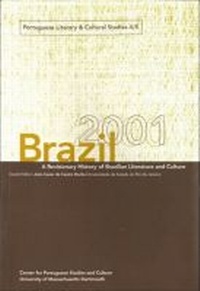
Brazil 2001
A Revisionary History of Brazilian Literature and Culture
Published on 30. December 2000
Book
Paperback/Softback
760 pages
978-1-933227-03-0 (ISBN)
Description
In one of his most intriguing poems, Carlos Drummond de Andrade provides inspiration for this current volume of Portuguese Literary & Cultural Studies - Brazil 2001: A Revisionary History of Brazilian Literature and Culture. The poem, called ""Hino Nacional,"" is a paradoxical reconstruction of variegated efforts aimed at the building of the nation. In the final lines of the poem, however, it is ""Brazil"" - as an impossible Kantian thing-in-itself - that emerges and refuses all attempts to grasp its essence:
Brazil does not want us! It is sick and tired of us!Our Brazil is in the afterworld. This is not Brazil.There is no Brazil. By any chance, are there Brazilians?
Brazil does not want us! It is sick and tired of us!Our Brazil is in the afterworld. This is not Brazil.There is no Brazil. By any chance, are there Brazilians?
More details
Language
English
Place of publication
Amherst
United States
Target group
Professional and scholarly
Dimensions
Height: 216 mm
Width: 152 mm
ISBN-13
978-1-933227-03-0 (9781933227030)
Copyright in bibliographic data and cover images is held by Nielsen Book Services Limited or by the publishers or by their respective licensors: all rights reserved.
Schweitzer Classification
Person
João Cezar De Castro Rocha is Professor of Comparative Literature at the Universidade do Estado do Rio de Janeiro (UERJ) and Researcher at the Conselho Nacional de Pesquisa Científica (CNPq). He is author of Literatura e cordialidade. O público e o privado na cultura brasileira (EdUERJ, 1998), and O exílio do homem cordial. Ensaios e revisões (Museu da República, 2004).
Carlos Deummond De Andrade (1902-1987) born in Itabira, a mining village in Minas Gerais in southeastern Brazil. His parents were farmers of Portuguese ancestry. He went to a school of pharmacy in Belo Horizonte, but never worked as a pharmacist after graduation. He worked in government service for most of his life, eventually becoming director of history for the National Historical and Artistic Heritage Service of Brazil.
Carlos Deummond De Andrade (1902-1987) born in Itabira, a mining village in Minas Gerais in southeastern Brazil. His parents were farmers of Portuguese ancestry. He went to a school of pharmacy in Belo Horizonte, but never worked as a pharmacist after graduation. He worked in government service for most of his life, eventually becoming director of history for the National Historical and Artistic Heritage Service of Brazil.
Content
- Introduction - "There is no Brazil": A Poet's Writing of Cultural History - João Cezar de Castro Rocha
- GILBERTO FREYRE: 100 YEARS
- A Sea Full of Waves: Ambiguity and Modernity in Brazilian Culture - Ricardo Benzaquen de Araujo
- The Road to Casa-Grande. Itineraries by Gilberto Freyre - Enrique Rodríguez Larreta
- The UNESCO Project: Social Sciences and Race Studies in Brazil in the 1950s - Marcos Chor Maio
- The Mansions and the Shanties: "The Flesh and the Stone" in Nineteenth-Century Brazil - Mary Del Priore
- The Origins and Errors of Brazilian Cordiality - João Cezar de Castro Rocha
- LITERATURE
- Theater of the Impressed: The Brazilian Stage in the Nineteenth Century - Ross G. Forman
- Gonçalves Dias - José Luís Jobim
- Memoirs of a Militia Sergeant: A Singular Novel - Marcus Vinicius Nogueira Soares
- Iracema: The Tupinization of Portuguese - Ivo Barbieri
- Machado de Assis and The Posthumous Memoirs of Brás Cubas - Bluma Waddington Vilar
- Rebellion in the Backlands: Landscape with Figures - Walnice Nogueira Galvão
- The Patriot: The Exclusion of the Hero Full of Character - Beatriz Resende
- Plantation Boy: The Memory of Loss - Heloisa Toller Gomes
- Monteiro Lobato Today-Semicolon - Silviano Santiago
- Contemporary Brazilian Women's Autobiography and the Forgotten Case of Adalgisa Nery - Sabrina Karpa-Wilson
- Devil to Pay in the Backlands and João Guimarães Rosa's Quest of Universality - Kathrin H. Rosenfield
- Archives and Memories of Pedro Nava - Eneida Maria de Souza
- The Hour of the Star or Clarice Lispector's Trash Hour - Italo Moriconi
- The Case of Rubem Fonseca-The Search for Reality - Karl Erik Schøllhammer
- João Cabral in Perspective - Antonio Carlos Secchin
- Two Poetics, Two Moments - Heloísa Buarque de Hollanda
- Brazilian Fiction Today: A Point of Departure - Therezinha Barbieri
- A Brief Introduction to Contemporary Afro-Brazilian Women's Literature - Maria Aparecida Ferreira de Andrade Salgueiro
- Down with Tordesilhas! - Jorge Schwartz
- CULTURE
- Politics as History and Literature - Valdei Lopes Araujo
- Manoel Bomfim: The State and Elites Seen as Parasites of the People-Nation - Roberto Ventura
- Dom João VI no Brasil - Luiz Costa Lima
- Citizenship in Rui Barbosa: "A Questão Social e Política no Brasil" - Tarcisio Costa
- "A Portrait of Brazil" in the Postmodern Context - Tereza Virginia de Almeida
- The USA and Brazil: Capitalism and Pre-Capitalism According to Oliveira Vianna - Ângela de Castro Gomes
- Raymundo Faoro's Roundabout Voyage in Os Donos do Poder - Marcelo Jasmin
- America, Joy of Man's Desiring: A Comparison of Visão do Paraíso with Wilderness and Paradise in Christian Thought - Robert Wegner
- Florestan Fernandes: Memory and Utopia - Carlos Guilherme Mota
- Discovering "Brazil's Soul": A Reading of Luís da Câmara Cascudo - Margarida de Souza Neves
- The Theater of Politics: The King as Character in the Imperial Brazilian State-A Reading of A Construção da Ordem: A Elite Política Imperial and Teatro de Sombras: A Política Imperial - Lilia K. Moritz Schwarcz
- References, Responsibilities and Reading: A Época Pombalina - Marcus Alexandre Motta
- The Nation's Borders and the Construction of Plural Identities: Carnivals, Rogues and Heroes or Roberto DaMatta and the In-between Place of Brazilian Culture - Valter Sinder
- CULTURAL INTERMEDIARIES
- Who Was Pero Vaz de Caminha? - Hans Ulrich Gumbrecht
- José de Anchieta: Performing the History of Christianity in Brazil - César Braga-Pinto
- Guidelines for Reading Vieira - João Adolfo Hansen
- The Image of Brazil in Robinson Crusoe - Marcus Vinicius de Freitas
- Ferdinand Denis and Brazilian Literature: A Successful Tutelary Relationship - Maria Helena Rouanet
- "Watercolors of Brazil": Jean Baptiste Debret's Work - Vera Beatriz Siqueira
- Stefan Zweig's Brazil, Land of the Future: A Topic of Debate - Cléia Schiavo Weyrauch
- Elizabeth Bishop as Cultural Intermediary - Paulo Henriques Britto
- Roger Bastide and Brazil: At the Crossroads Between Viewpoints - Fernanda Peixoto
- The Logic of the Backward and the Boomerang Effect: The Case of Ziembinski - Victor Hugo Adler Pereira
- Otto Maria Carpeaux - Olavo de Carvalho
- The Foreigner - Gustavo Bernardo
- Back to the Tristes Tropiques: Notes on Lévi-Strauss and Brazil - Roberto DaMatta
- LITERARY HISTORY AND LITERARY CRITICISM
- Brazilian Literary Historiography: Its Beginnings - Roberto Acízelo de Sousa
- Between Two Histories: From Sílvio Romero to José Veríssimo - Regina Zilberman
- "The Abstract Brazilian": Antonio Candido's Malandro as National Persona - K. David Jackson
- Roberto Schwarz' Dialectical Criticism - Regina Lúcia de Faria
- Hybrid Criticism and Historical Form - Raúl Antelo
- The Itinerary of a Problem: Luiz Costa Lima and the "Control of the Imaginary" - Sergio Alcides
- Comparative Literature in Brazil in the 1990s - Eduardo Coutinho
- AUDIOVISUAL
- The Role of Radio in Everyday Brazilian Society (1923 - 1960) - Lia Calabre
- The Orphan Brotherland: Rap's Civilizing Effort on the Periphery of São Paulo - Maria Rita Kehl
- Funk and Hip-Hop Transculture: Cultural Conciliation and Racial Identification in the "Divided City" - Shoshanna Lurie
- Politics and the Aesthetics of Myth in Black God, White Devil - Ivana Bentes
- Redemption Through the Excess of Sin - José Carlos Avellar
- Brazil 2001 and Walter Salles: Cinema for the Global Village? - Jorge Ruffinelli Praying in the Sand: Paula Rega and Visual Representations of the First Mass in Brazil - Memory Holloway
- The Media: The Past and the Years to Come - Eduardo Neiva
- Abstracts/Resumos
- Contributors/Colahoradores
- Translators/Tradutores
- GILBERTO FREYRE: 100 YEARS
- A Sea Full of Waves: Ambiguity and Modernity in Brazilian Culture - Ricardo Benzaquen de Araujo
- The Road to Casa-Grande. Itineraries by Gilberto Freyre - Enrique Rodríguez Larreta
- The UNESCO Project: Social Sciences and Race Studies in Brazil in the 1950s - Marcos Chor Maio
- The Mansions and the Shanties: "The Flesh and the Stone" in Nineteenth-Century Brazil - Mary Del Priore
- The Origins and Errors of Brazilian Cordiality - João Cezar de Castro Rocha
- LITERATURE
- Theater of the Impressed: The Brazilian Stage in the Nineteenth Century - Ross G. Forman
- Gonçalves Dias - José Luís Jobim
- Memoirs of a Militia Sergeant: A Singular Novel - Marcus Vinicius Nogueira Soares
- Iracema: The Tupinization of Portuguese - Ivo Barbieri
- Machado de Assis and The Posthumous Memoirs of Brás Cubas - Bluma Waddington Vilar
- Rebellion in the Backlands: Landscape with Figures - Walnice Nogueira Galvão
- The Patriot: The Exclusion of the Hero Full of Character - Beatriz Resende
- Plantation Boy: The Memory of Loss - Heloisa Toller Gomes
- Monteiro Lobato Today-Semicolon - Silviano Santiago
- Contemporary Brazilian Women's Autobiography and the Forgotten Case of Adalgisa Nery - Sabrina Karpa-Wilson
- Devil to Pay in the Backlands and João Guimarães Rosa's Quest of Universality - Kathrin H. Rosenfield
- Archives and Memories of Pedro Nava - Eneida Maria de Souza
- The Hour of the Star or Clarice Lispector's Trash Hour - Italo Moriconi
- The Case of Rubem Fonseca-The Search for Reality - Karl Erik Schøllhammer
- João Cabral in Perspective - Antonio Carlos Secchin
- Two Poetics, Two Moments - Heloísa Buarque de Hollanda
- Brazilian Fiction Today: A Point of Departure - Therezinha Barbieri
- A Brief Introduction to Contemporary Afro-Brazilian Women's Literature - Maria Aparecida Ferreira de Andrade Salgueiro
- Down with Tordesilhas! - Jorge Schwartz
- CULTURE
- Politics as History and Literature - Valdei Lopes Araujo
- Manoel Bomfim: The State and Elites Seen as Parasites of the People-Nation - Roberto Ventura
- Dom João VI no Brasil - Luiz Costa Lima
- Citizenship in Rui Barbosa: "A Questão Social e Política no Brasil" - Tarcisio Costa
- "A Portrait of Brazil" in the Postmodern Context - Tereza Virginia de Almeida
- The USA and Brazil: Capitalism and Pre-Capitalism According to Oliveira Vianna - Ângela de Castro Gomes
- Raymundo Faoro's Roundabout Voyage in Os Donos do Poder - Marcelo Jasmin
- America, Joy of Man's Desiring: A Comparison of Visão do Paraíso with Wilderness and Paradise in Christian Thought - Robert Wegner
- Florestan Fernandes: Memory and Utopia - Carlos Guilherme Mota
- Discovering "Brazil's Soul": A Reading of Luís da Câmara Cascudo - Margarida de Souza Neves
- The Theater of Politics: The King as Character in the Imperial Brazilian State-A Reading of A Construção da Ordem: A Elite Política Imperial and Teatro de Sombras: A Política Imperial - Lilia K. Moritz Schwarcz
- References, Responsibilities and Reading: A Época Pombalina - Marcus Alexandre Motta
- The Nation's Borders and the Construction of Plural Identities: Carnivals, Rogues and Heroes or Roberto DaMatta and the In-between Place of Brazilian Culture - Valter Sinder
- CULTURAL INTERMEDIARIES
- Who Was Pero Vaz de Caminha? - Hans Ulrich Gumbrecht
- José de Anchieta: Performing the History of Christianity in Brazil - César Braga-Pinto
- Guidelines for Reading Vieira - João Adolfo Hansen
- The Image of Brazil in Robinson Crusoe - Marcus Vinicius de Freitas
- Ferdinand Denis and Brazilian Literature: A Successful Tutelary Relationship - Maria Helena Rouanet
- "Watercolors of Brazil": Jean Baptiste Debret's Work - Vera Beatriz Siqueira
- Stefan Zweig's Brazil, Land of the Future: A Topic of Debate - Cléia Schiavo Weyrauch
- Elizabeth Bishop as Cultural Intermediary - Paulo Henriques Britto
- Roger Bastide and Brazil: At the Crossroads Between Viewpoints - Fernanda Peixoto
- The Logic of the Backward and the Boomerang Effect: The Case of Ziembinski - Victor Hugo Adler Pereira
- Otto Maria Carpeaux - Olavo de Carvalho
- The Foreigner - Gustavo Bernardo
- Back to the Tristes Tropiques: Notes on Lévi-Strauss and Brazil - Roberto DaMatta
- LITERARY HISTORY AND LITERARY CRITICISM
- Brazilian Literary Historiography: Its Beginnings - Roberto Acízelo de Sousa
- Between Two Histories: From Sílvio Romero to José Veríssimo - Regina Zilberman
- "The Abstract Brazilian": Antonio Candido's Malandro as National Persona - K. David Jackson
- Roberto Schwarz' Dialectical Criticism - Regina Lúcia de Faria
- Hybrid Criticism and Historical Form - Raúl Antelo
- The Itinerary of a Problem: Luiz Costa Lima and the "Control of the Imaginary" - Sergio Alcides
- Comparative Literature in Brazil in the 1990s - Eduardo Coutinho
- AUDIOVISUAL
- The Role of Radio in Everyday Brazilian Society (1923 - 1960) - Lia Calabre
- The Orphan Brotherland: Rap's Civilizing Effort on the Periphery of São Paulo - Maria Rita Kehl
- Funk and Hip-Hop Transculture: Cultural Conciliation and Racial Identification in the "Divided City" - Shoshanna Lurie
- Politics and the Aesthetics of Myth in Black God, White Devil - Ivana Bentes
- Redemption Through the Excess of Sin - José Carlos Avellar
- Brazil 2001 and Walter Salles: Cinema for the Global Village? - Jorge Ruffinelli Praying in the Sand: Paula Rega and Visual Representations of the First Mass in Brazil - Memory Holloway
- The Media: The Past and the Years to Come - Eduardo Neiva
- Abstracts/Resumos
- Contributors/Colahoradores
- Translators/Tradutores