

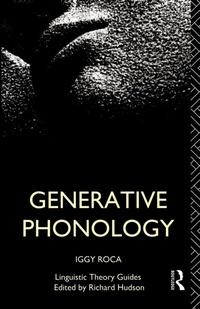
Generative Phonology
1st Edition
Published on 17. March 1994
Book
Paperback/Softback
328 pages
978-0-415-04141-6 (ISBN)
Description
"Generative Phonology" offers an overview of the post-SPE theory of generative phonology and is suitable for linguists not specializing in phonology, who want to keep abreast of the latest developments in the subject. It deals with all the major trends in what has come to be known as "non-linear" phonology, including: particle phonology; dependancy phonology; government and charm phonology. Iggy Roca guides the reader through the developments of the various approaches, justifying their rationale against the background of SPE machinery, and providing the reader with the basic tools necessary to penetrate current problems and debates. This text aims to integrate the modules and proposals of what can seem a fragmentary field, into a cohesive body of living theory.
Reviews / Votes
'The book reads very well and presents an exemplary summary of almost all major topics in current phonological theory and would therefore be suitable not only for linguists not specialising in phonology, but also for graduate students of phonology and professional phonologists. Generative Phonology is an outstanding treatment of most all current topics in phonological theory and is a book I unequivocally recommend to all linguists.' - Cambridge University PressMore details
Series
Language
English
Place of publication
London
United Kingdom
Publishing group
Taylor & Francis Ltd
Target group
College/higher education
Dimensions
Height: 216 mm
Width: 140 mm
Thickness: 19 mm
Weight
464 gr
ISBN-13
978-0-415-04141-6 (9780415041416)
Copyright in bibliographic data and cover images is held by Nielsen Book Services Limited or by the publishers or by their respective licensors: all rights reserved.
Schweitzer Classification
Other editions
Additional editions
Person
Iggy Roca
Content
1. Phonological representations
2. Lexical redundancies
3. Basic elements
4. The sonority fabric
5. Domains and modes of application
2. Lexical redundancies
3. Basic elements
4. The sonority fabric
5. Domains and modes of application