

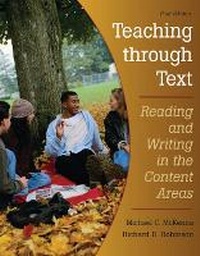
Teaching Through Text
Reading and Writing in the Content Areas
Published on 27. November 2008
Book
Paperback/Softback
264 pages
978-0-13-207472-8 (ISBN)
Description
Teaching through Text: Reading and Writing in the Content Areas is evidence-based, designed to help middle and high school content teachers apply effective reading-related techniques for fostering comprehension of materials in their area. This book provides a core set of instructional techniques that are easy for teachers to implement and that do not encroach on the time spent learning content.
In order to help teachers incorporate reading-related approaches into their classroom, Teaching through Text begins by explaining how these approaches are easy to implement and require no time diverted from content learning. Specific approaches are nested within "before-during-after" lesson formats, such as the DR-TA and Reciprocal Teaching.
Unlike other texts on the market in this area, all the approaches provided in the book have a strong empirical base. Some approaches provided in the text include: vocabulary techniques (e.g., graphic organizers, feature analysis, list-group-label), comprehension techniques (e.g., reading guides, questioning strategies), and study techniques. The book also addresses issues of assessment, motivation, and cultural and linguistic diversity.
In order to help teachers incorporate reading-related approaches into their classroom, Teaching through Text begins by explaining how these approaches are easy to implement and require no time diverted from content learning. Specific approaches are nested within "before-during-after" lesson formats, such as the DR-TA and Reciprocal Teaching.
Unlike other texts on the market in this area, all the approaches provided in the book have a strong empirical base. Some approaches provided in the text include: vocabulary techniques (e.g., graphic organizers, feature analysis, list-group-label), comprehension techniques (e.g., reading guides, questioning strategies), and study techniques. The book also addresses issues of assessment, motivation, and cultural and linguistic diversity.
More details
Language
English
Place of publication
United States
Publishing group
Pearson Education (US)
Target group
Professional and scholarly
Dimensions
Height: 215 mm
Width: 277 mm
Thickness: 12 mm
Weight
508 gr
ISBN-13
978-0-13-207472-8 (9780132074728)
Copyright in bibliographic data and cover images is held by Nielsen Book Services Limited or by the publishers or by their respective licensors: all rights reserved.
Schweitzer Classification
Other editions
New editions
Michael McKenna | Michael C. McKenna | Richard D. Robinson
Teaching through Text: Reading and Writing in the Content Areas
Reading and Writing in the Content Areas
Book
02/2013
2nd Edition
Pearson
€133.00
Shipment within 15-20 days
Michael C. McKenna | Richard D. Robinson
Teaching through Text
Reading and Writing in the Content Areas Plus NEW MyEducationLab with Pearson eText -- Access Card
Book
01/2013
2nd Edition
Pearson
€76.44
Article is exhausted; no reprint
Previous edition
Book
09/2005
4th Edition
Pearson
€93.03
Article exhausted; check for reprint
Person
Michael C. McKenna is Thomas G. Jewell Professor of Reading at the University of Virginia. He has authored, coauthored, or edited 15 books and more than 100 articles, chapters, and technical reports on a range of literacy topics. His books include The Literacy Coach's Handbook: A Guide to Research-Based Reform, Differentiated Reading Instruction: Strategies for the Primary Grades, and The Literacy Coaching Challenge, with Sharon Walpole. Other books include Assessment for Reading Instruction (with Steven Stahl), Help for Struggling Readers, Issues and Trends in Literacy Education, with Richard Robinson, among others.
Richard D. Robinson is Professor of Literacy Education at the University of Missouri-Columbia. He is the author of 10 books and numerous articles on many areas of literacy development. His national prominence in the field of literacy has been acknowledged through many awards, such as the William H. Byler Distinguished Professor Award.
Richard D. Robinson is Professor of Literacy Education at the University of Missouri-Columbia. He is the author of 10 books and numerous articles on many areas of literacy development. His national prominence in the field of literacy has been acknowledged through many awards, such as the William H. Byler Distinguished Professor Award.
Content
Preface ix
SECTION 1
TEACHING AND LEARNING THROUGH TEXT 1
1
The Importance of Literacy in Content Areas 3
Objectives 4
The Meaning of Literacy 4
Four Aspects of Literacy 5
The Implications of Content Literacy 7
Teacher Resistance to Content Literacy 9
Seeing Yourself as a Teacher 10
Summary 12
Getting Involved 13
2
Literacy Processes 14
Objectives 15
Reading and Writing as Language
Processes 15
The Reading Process 16
The Writing Process 21
Making Sense Out of Content 23
Summary 23
Getting Involved 24
3
Getting to Know Your Students, Your Materials, and Your Teaching 26
Objectives 27
Three Dimensions of Classroom Assessment 27
What Is Reading Ability? 27
Levels of Reading Ability 31
Reading Ability and Readability 32
Judging the Match Between Students and Materials 32
Judging the Context of Instruction 36
Three Struggling Readers 39
Summary 40Getting Involved 42
4
Teaching for Diversity 44
Objectives 45
Dimensions of Diversity 46
Meeting the Challenge of Diversity 50
Summary 55
Getting Involved 55
5
Building Prior Knowledge 59
Objectives 61
Judging Whether Prior Knowledge Is Adequate 61
Ways to Add and Activate Background Knowledge 65
Summary 76
Getting Involved 77
6
Introducing Technical
Vocabulary 78
Objectives 80
The Nature of Words 80
The Myth That Words Teach Themselves 81
Formal Definitions 82
Feature Analysis 82
Graphic Organizers 83
Additional Methods 95
Summary 97
Getting Involved 97
SECTION 2
PREREADING STRATEGIES 57
SECTION 3
STRATEGIES FOR GUIDED READING 99
7
Making Reading Purposeful 101
Objectives 102
Who Should Set Purposes for Reading? 102
Ways of Setting Purposes 103
Varying and Combining Techniques 115
Summary 115
Getting Involved 116
8
Reading Guides 117
Objectives 118
Advantages of a Written Guide 118
When Should Reading Guides Be Used? 119
Types of Guides 120
Constructing a Reading Guide 127
Computerizing Reading Guides and Units 128
Using Reading Guides 128
Summary 130
Getting Involved 131
9
Providing Time to Read: When, Where, and How? 132
Objectives 133
Reading Assignments as Homework 133
Structuring Units to Allow Reading in Class 134
Major Lesson Formats 136
Summary 145
Getting Involved 146
SECTION 4
POSTREADING STRATEGIES 147
11
Reinforcing and Extending
Content Knowledge 168
Objectives 169
Drilling versus Extending 169
Using Literacy to Reinforce and Extend 170
Reinforcing through Direct Instruction 186
Summary 187
Getting Involved 187
10
Effective Questioning 149
Objectives 150
The Purposes of Discussion 150
Planning a Discussion 153
Conducting a Discussion 154
Alternatives to Teacher-Led Discussions 160
Discussion and Recitation: A Second Look 164
Discussion and Writing 164
Summary 166
Getting Involved 167
SECTION 5
MORE WAYS TO FACILITATE LEARNING THROUGH TEXT 189
12
Study Skills: Encouraging Independence in Content Literacy 191
Objectives 192
Responsibility for Teaching Study Skills 192
Note Taking 194
Review and Homework 195
Test Taking 197
Strategies for Independent Reading 201
Summary 203
Getting Involved 204
13
Student Attitudes: Encouraging Content Literacy 205
Objectives 206
Factors That Affect Motivation 206
Assessing Reading Interests 209
Promoting Content Literacy in Your Classroom 211
Summary 220
Getting Involved 220
References 223
Name Index 241
Subject Index 245
SECTION 1
TEACHING AND LEARNING THROUGH TEXT 1
1
The Importance of Literacy in Content Areas 3
Objectives 4
The Meaning of Literacy 4
Four Aspects of Literacy 5
The Implications of Content Literacy 7
Teacher Resistance to Content Literacy 9
Seeing Yourself as a Teacher 10
Summary 12
Getting Involved 13
2
Literacy Processes 14
Objectives 15
Reading and Writing as Language
Processes 15
The Reading Process 16
The Writing Process 21
Making Sense Out of Content 23
Summary 23
Getting Involved 24
3
Getting to Know Your Students, Your Materials, and Your Teaching 26
Objectives 27
Three Dimensions of Classroom Assessment 27
What Is Reading Ability? 27
Levels of Reading Ability 31
Reading Ability and Readability 32
Judging the Match Between Students and Materials 32
Judging the Context of Instruction 36
Three Struggling Readers 39
Summary 40Getting Involved 42
4
Teaching for Diversity 44
Objectives 45
Dimensions of Diversity 46
Meeting the Challenge of Diversity 50
Summary 55
Getting Involved 55
5
Building Prior Knowledge 59
Objectives 61
Judging Whether Prior Knowledge Is Adequate 61
Ways to Add and Activate Background Knowledge 65
Summary 76
Getting Involved 77
6
Introducing Technical
Vocabulary 78
Objectives 80
The Nature of Words 80
The Myth That Words Teach Themselves 81
Formal Definitions 82
Feature Analysis 82
Graphic Organizers 83
Additional Methods 95
Summary 97
Getting Involved 97
SECTION 2
PREREADING STRATEGIES 57
SECTION 3
STRATEGIES FOR GUIDED READING 99
7
Making Reading Purposeful 101
Objectives 102
Who Should Set Purposes for Reading? 102
Ways of Setting Purposes 103
Varying and Combining Techniques 115
Summary 115
Getting Involved 116
8
Reading Guides 117
Objectives 118
Advantages of a Written Guide 118
When Should Reading Guides Be Used? 119
Types of Guides 120
Constructing a Reading Guide 127
Computerizing Reading Guides and Units 128
Using Reading Guides 128
Summary 130
Getting Involved 131
9
Providing Time to Read: When, Where, and How? 132
Objectives 133
Reading Assignments as Homework 133
Structuring Units to Allow Reading in Class 134
Major Lesson Formats 136
Summary 145
Getting Involved 146
SECTION 4
POSTREADING STRATEGIES 147
11
Reinforcing and Extending
Content Knowledge 168
Objectives 169
Drilling versus Extending 169
Using Literacy to Reinforce and Extend 170
Reinforcing through Direct Instruction 186
Summary 187
Getting Involved 187
10
Effective Questioning 149
Objectives 150
The Purposes of Discussion 150
Planning a Discussion 153
Conducting a Discussion 154
Alternatives to Teacher-Led Discussions 160
Discussion and Recitation: A Second Look 164
Discussion and Writing 164
Summary 166
Getting Involved 167
SECTION 5
MORE WAYS TO FACILITATE LEARNING THROUGH TEXT 189
12
Study Skills: Encouraging Independence in Content Literacy 191
Objectives 192
Responsibility for Teaching Study Skills 192
Note Taking 194
Review and Homework 195
Test Taking 197
Strategies for Independent Reading 201
Summary 203
Getting Involved 204
13
Student Attitudes: Encouraging Content Literacy 205
Objectives 206
Factors That Affect Motivation 206
Assessing Reading Interests 209
Promoting Content Literacy in Your Classroom 211
Summary 220
Getting Involved 220
References 223
Name Index 241
Subject Index 245