

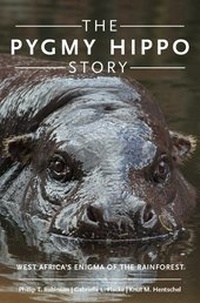
The Pygmy Hippo Story
West Africa's Enigma of the Rainforest
Published on 20. April 2017
Book
Hardback
436 pages
978-0-19-061185-9 (ISBN)
Description
Though the pygmy hippopotamus has been designated as a flagship species of West African forests (meaning that by raising conservation efforts for a single species, an entire ecological region could benefit), very little research has been published on the animal. They are solitary, nocturnal, and skittish, and until recent developments in "camera trap" technology, they were considered the least-photographed large mammal species in the world. The information currently available on this endangered species is scattered, limited, redundant, and often inaccurate, and no major volume exists as a resource for those interested in the conservation effort for the species, until now.
Philip Robinson and his coauthors provide a treatment of the natural history, biology, and ecology of the pygmy hippo, along with a discussion of the rare animal's taxonomic niche and a summary of its research initiatives up to this point. The authors show the ways in which the pygmy hippo has come into contact with people in West African countries, both in terms of ecological impact and cultural: the creature has been the subject of local folktales, and is treated as almost mythic by some regions. Information on issues related to captivity, breeding, and zoos will be provided. The book is heavily illustrated with original photographs and anatomic drawings. The project should be of use to conservation biologists and zoologists, and will be the definitive single-volume account of an animal that the scientific community has designated to be ecologically significant to West Africa.
Philip Robinson and his coauthors provide a treatment of the natural history, biology, and ecology of the pygmy hippo, along with a discussion of the rare animal's taxonomic niche and a summary of its research initiatives up to this point. The authors show the ways in which the pygmy hippo has come into contact with people in West African countries, both in terms of ecological impact and cultural: the creature has been the subject of local folktales, and is treated as almost mythic by some regions. Information on issues related to captivity, breeding, and zoos will be provided. The book is heavily illustrated with original photographs and anatomic drawings. The project should be of use to conservation biologists and zoologists, and will be the definitive single-volume account of an animal that the scientific community has designated to be ecologically significant to West Africa.
Reviews / Votes
Overall, this book is the most up-to-date scientific and most comprehensive book about pygmy hippos. The combination with the personal experiences and challenges of scientific and conservation work is quite unique. Therefore, not only people who are interested in hippos should read it but also those who are generally interested in the Upper Guinean forests, their social troubles, armed conflicts and in vivid descriptions and adventures of scientists. Hopefully the book will help to raise interest in these forests and the enigmatic and cute but endangered Pygmy Hippos living in them! * Thiemo Braasch, Suiform Soundings Newsletter of the IUCN * This book fills an important gap in the monographic treatment of African large mammals... a delightful mixture of natural and cultural history, reviewing facts, folklore, and fiction surrounding this little-known species, organized into 5 parts and 33 chapters. * Jan Decher, The Journal of Mammalogy * The Pygmy Hippo Story is not your classic monolithic and scientifically detached monograph of single species research [...] It is a highly informative and passionate call for attention and action that something very unique may be irreversibly disappearing in West Africa. The authors leave us with an afterword [...] wherein they conclude that [t]he forecast for the pygmy hippo is clearly pessimistic, but not entirely hopeless if things change very soon. There is, however, keen competition in the information and misinformation wars that are now being waged between true scientists and special interests, such as the carbon industry climate science deniers. * Jan Decher, Journal of Mammalogy * [...] When it comes to species for which little is known, particularly one as vulnerable as the pygmy hippopotamus, any account is valuable and this is no exception. What is striking is that the vast majority of the content focuses on the history and the sociopolitical aspects of the region where this species calls home, and documents the authors efforts to study and protect the pygmy hippopotamus from extinction. * Jennifer L. Verdolin, The Quarterly Review of Biology * This book, written by Phillip T. Robinson, Gabriella L. Flacke and Knut M. Hentschel is the first monograph of West Africa's enigma of the rainforest. It presents the most comprehensive description of this species...Hopefully the book will help to raise interest in these forests and the enigmatic...pygmy hippos living in them! * Thiemo Braasch, Suiform Soundings *More details
Language
English
Place of publication
New York
United States
Illustrations
271
Dimensions
Height: 160 mm
Width: 236 mm
Thickness: 30 mm
Weight
794 gr
ISBN-13
978-0-19-061185-9 (9780190611859)
Copyright in bibliographic data and cover images is held by Nielsen Book Services Limited or by the publishers or by their respective licensors: all rights reserved.
Schweitzer Classification
Other editions
Additional editions
Phillip T. Robinson | Gabriella L. Flacke | Knut M. Hentschel
The Pygmy Hippo Story
West Africa's Enigma of the Rainforest
E-Book
03/2017
1st Edition
OUP eBook
€85.99
Available for download
Phillip T. Robinson | Gabriella L. Flacke | Knut M. Hentschel
The Pygmy Hippo Story
West Africa's Enigma of the Rainforest
E-Book
03/2017
1st Edition
OUP eBook
€85.99
Available for download
Persons
Philip T. Robinson, MS, DVM, DACZM, is board certified in zoological medicine and currently serves as the Director of the Department of Laboratory Animal Resources at the University of Toledo. He was formerly the chief veterinarian at the San Diego Zoo.
Knut Hentschel, MS, PhD is now retired after a long career of research and conservation efforts, notably in Africa. After completing his PhD at the University of Braunschweig, Germany in 1990, Hentschel dedicating twenty years to positions in Uganda, Central African Republic, and the Ivory Coast.
Gabriella Flacke, DVM, MS has lived and worked in Southern Africa where she served as clinical veterinarian for both the KwaZulu-Natal African Wild Dog Conservation and Reintroduction Programme in South Africa and the Cheetah Conservation Fund in Otjiwarongo, Namibia. She has recently completed her PhD at the University of Western Australia, where her research focused on pygmy hippo health, reproduction, and conservation. She is now working as an associate veterinarian at Zoo Miami.
Knut Hentschel, MS, PhD is now retired after a long career of research and conservation efforts, notably in Africa. After completing his PhD at the University of Braunschweig, Germany in 1990, Hentschel dedicating twenty years to positions in Uganda, Central African Republic, and the Ivory Coast.
Gabriella Flacke, DVM, MS has lived and worked in Southern Africa where she served as clinical veterinarian for both the KwaZulu-Natal African Wild Dog Conservation and Reintroduction Programme in South Africa and the Cheetah Conservation Fund in Otjiwarongo, Namibia. She has recently completed her PhD at the University of Western Australia, where her research focused on pygmy hippo health, reproduction, and conservation. She is now working as an associate veterinarian at Zoo Miami.
Author
Director/Attending VeterinarianDirector/Attending Veterinarian, Department of Laboratory Animal Resources, University of Toledo
Former Director, Ecology DivisionFormer Director, Ecology Division, Program for the Development of the Northern Region, Central African Republic
Doctoral Candidate, School of Animal BiologyDoctoral Candidate, School of Animal Biology, University of Western Australia
Content
Foreword - David P. Mallon, Manchester Metropolitan University Preface - Phillip. T. Robinson Authors' Introduction - The Authors I. DISCOVERY, HISTORY AND CAPTURE 1. What is a Pygmy Hippopotamus - Gabriella L. Flacke 2. Hippos in Popular Culture and Folklore - Gabriella L. Flacke 3. Looking for Enigmas in the Forest - Phillip T. Robinson 4. The Use and Abuse of Hippos in Nature - Phillip T. Robinson 5. Heslop's Pygmy Hippopotamus - Phillip T. Robinson 6. Hans Schomburgk - Hunter, Trapper, Bush Bicyclist - Phillip T. Robinson 7. Frans Van den Brink- Master Hippo Catcher - Phillip T. Robinson II. WORKING IN PYGMY HIPPO COUNTRY
Phillip T. Robinson 8. Arriving in West Africa 9. Just Getting There is Most of the Journey 10. Wrestling the Town Chief in Pygmy Hippo Country 11. Journeys Without Destinations 12. Going Bush in Sierra Leone 13. Traveling Hammocks and Piggyback Rides 14. A Six to Six Walk 15. Small Planes 16. Navigating Pygmy Hippo Country Co-authors and Contributors 17. Pygmy Hippo Research on Tiwai Island - April L. Conway 18. Living the Dream - Gabriella L. Flacke 19. Pygmy Hippo Research in the Ivory Coast - Knut M. Hentschel 20. The Hippo Hotel of Ivory Coast - Waldemar Buelow III. BIOLOGY AND NATURAL HISTORY
21. The Flora and Fauna of Pygmy Hippo Country - Gabriella L. Flacke 22. The Feeding Behavior of Pygmy Hippos in the Wild - Knut M. Hentschel 23. The Pygmy Hippo Hunters - Phillip T. Robinson 24. Common Ground for Hippos in West Africa - Phillip T. Robinson 25. Sly, Shy or Focused? The Origins of Elusiveness - Phillip T. Robinson 26. Husbandry, Health and Pathology of Pygmy Hippos - Gabriella L. Flacke IV. CONSERVATION DURING WARTIME 27. Staying Alive During the War - Phillip T. Robinson 28 The Disruptions and Setbacks of Civil War - Phillip T. Robinson and Henk Dop 29. The Shortcut from Master Sergeant to President - Phillip T. Robinson V. CONSERVATION AND THE FUTURE 30. A Very Sad Story of Greed - Knut M. Hentschel 31. Conservation Genetics and Fragmented Populations - Gabriela L. Flacke and Phillip T. Robinson 32. Distribution and Population Estimates - Gabriella L. Flacke 33. Conservation Planning and Priorities - Gabriella L. Flacke AFTERWORD - The Authors IMAGE CREDITS INDEX
Phillip T. Robinson 8. Arriving in West Africa 9. Just Getting There is Most of the Journey 10. Wrestling the Town Chief in Pygmy Hippo Country 11. Journeys Without Destinations 12. Going Bush in Sierra Leone 13. Traveling Hammocks and Piggyback Rides 14. A Six to Six Walk 15. Small Planes 16. Navigating Pygmy Hippo Country Co-authors and Contributors 17. Pygmy Hippo Research on Tiwai Island - April L. Conway 18. Living the Dream - Gabriella L. Flacke 19. Pygmy Hippo Research in the Ivory Coast - Knut M. Hentschel 20. The Hippo Hotel of Ivory Coast - Waldemar Buelow III. BIOLOGY AND NATURAL HISTORY
21. The Flora and Fauna of Pygmy Hippo Country - Gabriella L. Flacke 22. The Feeding Behavior of Pygmy Hippos in the Wild - Knut M. Hentschel 23. The Pygmy Hippo Hunters - Phillip T. Robinson 24. Common Ground for Hippos in West Africa - Phillip T. Robinson 25. Sly, Shy or Focused? The Origins of Elusiveness - Phillip T. Robinson 26. Husbandry, Health and Pathology of Pygmy Hippos - Gabriella L. Flacke IV. CONSERVATION DURING WARTIME 27. Staying Alive During the War - Phillip T. Robinson 28 The Disruptions and Setbacks of Civil War - Phillip T. Robinson and Henk Dop 29. The Shortcut from Master Sergeant to President - Phillip T. Robinson V. CONSERVATION AND THE FUTURE 30. A Very Sad Story of Greed - Knut M. Hentschel 31. Conservation Genetics and Fragmented Populations - Gabriela L. Flacke and Phillip T. Robinson 32. Distribution and Population Estimates - Gabriella L. Flacke 33. Conservation Planning and Priorities - Gabriella L. Flacke AFTERWORD - The Authors IMAGE CREDITS INDEX