

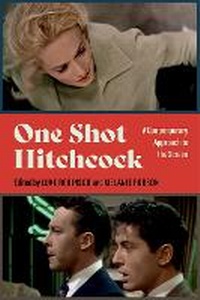
One Shot Hitchcock
A Contemporary Approach to the Screen
Published on 16. July 2024
Book
Hardback
312 pages
978-0-19-768287-6 (ISBN)
Description
In recent years, the enduring appeal of Alfred Hitchcock to film studies has been evidenced by the proliferation of innovative approaches to the director's work. Adding to this pattern of innovation, the edited collection One Shot Hitchcock: A Contemporary Approach to the Screen utilizes formal analysis to interrogate key single shots from across Alfred Hitchcock's long career. This collection reveals the value of analyzing the single shot - within this small, cinematic unit is a code that unlocks a series of revelations about cinema as an artistic practice and a theoretical study. Each chapter examines one shot from a single film, beginning with The Lodger (1927) and ending with Frenzy (1972).
If Hitchcock is known as a director of suspense films and films about murder, the shots discussed in One Shot Hitchcock are his crime scenes. These are the shots that resist being forgotten, that repeatedly demand to be investigated, in which Hitchcock's influence on aesthetics and culture is at its most acute. Each chapter uses a different lens of film analysis - transnationalism, gender and sexuality, performance, history, affect, intermediality, remake studies, philosophy, and film form are all used to interrogate single shots. In these essays, the single shot from Hitchcock's film not only illustrates the approach in question but also demonstrates how the single shot encourages us to rethink our approaches to the screen. By reinvigorating a close formal mode of analysis, One Shot Hitchcock asks readers to think differently about film, offering a renewed assessment of Hitchcock's oeuvre in the process.
If Hitchcock is known as a director of suspense films and films about murder, the shots discussed in One Shot Hitchcock are his crime scenes. These are the shots that resist being forgotten, that repeatedly demand to be investigated, in which Hitchcock's influence on aesthetics and culture is at its most acute. Each chapter uses a different lens of film analysis - transnationalism, gender and sexuality, performance, history, affect, intermediality, remake studies, philosophy, and film form are all used to interrogate single shots. In these essays, the single shot from Hitchcock's film not only illustrates the approach in question but also demonstrates how the single shot encourages us to rethink our approaches to the screen. By reinvigorating a close formal mode of analysis, One Shot Hitchcock asks readers to think differently about film, offering a renewed assessment of Hitchcock's oeuvre in the process.
Reviews / Votes
Through the close reading of single shots, the collection provides an innovative approach to the study of Hitchcock's work. An invaluable resource for researchers and scholars. * A. F. Winstead, CHOICE *More details
Language
English
Place of publication
New York
United States
Target group
College/higher education
Illustrations
65 b&w halftones
Dimensions
Height: 235 mm
Width: 156 mm
Weight
1310 gr
ISBN-13
978-0-19-768287-6 (9780197682876)
Copyright in bibliographic data and cover images is held by Nielsen Book Services Limited or by the publishers or by their respective licensors: all rights reserved.
Schweitzer Classification
Other editions
Additional editions
Book
08/2024
Oxford University Press Inc
€32.50
Shipment within 15-20 days
E-Book
04/2024
OUP eBook
€28.49
Available for download
E-Book
04/2024
OUP eBook
€28.49
Available for download
Persons
Luke Robinson is Casual Academic at the School of the Arts and Media, University of New South Wales Sydney and University of Technology Sydney.
Melanie Robson is Adjunct Lecturer at the School of the Arts and Media, University of New South Wales Sydney
Melanie Robson is Adjunct Lecturer at the School of the Arts and Media, University of New South Wales Sydney
Content
1. One Shot: Hitchcock's Crime Scenes
Luke Robinson and Melanie Robson
2. The Lodger (1927): Contaminating British silent cinema
Sebastian Smoli'nski
3. The Manxman (1929): Written on the water: Hitchcock's dissolving ink
Tom Gunning
4. Sabotage (1936): A thriller and its aftereffects
Helen Hughes
5. Rebecca (1940): The impure object of vision
Bruce Isaacs
6. Shadow of a Doubt (1943): Performing a murder(er)
Melanie Robson
7. Aventure Malgache (1944): French colonial tensions
Charles Barr
8. Rope (1948): Chromatic design and neon light
Sarah Street
9. Rear Window (1954): Intermedialities of peeping in the plural
Martin P. Rossouw
10. To Catch a Thief (1955): Stanley Cavell and the end of a conventional myth
Susana Viegas
11. The Man Who Knew Too Much (1956): Hitchcock remakes himself in Hollywood
Megan Carrigy
12. The Wrong Man (1956): Towards singularity
Noa Steimatsky
13. Vertigo (1958): Labor in a single shot
Domietta Torlasco
14. The Birds (1963): Trauma and the right of reply
Julian Murphet
15. Marnie (1964): Restroom
Jodi Brooks
16. Frenzy (1972): Pulling focus between a woman's face and a face of death
Luke Robinson
Index
Luke Robinson and Melanie Robson
2. The Lodger (1927): Contaminating British silent cinema
Sebastian Smoli'nski
3. The Manxman (1929): Written on the water: Hitchcock's dissolving ink
Tom Gunning
4. Sabotage (1936): A thriller and its aftereffects
Helen Hughes
5. Rebecca (1940): The impure object of vision
Bruce Isaacs
6. Shadow of a Doubt (1943): Performing a murder(er)
Melanie Robson
7. Aventure Malgache (1944): French colonial tensions
Charles Barr
8. Rope (1948): Chromatic design and neon light
Sarah Street
9. Rear Window (1954): Intermedialities of peeping in the plural
Martin P. Rossouw
10. To Catch a Thief (1955): Stanley Cavell and the end of a conventional myth
Susana Viegas
11. The Man Who Knew Too Much (1956): Hitchcock remakes himself in Hollywood
Megan Carrigy
12. The Wrong Man (1956): Towards singularity
Noa Steimatsky
13. Vertigo (1958): Labor in a single shot
Domietta Torlasco
14. The Birds (1963): Trauma and the right of reply
Julian Murphet
15. Marnie (1964): Restroom
Jodi Brooks
16. Frenzy (1972): Pulling focus between a woman's face and a face of death
Luke Robinson
Index