

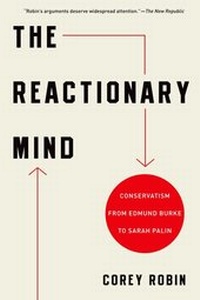
The Reactionary Mind
Conservatism from Edmund Burke to Sarah Palin
Published on 14. March 2013
Book
Paperback/Softback
304 pages
978-0-19-995911-2 (ISBN)
Description
Late in life, William F. Buckley made a confession to Corey Robin. Capitalism is "boring," said the founding father of the American right. "Devoting your life to it," as conservatives do, "is horrifying if only because it's so repetitious. It's like sex." With this unlikely conversation began Robin's decade-long foray into the conservative mind. What is conservatism, and what's truly at stake for its proponents? If capitalism bores them, what excites them?
Tracing conservatism back to its roots in the reaction against the French Revolution, Robin argues that the right is fundamentally inspired by a hostility to emancipating the lower orders. Some conservatives endorse the free market, others oppose it. Some criticize the state, others celebrate it. Underlying these differences is the impulse to defend power and privilege against movements demanding freedom and equality.
Despite their opposition to these movements, conservatives favor a dynamic conception of politics and society-one that involves self-transformation, violence, and war. They are also highly adaptive to new challenges and circumstances. This partiality to violence and capacity for reinvention has been critical to their success.
Written by a keen, highly regarded observer of the contemporary political scene, The Reactionary Mind ranges widely, from Edmund Burke to Antonin Scalia, from John C. Calhoun to Ayn Rand. It advances the notion that all rightwing ideologies, from the eighteenth century through today, are historical improvisations on a theme: the felt experience of having power, seeing it threatened, and trying to win it back.
Tracing conservatism back to its roots in the reaction against the French Revolution, Robin argues that the right is fundamentally inspired by a hostility to emancipating the lower orders. Some conservatives endorse the free market, others oppose it. Some criticize the state, others celebrate it. Underlying these differences is the impulse to defend power and privilege against movements demanding freedom and equality.
Despite their opposition to these movements, conservatives favor a dynamic conception of politics and society-one that involves self-transformation, violence, and war. They are also highly adaptive to new challenges and circumstances. This partiality to violence and capacity for reinvention has been critical to their success.
Written by a keen, highly regarded observer of the contemporary political scene, The Reactionary Mind ranges widely, from Edmund Burke to Antonin Scalia, from John C. Calhoun to Ayn Rand. It advances the notion that all rightwing ideologies, from the eighteenth century through today, are historical improvisations on a theme: the felt experience of having power, seeing it threatened, and trying to win it back.
More details
Language
English
Place of publication
New York
United States
Target group
College/higher education
Dimensions
Height: 209 mm
Width: 141 mm
Thickness: 21 mm
Weight
320 gr
ISBN-13
978-0-19-995911-2 (9780199959112)
Copyright in bibliographic data and cover images is held by Nielsen Book Services Limited or by the publishers or by their respective licensors: all rights reserved.
Schweitzer Classification
Other editions
Additional editions
Book
11/2011
Oxford University Press Inc
€35.89
Article exhausted; check different version
Person
Corey Robin teaches political science at Brooklyn College and the CUNY Graduate Center. His writings have appeared in the New York Times, Harper's, and the London Review of Books.
Content
Introduction ; Part 1: Profiles in Reaction ; Conservatism and Counterrevolution ; The First Counterrevolutionary ; Garbage and Gravitas ; Inside Out ; The Ex-Cons ; Affirmative Action Baby ; Part 2: The Virtues of Violence ; A Color-Coded Genocide ; Remembrance of Empires Past ; Protocols of Machismo ; Potomac Fever ; Easy to Be Hard ; Conclusion