

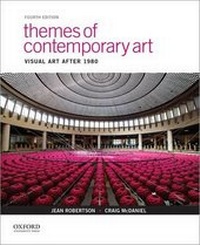
Themes of Contemporary Art
Visual Art after 1980
4th Edition
Published on 1. November 2016
Book
Paperback/Softback
464 pages
978-0-19-027662-1 (ISBN)
Description
Offering a unique thematic approach to recent art history, Themes of Contemporary Art: Visual Art after 1980, Fourth Edition, focuses on eight central ideas recurring in art over the past few decades: identity, the body, time, memory, place, language, science, and spirituality.This thought-provoking volume features over 200 full-color images of artworks that exemplify a wide variety of materials, techniques, theoretical viewpoints, and
stylistic approaches, by artists from diverse ethnic, cultural, and geographic backgrounds. Its concise, engaging, and accessible narrative challenges readers to think actively and critically about the ideas
expressed in contemporary art.
stylistic approaches, by artists from diverse ethnic, cultural, and geographic backgrounds. Its concise, engaging, and accessible narrative challenges readers to think actively and critically about the ideas
expressed in contemporary art.
Reviews / Votes
"This book does everything I need it to. The thematic organization is valuable and unique, allowing me to incorporate supplemental materials easily. It is well written, reasonably priced, and my students love it as much as I do. I absolutely always recommend it to other professors."--Julia Alderson, Humboldt State University
"Themes of Contemporary Art is written in a mostly jargon-free, plain-language manner that is at my students' level."
--Anita Welych, Cazenovia College
"I think the authors have done a sensational job of breaking down difficult-to-grasp concepts while synthesizing the discourse into streamlined and elegant prose."
--Miguel de Baca, Lake Forest College
"This is a superb contemporary art text. The writing, organization, and inclusiveness of Themes of Contemporary Art are outstanding. The historical overviews, the authors' self-reflection, and the analysis of artworks are exceptional. In my opinion, it is the best text for studio artists and a wonderful addition to contemporary art history courses."
--Andrea V. Feeser, Clemson University
More details
Edition
4th edition
Language
English
Place of publication
New York
United States
Target group
College/higher education
Illustrations
Illustrations
Weight
1280 gr
ISBN-13
978-0-19-027662-1 (9780190276621)
Copyright in bibliographic data and cover images is held by Nielsen Book Services Limited or by the publishers or by their respective licensors: all rights reserved.
Schweitzer Classification
Persons
JEAN ROBERTSON is Chancellor's Professor of Art History at Indiana University's Herron School of Art and Design. CRAIG McDANIEL is Associate Dean and Professor of Fine Arts at Indiana University's Herron School of Art and Design. They are co-authors of Spellbound: Rethinking the Alphabet (2016).
Content
Contents
PREFACE
INTRODUCTION
Themes of Contemporary Art: What, Why, and How
A Brief Orientation
CHAPTER ONE
The Art World Expands
Overview of History and Art History: 1980-2016
A Spectrum of Voices Emerges
Globalization
Theory Flexes Its Muscles
Impact of the Digital
Traditions Survive, New Trends Arrive
Social Experience as Art
Art Meets Contemporary Culture
PROFILE: Katharina Grosse
PROFILE: Ryan Trecartin and Lizzie Fitch
CHAPTER TWO
Identity
A Focus on Identity in Art History
Identity Is Collective and Relational
Identity Politics
Otherness and Representation
Essentialism Versus Diversity
Authenticity and Hybridity
Identity Is Constructed
Deconstructing Difference
The Fluidity of Identity
Fictional Identities
Are We Post-Identity?
PROFILE: Shirin Neshat
PROFILE: Nancy Burson
CHAPTER THREE
The Body
Past Figurative Art
The Body Beautiful
A New Spin on the Body
The Body Is a Battleground
The Body Is a Sign
Performing Bodies
Sexual Bodies
The Gaze
Sex and Violence
Mortal Bodies
Grotesque Bodies
Classifying Humans in the Genomic Age
Posthuman Bodies
PROFILE: Renee Cox
PROFILE: Zhang Huan
CHAPTER FOUR
Time
Changing Views of Time
Time and Art History
Representing Time
Time as a Medium
Live Art
Film and Video
Process Art
Exploring the Structure of Time
Counting and Measuring Time
Reordering Time
Expressing Endlessness
PROFILE: Hiroshi Sugimoto
PROFILE: Cornelia Parker
CHAPTER FIVE
Memory
Memory and Art History
The Texture of Memory
Memory Is Emotional
Memory Is Unreliable
Memory Is Multisensory
Strategies for Representing the Past
Displaying Evidence
Reenacting the Past
Fracturing Narratives and Reshuffling Memories
Storehouses of Memory
Revisiting the Past
Recovering History
Rethinking History
Reframing the Present
Commemorating the Past
PROFILE: Christian Boltanski
PROFILE: Brian Tolle
CHAPTER SIX
Place
Places Have Meanings
Places Have Value
History's Influence
Representations of Space
(Most) Works of Art Exist in a Place
What's Public? What's Private?
Dislocation
Looking Out for Places
Fictionalized Places
PROFILE: Turbine Hall at Tate Modern
PROFILE: Andrea Zittel
CHAPTER SEVEN
Language
Art and Words: A History
Recent Theories of Language
Reasons for Using Language
Language Makes Meaning
Language Takes Form
Transparency and Translucency
Spatiality and Physicality
Books Made by Artists
Art Made with Books
Wielding the Power of Language
Naming
Confronting the Challenge of Translation
Using Text in the Digital Age
PROFILE: Nina Katchadourian
PROFILE: Janet Cardiff and George Bures Miller
CHAPTER EIGHT
Science
What Is Science?
Artists as Amateur Scientists
Artists Adopt Scientific Tools and Materials
Creole Technologies
Bio Art
The Ideology of Science
Changing Paradigms of Science
Is Science Running Amok? Activist Art Responds
The Visual Culture of Science
Scientific Imaging and Art
Deconstructing the Visual Culture of Science
Scientific Displays and Archives
Science in Popular Culture
Is Nature Natural?
Marveling at the Universe
PROFILE: Patricia Piccinini
PROFILE: Eduardo Kac
CHAPTER NINE
Spirituality
Spirituality and Religion
Enchantment
A Short History
Religious Iconography
Spiritual Forms and Materials
Mingling the Sacred and the Profane
Sacred Spaces and Rituals
Art and Transcendence
Finding Faith and Harboring Doubt
Expressing Religious Identities
Facing Death, Doom, and Destruction
PROFILE: Bill Viola
PROFILE: Jose Bedia
TIMELINE
SELECTED BIBLIOGRAPHY
INDEX
PREFACE
INTRODUCTION
Themes of Contemporary Art: What, Why, and How
A Brief Orientation
CHAPTER ONE
The Art World Expands
Overview of History and Art History: 1980-2016
A Spectrum of Voices Emerges
Globalization
Theory Flexes Its Muscles
Impact of the Digital
Traditions Survive, New Trends Arrive
Social Experience as Art
Art Meets Contemporary Culture
PROFILE: Katharina Grosse
PROFILE: Ryan Trecartin and Lizzie Fitch
CHAPTER TWO
Identity
A Focus on Identity in Art History
Identity Is Collective and Relational
Identity Politics
Otherness and Representation
Essentialism Versus Diversity
Authenticity and Hybridity
Identity Is Constructed
Deconstructing Difference
The Fluidity of Identity
Fictional Identities
Are We Post-Identity?
PROFILE: Shirin Neshat
PROFILE: Nancy Burson
CHAPTER THREE
The Body
Past Figurative Art
The Body Beautiful
A New Spin on the Body
The Body Is a Battleground
The Body Is a Sign
Performing Bodies
Sexual Bodies
The Gaze
Sex and Violence
Mortal Bodies
Grotesque Bodies
Classifying Humans in the Genomic Age
Posthuman Bodies
PROFILE: Renee Cox
PROFILE: Zhang Huan
CHAPTER FOUR
Time
Changing Views of Time
Time and Art History
Representing Time
Time as a Medium
Live Art
Film and Video
Process Art
Exploring the Structure of Time
Counting and Measuring Time
Reordering Time
Expressing Endlessness
PROFILE: Hiroshi Sugimoto
PROFILE: Cornelia Parker
CHAPTER FIVE
Memory
Memory and Art History
The Texture of Memory
Memory Is Emotional
Memory Is Unreliable
Memory Is Multisensory
Strategies for Representing the Past
Displaying Evidence
Reenacting the Past
Fracturing Narratives and Reshuffling Memories
Storehouses of Memory
Revisiting the Past
Recovering History
Rethinking History
Reframing the Present
Commemorating the Past
PROFILE: Christian Boltanski
PROFILE: Brian Tolle
CHAPTER SIX
Place
Places Have Meanings
Places Have Value
History's Influence
Representations of Space
(Most) Works of Art Exist in a Place
What's Public? What's Private?
Dislocation
Looking Out for Places
Fictionalized Places
PROFILE: Turbine Hall at Tate Modern
PROFILE: Andrea Zittel
CHAPTER SEVEN
Language
Art and Words: A History
Recent Theories of Language
Reasons for Using Language
Language Makes Meaning
Language Takes Form
Transparency and Translucency
Spatiality and Physicality
Books Made by Artists
Art Made with Books
Wielding the Power of Language
Naming
Confronting the Challenge of Translation
Using Text in the Digital Age
PROFILE: Nina Katchadourian
PROFILE: Janet Cardiff and George Bures Miller
CHAPTER EIGHT
Science
What Is Science?
Artists as Amateur Scientists
Artists Adopt Scientific Tools and Materials
Creole Technologies
Bio Art
The Ideology of Science
Changing Paradigms of Science
Is Science Running Amok? Activist Art Responds
The Visual Culture of Science
Scientific Imaging and Art
Deconstructing the Visual Culture of Science
Scientific Displays and Archives
Science in Popular Culture
Is Nature Natural?
Marveling at the Universe
PROFILE: Patricia Piccinini
PROFILE: Eduardo Kac
CHAPTER NINE
Spirituality
Spirituality and Religion
Enchantment
A Short History
Religious Iconography
Spiritual Forms and Materials
Mingling the Sacred and the Profane
Sacred Spaces and Rituals
Art and Transcendence
Finding Faith and Harboring Doubt
Expressing Religious Identities
Facing Death, Doom, and Destruction
PROFILE: Bill Viola
PROFILE: Jose Bedia
TIMELINE
SELECTED BIBLIOGRAPHY
INDEX