

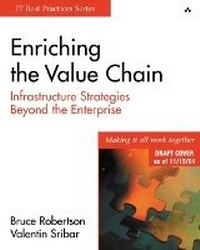
Enriching the Value Chain
Infrastructure Strategies Beyond the Enterprise
Published on 5. February 2002
Book
Hardback
384 pages
978-0-201-76730-8 (ISBN)
Description
Enriching the Value Chain: Infrastructure Strategies Beyond the Enterprise explains how adaptive infrastructure techniques can create a more focused, organized approach to delivering and supporting high-agility applications for e-Business and beyond. Along the way, the book recommends best practices for dealing with architecture and technology issues within the infrastructure in a way that can lead to success.
More details
Language
English
Place of publication
Boston
United States
Publishing group
Pearson Education (US)
Target group
College/higher education
Dimensions
Height: 242 mm
Width: 192 mm
Thickness: 21 mm
Weight
777 gr
ISBN-13
978-0-201-76730-8 (9780201767308)
Copyright in bibliographic data and cover images is held by Nielsen Book Services Limited or by the publishers or by their respective licensors: all rights reserved.
Schweitzer Classification
Other editions
New editions

Bruce Robertson | Valentin Sribar
Enriching the Value Chain: Infrastructure Strategies Beyond Enterprise
Book
03/2004
Intel Press
€59.04
Article not available
Persons
BRUCE ROBERTSON leads META Group's infrastructure development program, working with clients to plan their e-Business and enterprise systems from a pattern perspective. His areas of technical specialization include directory and security services, networking, middleware, and e-Business infrastructure. Previously, he was a senior technology editor at Network Computing Magazine, a director of consulting for a Los Angeles technology consulting firm, and manager of an online services marketing joint venture.
VALENTIN SRIBAR is general manager of META Group's Infusion offerings, helping clients adapt their processes and organization to cope with any combination of dramatic business and technology changes. Previously, he was a senior consultant with the technology services practice of Ernst & Young, where he developed information technology architectures and networking designs.
0201767309AB12052001
VALENTIN SRIBAR is general manager of META Group's Infusion offerings, helping clients adapt their processes and organization to cope with any combination of dramatic business and technology changes. Previously, he was a senior consultant with the technology services practice of Ernst & Young, where he developed information technology architectures and networking designs.
0201767309AB12052001
Content
(NOTE: Each chapter concludes with a Summary.)
Preface.
1 Beyond e-Business.
Why Infrastructure (Suddenly) Matters.
Getting It Right.
The Importance of Being Adaptive.
The Clash of Cultures.
What's the Solution?
Understanding Adaptive Infrastructure.
Measuring the Benefits.
2 Laying the Foundation.
How to Catalog Components.
Physical Components.
Functional Components.
Interface Components.
Other Components?
Other Layers?
Developing Adaptive Services.
Understanding the Concept.
Applying the Model.
Benefits of Adaptive Infrastructure Services.
Shifting Services to the Infrastructure.
Decoupling the Lifecycles.
Examining the Network Model.
Service Interfaces and Service Level Agreements.
Where to Create Service Boundaries.
Keeping it Real.
Design Guidelines.
How to Apply Services to New Applications.
3 Identifying and Using Patterns.
What Are Patterns?
Designing for the Future.
Asking Who, Where, and What?
How Detailed Should It Get?
Understanding the Major Patterns.
Transact Patterns.
Publish Patterns.
Collaborate Patterns.
Key Patterns for e-Business.
Web Publish Pattern.
3/N-Tier Transact Pattern.
What Patterns Do You Need?
Subdividing Patterns.
Should Patterns for e-Business Be Different?
Applying Multiple Patterns.
4 Infrastructure Planning and Design.
The Business/IT Project Lifecycle.
Step 1: Setting Strategy.
Step 2: Choosing Strategic Activities.
Step 3: Matching Activities to Patterns.
Step 4: Refining Patterns and Project Plans.
Step 5: Implementing and Operating.
The Importance of People Skills.
Assessing the Skills Required.
Increased Pressure to Deliver.
New Types of Relationships.
Developing Relationship-based Management.
New Business Roles.
Effective Recruiting.
Retaining Employees.
Understanding Infrastructure Planning.
Details of Project Planning.
Packaging Infrastructure.
Designing Patterns.
5 Security Services.
Isolation Infrastructure Service.
Understanding Firewalls.
Architecting the Demilitarized Zone (DMZ).
Intrusion Detection and Threat Management.
SSL and Encryption Hardware.
Refining Pattern Designs for Isolation Infrastructure.
Identity Infrastructure Service.
Web SSO: Simple Web-Centric Authentication.
Public Key Infrastructure (PKI).
Directory Server.
Building a Complete Identity Infrastructure.
Refining Pattern Designs in Identity Infrastructure.
6 Physical Components.
Network Layer.
Overview of Networking Technologies.
Scale-Out Design for Performance and Availability.
Network Load Balancer.
Caching Server.
Content Delivery Network (CDN).
Internet Access and Transport Services.
Extranet Service Providers (ESPs).
Hosting Services.
Refining Patterns in the Network Layer.
Storage Layer.
Storage Area Network Interconnect.
Network Attached Storage Solutions (NAS).
Backup/Recovery Architectures.
Storage Options in the Server Layer.
Refining Patterns in the Storage Layer.
Server Layer.
Server Evolution.
Scale-Up Versus Scale-Out.
Scaling Out Web Services.
Server Consolidation.
Refining Patterns in the Server Layer.
7 Functional Components.
Database Layer.
Important Design Issues.
Trends in Database Technologies.
Scale-Out Solutions and Clustered Database Options.
Refining Patterns in the Database Layer.
Integration Layer.
The Integration Server (Message Broker).
The Inter-Enterprise Integration (IEI) Server.
Refining Patterns in the Integration Layer.
Application Server Layer.
Understanding Application Servers.
Choosing Application Servers.
.NET versus J2EE.
Refining Patterns in the Application Server Layer.
8 Interface and Management Components.
Presentation Layer.
Web Server.
Wireless Application Protocol (WAP) Server.
Wireless Service.
Voice.
Interactive Voice Response (IVR).
Refining Patterns in the Presentation Layer.
API Layer.
Understanding APIs.
Refining Patterns in the API Layer.
Management Layer.
Service Level Management (SLM).
Web Application Monitoring Strategy.
A Note on Metrics.
Refining Patterns in the Management Layer.
Using a Test Lab to Increase Performance.
Appendix A. Component Catalog.
Index to Components.
Glossary.
Index. 0201767309T01242002
Preface.
1 Beyond e-Business.
Why Infrastructure (Suddenly) Matters.
Getting It Right.
The Importance of Being Adaptive.
The Clash of Cultures.
What's the Solution?
Understanding Adaptive Infrastructure.
Measuring the Benefits.
2 Laying the Foundation.
How to Catalog Components.
Physical Components.
Functional Components.
Interface Components.
Other Components?
Other Layers?
Developing Adaptive Services.
Understanding the Concept.
Applying the Model.
Benefits of Adaptive Infrastructure Services.
Shifting Services to the Infrastructure.
Decoupling the Lifecycles.
Examining the Network Model.
Service Interfaces and Service Level Agreements.
Where to Create Service Boundaries.
Keeping it Real.
Design Guidelines.
How to Apply Services to New Applications.
3 Identifying and Using Patterns.
What Are Patterns?
Designing for the Future.
Asking Who, Where, and What?
How Detailed Should It Get?
Understanding the Major Patterns.
Transact Patterns.
Publish Patterns.
Collaborate Patterns.
Key Patterns for e-Business.
Web Publish Pattern.
3/N-Tier Transact Pattern.
What Patterns Do You Need?
Subdividing Patterns.
Should Patterns for e-Business Be Different?
Applying Multiple Patterns.
4 Infrastructure Planning and Design.
The Business/IT Project Lifecycle.
Step 1: Setting Strategy.
Step 2: Choosing Strategic Activities.
Step 3: Matching Activities to Patterns.
Step 4: Refining Patterns and Project Plans.
Step 5: Implementing and Operating.
The Importance of People Skills.
Assessing the Skills Required.
Increased Pressure to Deliver.
New Types of Relationships.
Developing Relationship-based Management.
New Business Roles.
Effective Recruiting.
Retaining Employees.
Understanding Infrastructure Planning.
Details of Project Planning.
Packaging Infrastructure.
Designing Patterns.
5 Security Services.
Isolation Infrastructure Service.
Understanding Firewalls.
Architecting the Demilitarized Zone (DMZ).
Intrusion Detection and Threat Management.
SSL and Encryption Hardware.
Refining Pattern Designs for Isolation Infrastructure.
Identity Infrastructure Service.
Web SSO: Simple Web-Centric Authentication.
Public Key Infrastructure (PKI).
Directory Server.
Building a Complete Identity Infrastructure.
Refining Pattern Designs in Identity Infrastructure.
6 Physical Components.
Network Layer.
Overview of Networking Technologies.
Scale-Out Design for Performance and Availability.
Network Load Balancer.
Caching Server.
Content Delivery Network (CDN).
Internet Access and Transport Services.
Extranet Service Providers (ESPs).
Hosting Services.
Refining Patterns in the Network Layer.
Storage Layer.
Storage Area Network Interconnect.
Network Attached Storage Solutions (NAS).
Backup/Recovery Architectures.
Storage Options in the Server Layer.
Refining Patterns in the Storage Layer.
Server Layer.
Server Evolution.
Scale-Up Versus Scale-Out.
Scaling Out Web Services.
Server Consolidation.
Refining Patterns in the Server Layer.
7 Functional Components.
Database Layer.
Important Design Issues.
Trends in Database Technologies.
Scale-Out Solutions and Clustered Database Options.
Refining Patterns in the Database Layer.
Integration Layer.
The Integration Server (Message Broker).
The Inter-Enterprise Integration (IEI) Server.
Refining Patterns in the Integration Layer.
Application Server Layer.
Understanding Application Servers.
Choosing Application Servers.
.NET versus J2EE.
Refining Patterns in the Application Server Layer.
8 Interface and Management Components.
Presentation Layer.
Web Server.
Wireless Application Protocol (WAP) Server.
Wireless Service.
Voice.
Interactive Voice Response (IVR).
Refining Patterns in the Presentation Layer.
API Layer.
Understanding APIs.
Refining Patterns in the API Layer.
Management Layer.
Service Level Management (SLM).
Web Application Monitoring Strategy.
A Note on Metrics.
Refining Patterns in the Management Layer.
Using a Test Lab to Increase Performance.
Appendix A. Component Catalog.
Index to Components.
Glossary.
Index. 0201767309T01242002