

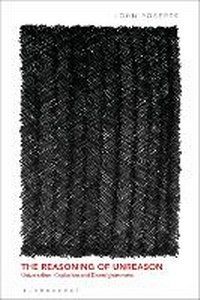
The Reasoning of Unreason
Universalism, Capitalism and Disenlightenment
Published on 20. February 2020
Book
Paperback/Softback
224 pages
978-1-350-15100-0 (ISBN)
Description
The twenty-first century so far has seen the global rise of authoritarian populism, systematic racism, and dogmatic metaphysics. Even though these events demonstrate the growth of an age of 'unreason', in this original and compelling book John Roberts resists the assumption that such thinking displays an unthinking irrationality or loss of reason; instead he asserts that an important feature of modern reactionary politics is that it offers a supposedly convincing integration of the particular and the universal. This move is defined by what Roberts calls the 'reasoning of unreason' and has deep roots in the history of Western thought and politics.
Tracing the dark history of enlightenment-disenlightenment, John Roberts explores 'the reasoning of unreason' across centuries from Aquinas, William of Ockham, the most important treatise on witchcraft Malleus Maleficarum, Locke, Kant, and Count Arthur de Gobineau, to Social Darwinism, Nazism, Carl Schmitt, Leo Strauss, and Friedrich von Hayek. Roberts provides a new set of philosophical-political tools to understand the formation and denigration of the rational subject and the current reinvestment in various forms of political unreason globally.
The Reasoning of Unreason is the first book to draw on the philosophy of reason, political philosophy, political theory and political history, in order to produce a dialectical account of the 'making of reason' internal to the forces of unreason and the limits of reason.
Tracing the dark history of enlightenment-disenlightenment, John Roberts explores 'the reasoning of unreason' across centuries from Aquinas, William of Ockham, the most important treatise on witchcraft Malleus Maleficarum, Locke, Kant, and Count Arthur de Gobineau, to Social Darwinism, Nazism, Carl Schmitt, Leo Strauss, and Friedrich von Hayek. Roberts provides a new set of philosophical-political tools to understand the formation and denigration of the rational subject and the current reinvestment in various forms of political unreason globally.
The Reasoning of Unreason is the first book to draw on the philosophy of reason, political philosophy, political theory and political history, in order to produce a dialectical account of the 'making of reason' internal to the forces of unreason and the limits of reason.
Reviews / Votes
John Roberts' The Reasoning of Unreason impressively shows how a contemporary critique of oppression must proceed: It must understand oppression in its own rationality. Roberts therefore analyzes in detail and with a broad historical perspective how the regimes of oppression think - how they reason against reason. Oppression thus becomes recognizable as the oppression of thinking itself: of its emancipatory power of radical universality. A remarkable example of Marx's "true philosophical criticism." -- Christoph Menke, Professor of Philosophy at the Goethe University, Frankfurt, Germany Where standard left critiques of reactionary politics view these as symptoms of irrational attachments, John Roberts shows how reactionaries lay claim to a universal reason to legitimize differences of race, culture, class, and caste. Robert's book is not only a brilliant analysis, but also a timely reminder that today's most urgent political contrast is not between universalism and particularism but between a reactionary reason dedicated to shoring up limits and an emancipatory reason working to undo them. -- Ray Brassier, Professor of Philosophy, American University of Beirut, LebanonMore details
Language
English
Place of publication
London
United Kingdom
Publishing group
Bloomsbury Publishing PLC
Target group
College/higher education
Dimensions
Height: 234 mm
Width: 156 mm
Weight
404 gr
ISBN-13
978-1-350-15100-0 (9781350151000)
Copyright in bibliographic data and cover images is held by Nielsen Book Services Limited or by the publishers or by their respective licensors: all rights reserved.
Schweitzer Classification
Other editions
Additional editions
E-Book
08/2018
1st Edition
Bloomsbury Academic
€37.49
Available for download
E-Book
08/2018
1st Edition
Bloomsbury Academic
€37.49
Available for download
Person
John Roberts is Professor of Art and Aesthetics at the University of Wolverhampton, UK. His books include The Art of Interruption: Realism, Photography and the Everyday, The Philistine Controversy (with Dave Beech), Philosophizing the Everyday, and The Necessity of Errors. He is also a contributor to Radical Philosophy, Oxford Art Journal, Historical Materialism, Third Text, and Cabinet magazine.
Content
Acknowledgements
Introduction
1) Hereticism, faith and the antinomies of reason
2) Writing enlightenment-disenlightenment in the 16th and 17th centuries
3) Bourgeois universalism in the age of Enlightenment and Nationalism
4) The reasoning of unreason as anti-philosophy: post-war capitalism, emancipatory universalism and radical particularism
Conclusion
Bibliography
Index
Introduction
1) Hereticism, faith and the antinomies of reason
2) Writing enlightenment-disenlightenment in the 16th and 17th centuries
3) Bourgeois universalism in the age of Enlightenment and Nationalism
4) The reasoning of unreason as anti-philosophy: post-war capitalism, emancipatory universalism and radical particularism
Conclusion
Bibliography
Index