


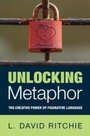
Unlocking Metaphor
The Creative Power of Figurative Language
Will be published approx. on 30. September 2026
Book
Paperback/Softback
279 pages
978-1-009-52294-6 (ISBN)
Description
'The traffic was a nightmare today'; 'you're a star'; 'he's an early bird'; 'we need to get our ducks in a row'. Metaphors like these are so enmeshed within our language that we barely realise we are using them. This book, written by world-renowned expert, provides a clear, comprehensive discussion of how we understand and use metaphor, with a focus on ordinary conversation. It begins by defining metaphors, moving on to explore their communicative role in a range of settings across regular and professional life, and finishing with an overview of the main theoretical approaches to metaphor. Drawing on current research findings, each chapter concludes with a brief discussion of how the topics covered are useful in everyday communication. Ideas are explained in non-technical language, using examples from real-life conversation - making it ideal for students of Communication, Linguistics and Psychology, or anyone interested in the fascinating world of metaphor.
More details
Language
English
Place of publication
Cambridge
United Kingdom
Product notice
Paperback (trade)
Illustrations
Worked examples or Exercises
ISBN-13
978-1-009-52294-6 (9781009522946)
Copyright in bibliographic data and cover images is held by Nielsen Book Services Limited or by the publishers or by their respective licensors: all rights reserved.
Schweitzer Classification
Other editions
Additional editions
Book
approx. 09/2026
Cambridge University Press
€103.50
Not yet published
Person
L. David Ritchie is Professor Emeritus of Communication at Portland State University. He has published extensively in metaphor theory and analysis, humor, and cognition, most recently Metaphorical Stories in Discourse (CUP, 2017) and Feeling, Thinking, and Talking (CUP, 2022).
Content
List of figures; List of concept maps; Preface; About the cover; 1. Encounters with metaphor; 2. Thinking, communicating and language; 3. Identifying and classifying metaphors; 4. Conceptual metaphors; 5. Attributes, similes and categories; 6. Analogy and structure-mapping; 7. Metaphorical stories; 8. Cultural contexts and metaphor ; 9. Visual and other cross-modal metaphors; 10. Metaphorical framing; 11. Metaphor interpretation: putting it all together; Chapter notes; Glossary; References; Index.