

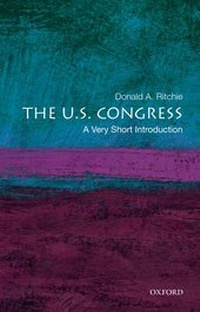
The U.S. Congress: A Very Short Introduction
A Very Short Introduction
Published on 10. June 2010
Book
Paperback/Softback
168 pages
978-0-19-533831-7 (ISBN)
Description
Many scholars believe that the framers of the Constitution intended Congress to be the preeminent branch of government. Indeed, no other legislature in the world approaches its power. Yet most Americans have only a murky idea of how it works.
In The U.S. Congress, Donald A. Ritchie, a congressional historian for more than thirty years, takes readers on a fascinating, behind-the-scenes tour of Capitol Hill-pointing out the key players, explaining their behavior, and translating parliamentary language into plain English. No mere civics lesson, this eye-opening book provides an insider's perspective on Congress, matched with a professional historian's analytical insight. After a swift survey of the creation of Congress by the
constitutional convention, he begins to unscrew the nuts and pull out the bolts. What is it like to campaign for congress? To attract large donors? To enter either house with no seniority? He answers these questions and more, explaining committee assignments (and committee work), the role of staffers and
lobbyists, floor proceedings, parliamentary rules, and coalition building. Ritchie explores the great effort put into constituent service-as representatives and senators respond to requests from groups and individuals-as well as media relations and news coverage. He also explores how the grand concepts we all know from civics class-checks and balances, advise and consent, congressional oversight-work in practice, in an age of strong presidents and a muscular Senate minority (no matter which
party is in that position).
In this sparkling addition to Oxford's Very Short Introduction series, Donald Ritchie moves beyond the cynicism and the platitudes to provide a gem of a portrait of how Congress really works.
ABOUT THE SERIES: The Very Short Introductions series from Oxford University Press contains hundreds of titles in almost every subject area. These pocket-sized books are the perfect way to get ahead in a new subject quickly. Our expert authors combine facts, analysis, perspective, new ideas, and enthusiasm to make interesting and challenging topics highly readable.
In The U.S. Congress, Donald A. Ritchie, a congressional historian for more than thirty years, takes readers on a fascinating, behind-the-scenes tour of Capitol Hill-pointing out the key players, explaining their behavior, and translating parliamentary language into plain English. No mere civics lesson, this eye-opening book provides an insider's perspective on Congress, matched with a professional historian's analytical insight. After a swift survey of the creation of Congress by the
constitutional convention, he begins to unscrew the nuts and pull out the bolts. What is it like to campaign for congress? To attract large donors? To enter either house with no seniority? He answers these questions and more, explaining committee assignments (and committee work), the role of staffers and
lobbyists, floor proceedings, parliamentary rules, and coalition building. Ritchie explores the great effort put into constituent service-as representatives and senators respond to requests from groups and individuals-as well as media relations and news coverage. He also explores how the grand concepts we all know from civics class-checks and balances, advise and consent, congressional oversight-work in practice, in an age of strong presidents and a muscular Senate minority (no matter which
party is in that position).
In this sparkling addition to Oxford's Very Short Introduction series, Donald Ritchie moves beyond the cynicism and the platitudes to provide a gem of a portrait of how Congress really works.
ABOUT THE SERIES: The Very Short Introductions series from Oxford University Press contains hundreds of titles in almost every subject area. These pocket-sized books are the perfect way to get ahead in a new subject quickly. Our expert authors combine facts, analysis, perspective, new ideas, and enthusiasm to make interesting and challenging topics highly readable.
Reviews / Votes
"This is a lively, comprehensive and knowing guide to the Congress that leaves nothing out. With clarity and good humor, Donald Ritchie explains how Congress works in a way I never thought possible. His book should be read by every citizen, by every journalist, and even by every member of the Congress."--Roger Mudd, former CBS News Congressional correspondent"This volume delivers an elegant, informative, and entertaining tour of the legislative branch. It manages to cover an impressive amount of ground with the benefit of smart organization, economical prose, and an insider's eye for what is interesting and important. In short, it is the kind of book diligent citizens should read."--Paul Charles Milazzo, Associate Professor of History, Ohio University
More details
Series
Language
English
Place of publication
Oxford
United Kingdom
Illustrations
8 black and white photographs
Dimensions
Height: 173 mm
Width: 113 mm
Thickness: 10 mm
Weight
138 gr
ISBN-13
978-0-19-533831-7 (9780195338317)
Copyright in bibliographic data and cover images is held by Nielsen Book Services Limited or by the publishers or by their respective licensors: all rights reserved.
Schweitzer Classification
Other editions
New editions
Book
12/2022
3rd Edition
Oxford University Press Inc
€13.00
Shipment within 15-20 days
Additional editions
Donald A. Ritchie
The U.S. Congress: A Very Short Introduction
E-Book
07/2010
OUP eBook
€7.99
Available for download
Person
Donald A. Ritchie is Historian of the U.S. Senate. His books include Our Constitution; The Oxford Guide to the United States Government; Press Gallery: Congress and the Washington Correspondents; Reporting from Washington: The History of the Washington Press Corps; and Electing FDR: The New Deal Campaign of 1932.
Content
Preface
Chapter 1: The Great Compromise
-Why Not a Parliament? -All Laws Necessary and Proper -The People's House -The Cooling Senate -To Get Along, Go Along
Chapter 2: Campaigns and Constituents
-Campaigning for Congress -The Freshman Class -Serving Constituents -Media Relations and News Coverage
Chapter 3: Congress at Work
-The Committees -Turning Bills into Laws -House Committees -Senate Committees -Appropriations: Where Things Happen
Chapter 4: Floor Proceedings and Coalition Building
-Debate, Rules, and Procedure -Majority Rule in the House -Minority Muscle in the Senate -Making Laws and Making Sausage
Chapter 5: Checks and Balances
-The Chief Legislator -Advice and Consent -War and Peace -Congress Investigates -Punishment and Protection -Congress and the Courts
Chapter 6: The Contours of Capitol Hill
-The Capitol -The Members -The Staff -Lobbyists and Other Visitors
Bibliography
Notes
Index
Chapter 1: The Great Compromise
-Why Not a Parliament? -All Laws Necessary and Proper -The People's House -The Cooling Senate -To Get Along, Go Along
Chapter 2: Campaigns and Constituents
-Campaigning for Congress -The Freshman Class -Serving Constituents -Media Relations and News Coverage
Chapter 3: Congress at Work
-The Committees -Turning Bills into Laws -House Committees -Senate Committees -Appropriations: Where Things Happen
Chapter 4: Floor Proceedings and Coalition Building
-Debate, Rules, and Procedure -Majority Rule in the House -Minority Muscle in the Senate -Making Laws and Making Sausage
Chapter 5: Checks and Balances
-The Chief Legislator -Advice and Consent -War and Peace -Congress Investigates -Punishment and Protection -Congress and the Courts
Chapter 6: The Contours of Capitol Hill
-The Capitol -The Members -The Staff -Lobbyists and Other Visitors
Bibliography
Notes
Index